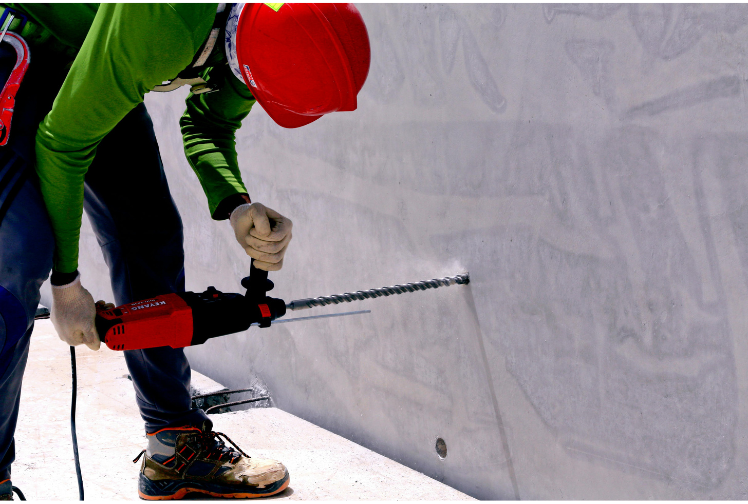
Concrete core drilling is the best way to cut clean, precise holes through reinforced concrete, asphalt, or stone. Core drilling is a great way to get the job done well, whether doing extensive infrastructure work or just a few updates. It doesn’t disturb nearby buildings very much.
In this post, we’ll go over everything that civil contractors, builders, and engineers in Australia need to know, from how to drill and what tools to use to real-world uses. We will also share important safety advice.
What is Concrete Core Drilling?
Concrete core drilling is a process used to create precise circular holes in concrete structures using specialized drilling equipment, commonly used in construction and renovation projects.
At present Concrete core drilling is a specific way to make round holes or cutouts in stone, masonry, or concrete surfaces. This procedure uses a cylindrical drill, usually embedded with industrial-grade diamonds, to remove a core without harming the rest of the structure. The holes drilled are typically used for:
- HVAC installation
- Anchor bolt holes
- Utility access points
- Testing the concrete’s integrity
- Electrical and plumbing conduits
In industrial and commercial projects, this method is necessary for making changes to or adding on to existing buildings with as little disruption as possible.
Why Concrete Core Drilling is Crucial in Civil Construction
For continuously involving infrastructure, civil contractors in Sydney heavily rely on core drilling to:
- Install signage and lighting poles
- Enable underground utility access
- Extract samples for structural testing
- Modify or expand bridges, tunnels, and roadways
It lets teams keep the structure strong while making room for electrical and mechanical installations. Concrete core drilling is useful for civil and infrastructure construction since it is necessary to be precise and keep structures intact.
Tools Used in Concrete Core Drilling
Professional core drilling requires specialized equipment to achieve accurate results. Common tools include:
- Diamond core drill bits
- Core drilling machines
- Water cooling systems
- Safety gear
Using the right tools ensures efficiency, precision, and minimal structural damage.
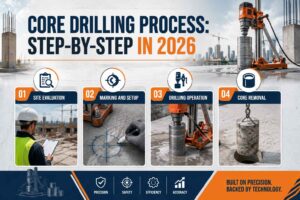
Core Drilling Process: Step-by-Step in 2026
Let’s go over how core drilling usually works in an industrial setting:
1. Site Evaluation
- Ground-penetrating radar (GPR) is used to check for existing utilities (such rebar or embedded pipes) on the site before drilling starts. It lowers the chances of hurting unseen infrastructure.
2. Marking and Setup
- Depending on the surface, the drill site is designated, and a core drill rig is securely in position, either with mechanical means or a vacuum system.
3. Drilling Operation
- A motorized drill is coupled to a core bit with a diamond tip. Water is utilized to cool the bit and keep the dust down. The bit cuts through the surface slowly, taking out a core that looks like a cylinder.
4. Core Removal
- After the core is drilled, it is carefully removed and kept (if it needs to be tested or documented). Then, the hole is cleaned and looked over.
Tools and Equipment Used in Drilling
Industrial core drilling requires heavy-duty tools to handle reinforced concrete:
- Drill Stand or Rig: Keeps the drill stable
- Power Source: Electric, hydraulic, or pneumatic
- Vacuum Pump or Anchor Bolts: For stabilising the rig
- Coolant System: Usually water to reduce heat and control dust
- Diamond Core Drill: Equipped with hollow diamond-coated drill bits
Specialised rigs are also available for angle drilling, vertical wall drilling, or overhead operations.
Common Applications in Australia’s Infrastructure
Here’s where concrete core drilling plays a vital role in the Australian industrial and civil landscape:
- Rail Infrastructure – Drilling holes in platforms or signal installations
- Commercial Buildings – Running electrical conduits or HVAC ducts
- Water Treatment Plants – Pipe fittings and maintenance access points
- Mining & Energy Sectors – Extracting test samples from concrete pads and footings
- Highways & Roads – For putting up drainage systems, light posts, and speed sensors
Concrete Repair Cracks: How Drilling Helps
Core drilling isn’t just for cutting; it’s also used to fix cracks in concrete. For example, when there are deep structural flaws in industrial slabs or bridge decks, core drilling lets contractors:
- Remove a section for lab analysis
- Create access for crack injection resins
- Enable dowel bar insertion for structural strengthening
The repair process works better and lasts longer when you make clean, precise access points.
Safety Tips for Core Drilling Operators
Working with concrete is hard, and safety is really important. Here are some important things that operators and contractors should do:
✔ Wear Full PPE
- You must wear safety glasses, gloves, hearing protection, steel-cap boots, and a hard hat.
✔ Watch for Rebar and Utilities
- Before you start drilling, always look for embedded items. Damaging a pipe or electrical conduit can cause problems and delays.
✔ Use the Right Drill Rig
- Pick the right size and type for the job, especially if working at heights or strange angles.
✔ Maintain Proper Cooling
- Water should flow steadily to keep the area cool and free of dust. It will also make your drill bits last longer.
✔ Never Force the Drill
- Let the drill do its job. It could get stuck, break, or damage the surface if you force it.
Hiring Professionals in Sydney and Beyond
Some light drilling jobs can be done in-house, but qualified specialists should do most industrial and infrastructure drilling.
Civil contractors in Sydney who do core drilling provide tools and have years of experience and knowledge of site circumstances, structural restrictions, and safety rules. Look for licensed, insured teams and learn about Australian standards like AS 3600 for concrete buildings.
Final Thoughts
Concrete core drilling is one of the best ways to change, test, and access structural elements without damaging them. This is especially true for civil infrastructure and industrial projects across Australia. Core drilling gets the work done cleanly and accurately, whether putting in new utilities, fixing broken concrete, or cutting through walls.
If you are a builder, engineer, or civil contractor in Sydney, hiring professional drilling services can help you finish projects faster, with less danger, and with more confidence. Remember, accuracy is always important when fixing fractures in concrete or installing new systems.
FAQs
Q: How deep can a core drill go into concrete?
Ans: The depth of most core drills depends on the rig and bit size; however, they can reach up to 1 meter. If necessary, specialized industrial systems can reach much deeper.
Q: Is it possible for core drilling to damage the structure around it?
Ans: Not if you do it right. Core drilling is a precise method that doesn’t cause much vibration, which lowers the chance of cracks or damage to neighboring surfaces.
Q: How much does concrete core drilling cost in Australia?
Ans: It depends on the diameter, depth, and number of holes. On average, it may range from $80–$200 per hole. Industrial jobs may have bulk pricing.
Q: Is core drilling only for concrete?
Ans: Nope! Core drilling can also be used on asphalt, brick, block, stone, and even some types of ceramic tiles.
Q: How does core drilling assist with concrete repair cracks?
Ans: Core drilling makes it possible to get to deep cracks, put in dowels or inject glue, and take samples to determine how bad the damage is.