Here’s the thing about drainage in Australia. When it works, no one notices. When it doesn’t, everyone pays for it. Flooded roads, cracked pavements, damaged foundations, and councils scrambling to fix problems that could’ve been avoided with the right setup from day one.
That’s where reinforced concrete pipe installation quietly does the work. Whether it’s stormwater under a suburban road, drainage for an industrial site, or runoff control on a civil project, reinforced concrete pipes (RCPs) are built for Australian conditions.
But the pipe alone isn’t enough. How it’s installed is what decides whether that drainage system lasts 20 years or 80. Let’s understand it in detail.
Australia’s Drainage Challenges Are No Joke
Australia throws a lot at its infrastructure. You’ve got sudden heavy downpours, flash flooding, long dry spells that harden soil, coastal salinity, clay movement, and heavy vehicle loads.
Add poor installation to that mix, and even the best materials will fail early. That’s why drainage systems here need to:
- Stay stable in reactive soils
- Handle large volumes of water fast
- Withstand traffic loads and vibration
- Resist cracking, joint failure, and erosion
Reinforced concrete pipes installation ticks all those boxes. But only if these pipes are installed correctly.
What Are Reinforced Concrete Pipes?
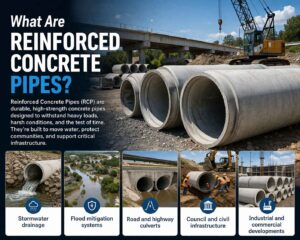
Reinforced concrete pipes are exactly what they sound like. Concrete pipes strengthened with steel reinforcement to handle high loads and pressure. They’re commonly used for:
- Stormwater drainage
- Flood mitigation systems
- Road and highway culverts
- Council and civil infrastructure
- Industrial and commercial developments
Compared to plastic alternatives, RCPs bring strength, stability, and lifespan to the table. But again, the magic happens during reinforced concrete pipes installation, not just at delivery.
Why Installation Matters More Than People Think
A reinforced concrete pipe is strong, but it’s not invincible. Poor installation can cause issues that don’t show up immediately but become expensive problems later. Here’s what proper installation actually does.
1. Prevents Pipe Movement and Settlement
Australia’s soil conditions vary wildly. One site might be sandy and loose. Another might be reactive clay that swells and shrinks with moisture. Correct installation includes:
- Accurate pipe alignment
- Proper trench preparation
- Even support along the pipe length
- Correct bedding material and depth
Without this, pipes can settle unevenly, crack, or separate at the joints. Once that happens, water escapes, soil erodes, and the system starts failing from the inside out.
2. Handles Heavy Loads Without Cracking
Think about what sits above most drainage systems. Roads. Trucks. Machinery. Entire buildings. Reinforced concrete pipes are designed to handle these loads, but only when:
- The pipe class matches the load requirements
- Bedding and backfill are compacted properly
- Installation follows engineering specs
Poor backfilling leaves voids around the pipe. Under load, the pipe takes stress it was never meant to carry alone. Cracks follow. Repairs aren’t cheap.
3. Ensures Long-Term Water Flow Efficiency
Drainage isn’t just about strength. It’s about flow. Incorrect gradients, misaligned joints, or uneven bedding can slow water movement. That leads to:
- Higher maintenance costs
- Water pooling inside pipes
- Increased sediment buildup
- Blockages during heavy rain
Professional reinforced concrete pipes installation ensures water moves the way it’s supposed to, even during peak storm events.
4. Protects Surrounding Infrastructure
When drainage fails, it doesn’t fail quietly. You’ll see:
- Pavement cracking
- Sinkholes near roads
- Washed-out shoulders
- Structural damage to nearby assets
A well-installed RCP system keeps water where it belongs. That protects roads, footpaths, buildings, and landscaping from long-term damage.
5. Delivers a Much Longer Lifespan
Replacing drainage is far more expensive than installing it properly the first time. With correct reinforced concrete pipes installation, you’re looking at:
- Minimal maintenance
- Decades of service life
- Strong resistance to corrosion and UV
- Better performance during extreme weather
In Australian conditions, that durability matters.
Common Mistakes That Shorten Drainage Lifespan
To understand why professional installation matters, it helps to know what goes wrong when corners are cut. Some common issues include:
- Skipping load and soil assessments
- Poor trench depth or width
- Incorrect bedding material
- Inadequate compaction
- Misaligned pipe joints
These mistakes might save time upfront, but lead to costly repairs, failures, and disruptions.
Where Reinforced Concrete Pipes Make the Most Sense
In Australia, RCPs are the go-to solution for a reason. They’re ideal for:
- Long drainage runs requiring durability
- High-traffic roads and highways
- Council stormwater networks
- Flood-prone areas
- Industrial estates
When installed properly, they outperform many alternatives in both strength and longevity.
How Civilcraft Helps With Reinforced Concrete Pipes Installation
Civilcraft helps with the reinforced concrete pipes installation by paying attention to the small things that might make or break a drainage system. Our method is practical, compliant, and site-specific from the first planning stages to the last placement. This is how we add value:
- Before installation, we check the soil conditions and load requirements.
- Prepare the trenches and beds according to engineering requirements.
- For long-term stability, we use the right methods for compaction.
- Make sure the pipes are lined up and joined correctly.
- Follow Australian rules for civil and drainage work.
Civilcraft doesn’t rush the job; instead, we focus on making drainage systems that last. That means fewer problems, cheaper maintenance expenses, and infrastructure that works when you need it most.
The Real Cost of Getting It Wrong
Drainage issues don’t usually show up right away. They appear months or years later, often after a heavy storm. By then, the cost isn’t just about fixing a pipe. It’s about:
- Safety risks
- Road closures
- Public complaints
- Emergency repairs
- Damage to surrounding assets
Investing in proper reinforced concrete pipes installation upfront is always cheaper than dealing with failure later.
Also Read:- Why Security Fencing in Australia Is Essential for Businesses
Final Thoughts
Even though drainage isn’t the most fun element of a project, it’s one of the most vital. Few other materials can match the strength, durability, and dependability of reinforced concrete pipes in Australia.
But those benefits only work if the installation is done correctly. With professional reinforced concrete pipes installation and experienced teams like Civilcraft handling the work, you’re not just installing pipes.
You’re building long-term protection for roads, land, and infrastructure. Get it right once, and you won’t have to think about it again for decades. And honestly, that’s exactly how good drainage should work.
FAQs
Q:- Why are reinforced concrete pipes better for Australian drainage?
Ans:- They handle heavy loads, resist soil movement, and perform well in extreme weather, making them ideal for Australian conditions.
Q:- How long do reinforced concrete pipes last?
Ans:- With correct reinforced concrete pipes installation, a drainage system can last 50 to 100 years with minimal maintenance.
Q:- What happens if reinforced concrete pipes are installed incorrectly?
Ans:- Poor installation can lead to cracking, joint failure, water leaks, erosion, and costly repairs down the line.
Q:- Are reinforced concrete pipes suitable for residential projects?
Ans:- Yes. They’re commonly used in residential stormwater systems, especially where durability and long-term performance matter.
Q:- How does Civilcraft ensure quality installation?
Ans:- Civilcraft focuses on proper site assessment, correct bedding & compaction, precise alignment, and compliance with Australian standards for reinforced concrete pipes installation.