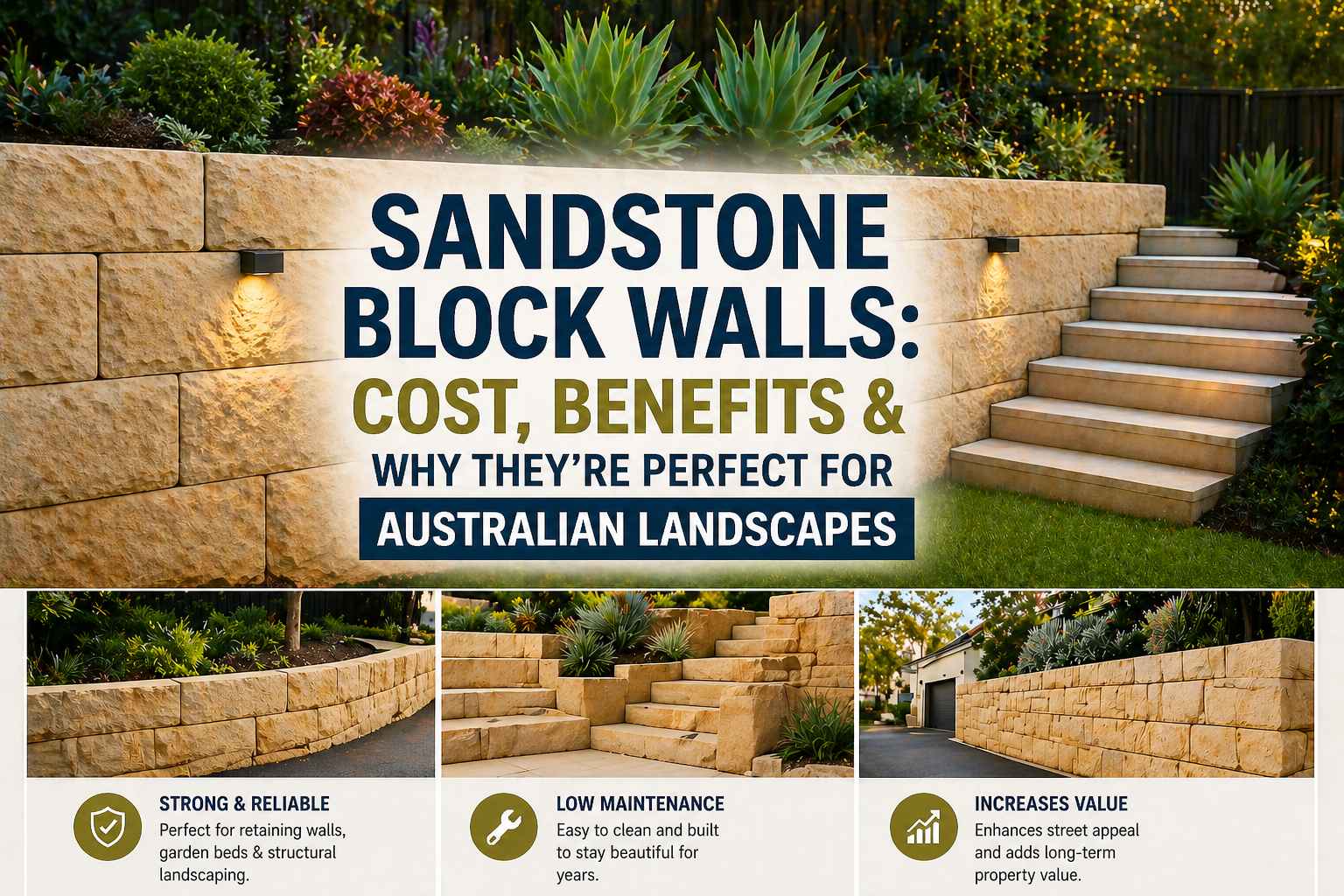
There is something undeniably “Aussie” about the look of natural stone. Whether it’s the rugged coastline or the red heart of the outback, stone is part of our DNA. When it comes to landscaping, specifically for those slopes or garden tiers, sandstone block walls are a total game-changer.
If you’ve been staring at a sloping backyard wondering how to make it more functional, or if you just want to add some serious curb appeal, let’s talk about why sandstone is the ultimate choice for the Australian climate.
Why Sandstone is a Winner for Australian Landscapes
Australia’s weather is… a lot. We deal with blistering summer sun, sudden downpours, and everything in between. Choosing natural stone walls in Australia isn’t just about aesthetics; it’s about choosing a material that evolved in this environment.
Sandstone is incredibly resilient. It doesn’t warp, it doesn’t rust, and unlike some treated timbers, it won’t leach chemicals into your garden soil. Plus, every block is unique. You get those gorgeous bands of gold, tan, and pink that look even better when the afternoon sun hits them. It’s a timeless look that never goes out of style.
Sandstone vs. Concrete Retaining Wall: The Great Debate
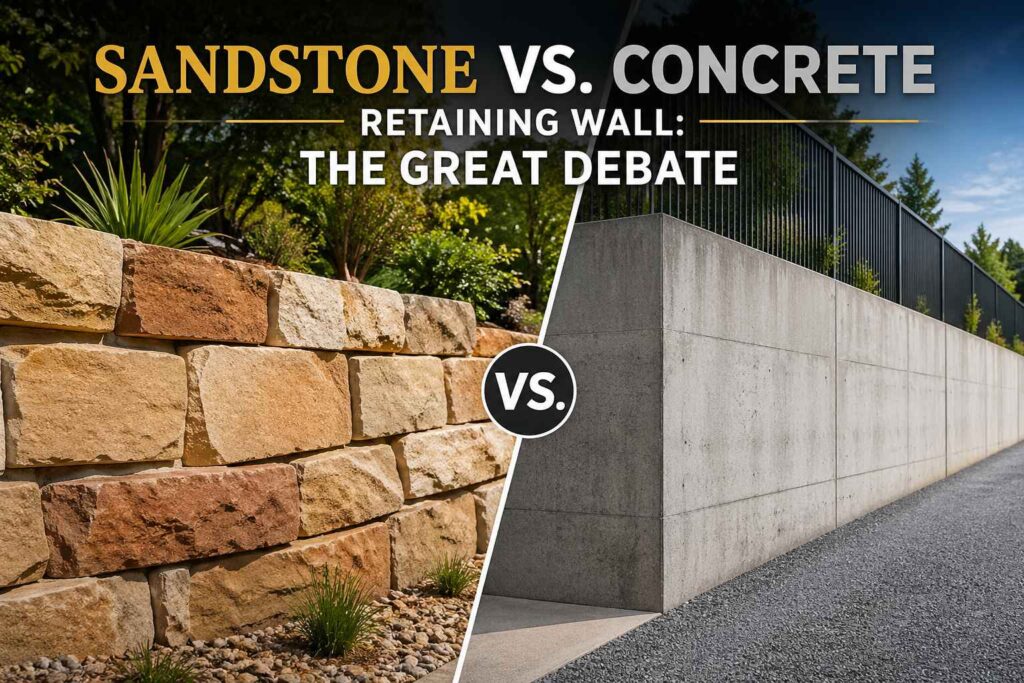
When planning a project, the most common question is: sandstone vs concrete retaining wall? Concrete sleepers or blocks are functional, sure. They offer a very uniform, modern look. However, concrete can sometimes feel a bit “cold” or industrial. Over time, concrete can also show wear, cracks, or fading.
While sandstone retaining walls age like a fine wine. They develop a natural patina that blends into your garden. While concrete is man-made to look like stone, sandstone is the real deal. Structurally, large sandstone blocks are incredibly heavy and stable, often relying on their own mass to hold back the earth, which makes them a powerhouse for long-term durability.
Are Sandstone Walls Durable?
Yes. They’ve been used in construction for thousands of years for a reason. When people ask, “Are sandstone walls durable?” They are usually worried about erosion. High-quality Australian sandstone is remarkably tough.
While it is a porous stone, its density makes it perfect for outdoor use. It handles the expansion and contraction caused by our temperature swings without breaking a sweat. If installed correctly with proper drainage, a sandstone wall can easily last a lifetime.
Breaking Down the Budget: Retaining Wall Cost in Australia
Building a wall is an investment in your property value. On average, the cost for a retaining wall can range anywhere from $250 to $700+ per square metre, depending on the material and the complexity of the site. When specifically looking at how much sandstone block walls cost, you have a few options:
- A-Grade Blocks: These are precision-cut with clean edges. They are easier to stack but come at a premium price.
- B-Grade/Random Blocks: These have more “character” (irregular shapes). The blocks themselves are cheaper, but they might take a bit more labor to fit together perfectly.
Generally, you might find sandstone block walls starting around $300 to $500 per square metre for the blocks and installation. While the upfront cost might be higher than timber, you save a fortune in the long run because you aren’t replacing it in 10 or 15 years.
Finding the Best Material for a Retaining Wall
It really depends on your goal.
- Concrete: Mid-range and sturdy, but lacks “soul.”
- Timber: Cheap and easy, but prone to termites and rot.
- Sandstone: High durability, stunning natural beauty, and adds the most “prestige” to a home.
For an Australian landscape, sandstone is often the winner because it handles the drainage and soil acidity of our coastal and inland regions so effectively.
Also Read:- Landscape Solutions Sydney: How to Design a Low-Maintenance & Modern Outdoor Space
How Civilcraft Can Help
Designing and installing a massive stone wall isn’t exactly a DIY Sunday afternoon job. It requires heavy machinery, a keen eye for levels, and an understanding of soil pressure. That’s where Civilcraft comes in. With deep expertise in civil works and landscaping, the team at Civilcraft takes the guesswork out of the process.
Whether you are looking to terrace a steep backyard or need a structural sea wall, they provide the professional engineering and precision needed to ensure your wall stays standing for decades. They handle everything from site assessment to the final block placement, ensuring your project meets all Australian standards.
Ready to Transform Your Landscape?
Whether you’re looking to boost value or create a stunning outdoor retreat, sandstone block walls offer the perfect blend of rugged strength and natural elegance. Trust the professionals to handle the heavy lifting and technical precision required for a flawless, durable finish.
Contact Civilcraft today for a consultation and let the experts build a sandstone masterpiece that stands the test of time. Our team ensures your project is executed with the highest engineering standards to withstand the unique challenges of the Australian environment.
FAQs
Q:- How much do sandstone block walls cost?
Ans:- Typically, you can expect to pay between $300 and $550 per square metre for supply and installation. Prices vary based on the grade of stone and site access.
Q:- Are sandstone walls durable?
Ans:- Absolutely. Sandstone is a natural, dense rock that withstands harsh weather, UV rays, and moisture, making it one of the most long-lasting landscaping materials available.
Q:- What is the best material for a retaining wall?
Ans:- For longevity and aesthetics, sandstone is often considered the best. However, for budget-conscious projects, concrete sleepers are a popular alternative.
Q:- How does sandstone compare to concrete for retaining walls?
Ans:- Sandstone offers a natural, unique look and superior longevity, while concrete is more uniform and often slightly cheaper but can lack the “high-end” finish of stone.
Q:- What is the average retaining wall cost in Australia?
Ans:- Most homeowners spend between $3,000 and $10,000 for a standard residential retaining wall project, depending on the length, height, and chosen material.