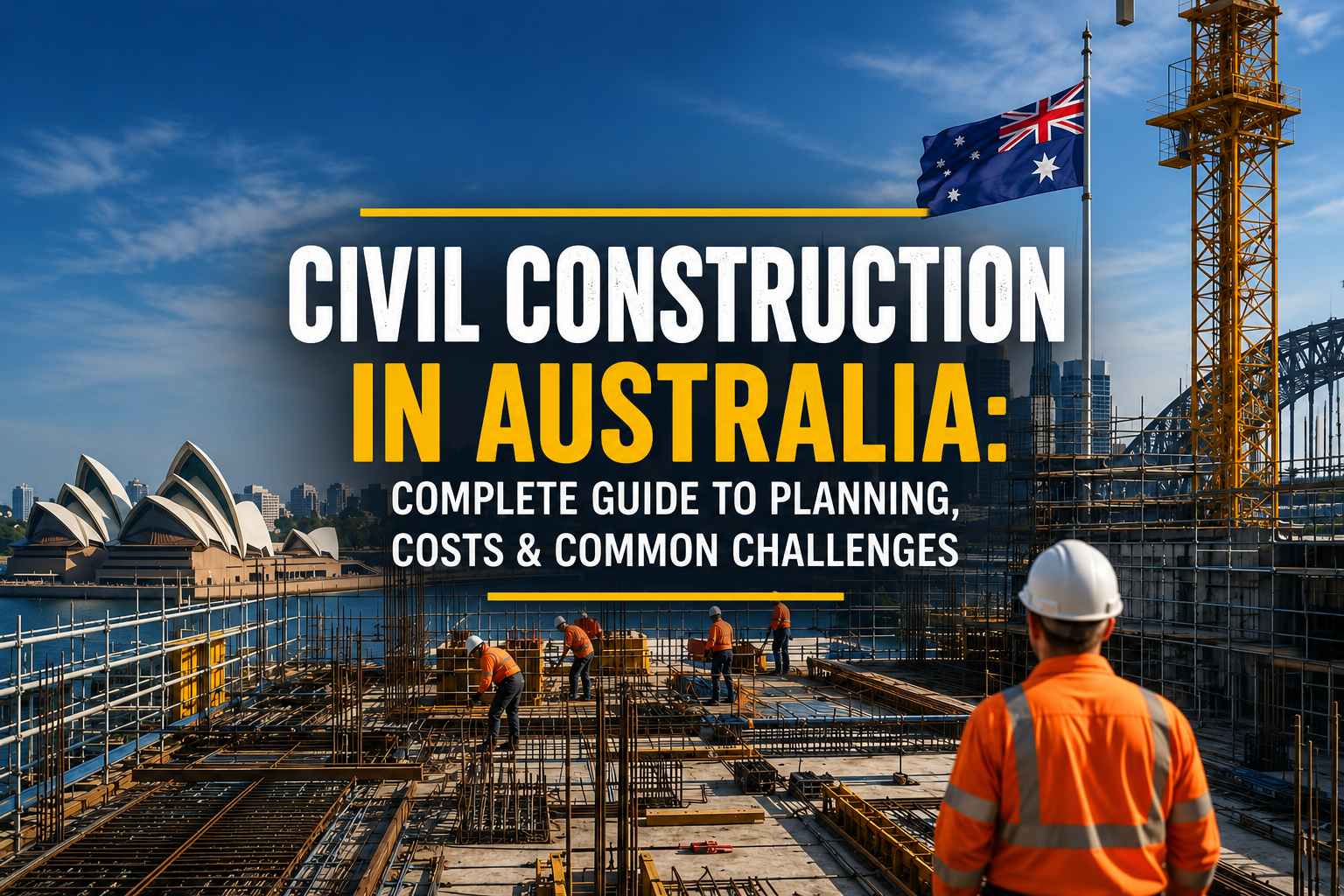
If you take a drive through any major Australian city right now, whether it’s the sprawling suburbs of Melbourne, the vertical climb of Brisbane, or the busy streets of Sydney, you’ll see the same thing: cranes, orange vests, and a whole lot of digging.
Civil construction is the backbone of our country’s growth. It’s the invisible force that ensures when you turn on the tap, water flows, and when you head to work, the roads actually get you there.
However, anyone who has managed a site knows that moving dirt and pouring concrete in the Australian climate and regulatory environment is not easy. From navigating strict EPA guidelines to managing the scale of infrastructure construction Australia requires, the stakes are high.
Construction Planning in Australia: Getting the Groundwork Right
Success in this industry isn’t born on the day the excavators arrive; it’s born months earlier in the boardroom. Effective construction planning Australia wide requires a deep understanding of local council requirements, soil conditions, and utility mapping.
One of the biggest mistakes firms make is rushing the “pre-con” phase. When you are dealing with high-stakes projects, you need civil contractors who don’t just follow a blueprint but actually interrogate it. This is where a company like Civilcraft really stands out.
With a reputation for precision in the Australian market, we focus on the heavy lifting of infrastructure, roads, bridges, and complex drainage, ensuring that the “civil” part of the project doesn’t become a “headache” part for the developer.
Civil Project Management Tips for Smooth Delivery

Managing a site is like conducting an orchestra where half the musicians are delayed by rain, and the other half are waiting on a permit. Here are a few tips to keep the music playing (for keeping the civil workflow smooth and fast):
- Iterative Scheduling: Don’t just set a date and pray. Use rolling wave planning to look two weeks ahead in great detail.
- Local Expertise: Australia’s labour laws and safety standards (WorkSafe) are some of the toughest in the world. Hire contractors who treat compliance as a foundation, not a chore.
- Tech Integration: Use BIM (Building Information Modelling) and real-time tracking. If a pipe is laid incorrectly, it’s much cheaper to find out via a digital twin than a backhoe six months later.
Why Do Construction Projects Get Delayed?
It’s the question every stakeholder asks, and every project manager dreads. In the Australian context, construction timeline issues usually stem from a few specific areas:
- The Weather Factor: From La Niña floods to extreme heatwaves that make it unsafe to pour concrete or work outdoors, the Aussie climate is unpredictable.
- Utility “Surprises”: Discovering an unmapped fibre optic cable or an old water main is a classic reason why construction projects get delayed.
- Supply Chain Lag: Being an island nation, we are often at the mercy of shipping schedules for specialised machinery or materials.
How to Manage Construction Budget and Avoid Overruns
Budgeting for civil construction is notoriously difficult because so much of the work happens underground. You don’t know what you’re dealing with until you start digging.
How to avoid cost overruns in construction projects:
- Geotechnical Certainty: Spend more on soil testing early on. Knowing exactly what’s under the surface prevents “hidden” costs later.
- Fixed-Price vs Cost-Plus: Depending on the risk profile, choosing the right contract type with your contractors can save millions.
- Contingency is Not a Luxury: A 10-15% contingency fund should be standard, not a “maybe.”
Civilcraft helps mitigate these risks by providing transparent cost structures and leveraging our experience to spot potential financial drains before they become a reality.
Navigating the Future of Australian Infrastructure
Ultimately, successful civil construction in Australia boils down to a delicate balance between rigorous technical planning and the ability to adapt to an unpredictable environment.
- Whether it is navigating the logistical hurdles of infrastructure construction or managing the shifting timelines caused by our unique climate, the difference between a project that thrives and one that stalls often lies in the quality of your partnerships.
- By prioritising comprehensive soil testing, maintaining transparent communication, and collaborating with seasoned civil contractors like Civilcraft, developers can mitigate risks before they escalate into costly setbacks.
- As the industry evolves with new technologies and stricter environmental standards, the fundamentals of solid project management remain more relevant than ever.
- Understanding the nuances of the local landscape and staying proactive with your construction planning strategies will ensure that your project is not only built to last but is also delivered within the parameters of your vision.
With the right framework in place, the challenges of modern civil work become manageable stepping stones toward building a more connected and resilient nation.
Also Read:- Cracked or Uneven Pavers? Complete Guide to Paving Repairs in Sydney
FAQs
Q: Why do construction projects get delayed so often in Australia?
A: Beyond the weather, delays are often caused by “latent conditions”, unexpected soil issues or hidden utilities, and the complex permit approval process across different Australian states.
Q: How to manage construction budget effectively?
A: Use integrated project management software to track every dollar in real-time. Don’t wait for the end of the month to see where you’ve overspent; check the data daily.
Q: What is the most common cause of construction timeline issues?
A: Poor communication between the design team and the onsite contractors is a leading cause. If the plan doesn’t match the reality of the ground, work stops until a solution is found.
Q: Is infrastructure construction in Australia different from residential building?
A: Yes, it’s much more heavily regulated. Civil projects involve public safety, environmental impact on waterways, and long-term durability for thousands of users, requiring specialised contractors.
Q: How can I ensure my project stays on track?
A: Partner with experienced firms like Civilcraft that have a proven track record in the Australian landscape. Experience is the best insurance against the “unknowns” of civil work.