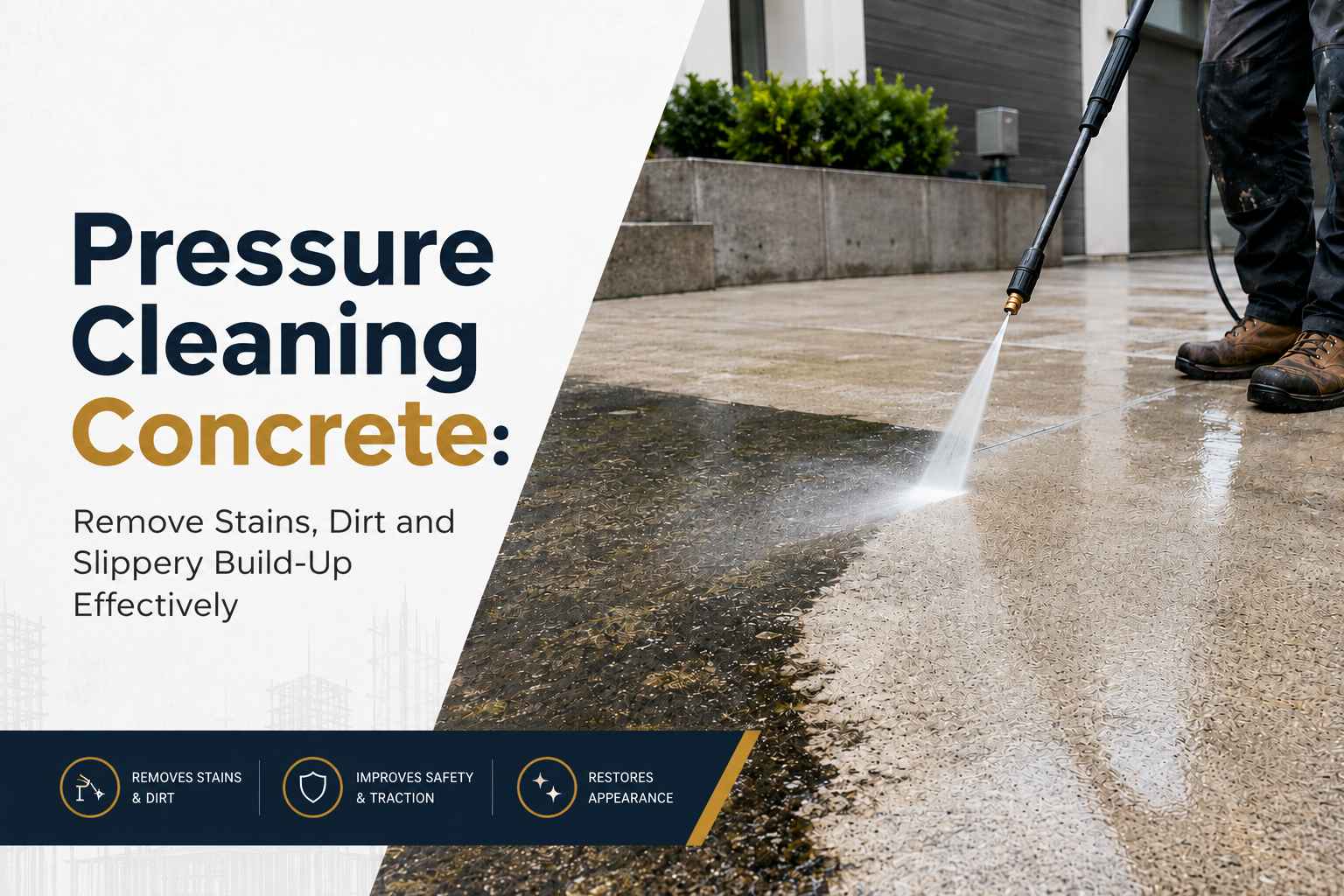
Concrete is the ultimate workhorse of our homes and commercial properties. It handles everything we throw at it: heavy vehicles, muddy boots, dripping oil, and the relentless weather. But over time, that pristine grey surface starts to look a bit sad.
It collects layers of dark grime, unsightly oil patches, and a green, slimy coat of algae that turns your pathway into a dangerous ice rink every time it rains.
If your driveway or patio is looking more “haunted house” than “welcome home,” it’s time to talk about pressure cleaning concrete. It is easily the fastest, most satisfying, and most effective way to blast away years of neglect and restore your property’s curb appeal.
Why Your Concrete Needs Some Serious TLC
Concrete looks tough, but its surface is actually quite porous. Think of it like a hard sponge. All that dirt, leaf tannin, car fluid, and atmospheric pollution sinks right into those tiny microscopic pores. Normal sweeping or hosing down barely touches the surface.
Leaving dirt and organic growth to fester isn’t just an eyesore; it’s a hazard. Moss, mould, and algae thrive in damp, shaded spots. When mixed with a little water, they create an incredibly slippery film.
Investing in professional concrete pressure washing ensures you peel back those hazardous layers, making your outdoor spaces safe for family, guests, or customers.
Can Pressure Washing Remove Mould from Pathways?
It is one of the most common questions people ask when their paths start turning a suspicious shade of green or black. The answer? Yes, absolutely. Pressure washing is highly effective at blasting away mould, moss, and algae from pathways.
However, a casual blast with cold water from a standard domestic pressure washer often just haircuts the problem. Because mould spores live deep within the concrete pores, the green stuff usually grows right back a few weeks later.
To handle it effectively, professional driveway cleaning services by Civilcraft combine high-pressure water with specialised, biodegradable chemical treatments. These treatments penetrate the concrete, killing the root spores so your pathways stay cleaner and safer for much longer.
How Do You Remove Oil Stains from Concrete?
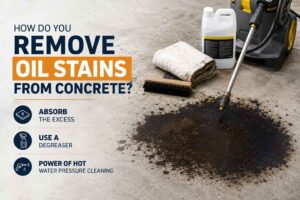
Whether it’s an old leak from the family car or a mishap during a DIY oil change, these dark patches are notoriously stubborn. Because oil is petroleum-based and concrete is porous, the fluid quickly wicks deep into the slab.
If you try to tackle this with a standard garden hose, you’ll just spread the mess around. Here’s a step-by-step process for getting rid of oil stains:
- Absorb the Excess: For a fresh spill, pour cat litter, baking soda or sawdust on the wet oil to absorb it.
- Use a Degreaser: Scrub a heavy-duty concrete-specific degreaser or a concentrated microbial cleaner into the stain to break down the oil molecules.
- Power of Hot Water Pressure Cleaning: Professional pressure cleaning concrete units use heated water that works like a dishwasher, melting the oil and emulsifying it so the high pressure can lift it completely out of the concrete’s pores.
Does Pressure Cleaning Damage Concrete?
It absolutely can if done incorrectly! While concrete feels indestructible, using the wrong nozzle, holding the spray wand too close, or using excessive pressure (PSI) can easily gouge the surface, strip away the smooth top layer (aggregate), and leave permanent swirl marks.
This risk is particularly high on “green” or relatively new concrete (under a year old), which hasn’t fully cured to its maximum strength. It’s also a major issue with cheap, high-powered domestic pressure washers used by untrained hands.
Hire professionals who specialise in pressure cleaning concrete to avoid permanently scarring your property. They know how to adjust the pressure, the right spray angles, and “soft washing” techniques to clean your surfaces safely without a single bit of structural damage.
How Often Should You Pressure Wash Concrete?
A good rule of thumb is to schedule a professional pressure cleaning concrete session once a year to keep your surfaces looking great and safe. But the optimal frequency really depends on your environment:
- Sunny, Open Spaces: If your concrete gets plenty of direct sunlight, you can easily stretch the cleaning interval to every 18 to 24 months.
- Shaded or Tree-Lined Areas: If your driveway is in the shade or under large trees, it will trap moisture and grow algae quickly, so that it may need a cleaning every 6 to 9 months.
- High-Traffic Zones: Commercial areas or busy family driveways that are subject to a lot of vehicle traffic will build up oil, tyre marks and dirt much more quickly and so will need to be maintained more regularly.
How Can Civilcraft Help?
You’re working on heavy-duty infrastructure, commercial assets or premium residential spaces. You don’t want to trust the job to a basic DIY machine. That’s where Civilcraft comes in. Civilcraft has the expertise in civil works and concrete maintenance.
We know the science of concrete better than anyone. We don’t just spray water on a surface, we’ll look at the age, condition and type of your concrete and offer a customised cleaning solution.
Civilcraft provides premium driveway cleaning and large-scale concrete restoration using cutting-edge commercial equipment.
We use environmentally friendly cleaning products that remove the most stubborn stains, ingrained dirt and slippery build-ups safely and efficiently. We make sure that your concrete looks like new and has structural integrity that will last for a long time to come.
Also Read:- Infrastructure Management Services: How Preventive Maintenance Reduces Long-Term Costs
Conclusion
Investing in professional pressure cleaning concrete effectively eliminates hazardous, slippery build-ups and stubborn stains. It instantly restores your property’s safety and curb appeal without risking surface damage.
FAQs
Q:- Will pressure washing remove old, dried-in rust stains?
Ans:- Yes, but water alone won’t do. Pros use special cleaners based on oxalic or phosphoric acid to break the chemical bond before pressure washing the rust stains away.
Q:- Is it better to pressure wash concrete with hot or cold water?
Ans:- Cold water is perfectly adequate for general dirt, mud and light algae. However, hot water is a must if you want to lift stubborn grease, oil stains and heavy chewing gum.
Q:- Do I need to seal concrete after pressure washing?
Ans:- Highly recommended! After the concrete is cleaned and dried thoroughly, a premium concrete sealer will lock out moisture, prevent future oil penetration and stop algae from taking root, helping it stay cleaner longer.
Q:- How long does a professional driveway cleaning service last?
Ans:- A professional service typically takes 1 to 3 hours for a standard two-car residential driveway, depending on how dirty or stained the surface is.
Q:- Is bleach safe for my concrete driveway?
Ans:- Bleach will kill mould in the home, but rinsing it away can be damaging to surrounding lawns and landscaping, and it doesn’t really take away deep dirt. Professional services use regulated, eco-friendly detergents that protect your garden.