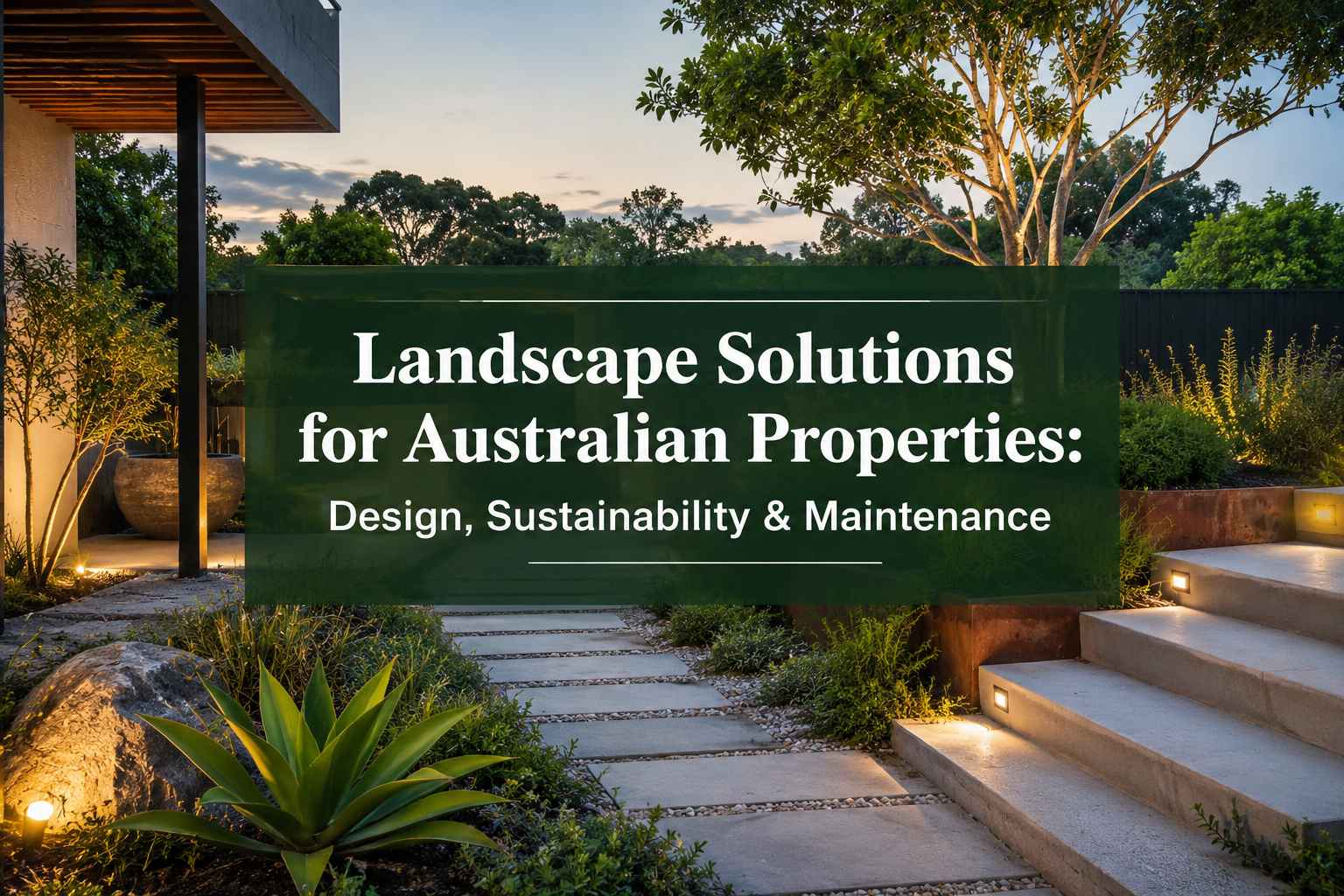
Outdoor spaces are no longer treated as the finishing touch on a project. Across Australia, they have become an important part of how properties perform, how assets are maintained, and how communities experience built environments. A well-planned landscape can improve accessibility, support stormwater management, reduce maintenance demands, and create attractive spaces that stand up to Australia’s varied climate.
For developers, property managers, councils, and infrastructure owners, landscaping is an investment in long-term asset performance rather than a cosmetic upgrade.
Poor plant selection, inadequate drainage, or low-quality construction can lead to ongoing maintenance issues and unnecessary costs. By contrast, carefully designed landscape solutions combine engineering principles, sustainable practices, and practical construction methods to deliver outdoor environments that remain functional for years.
This guide explores the landscape solutions that work best across Australian conditions, explains how they add value to commercial and public assets, and highlights the importance of planning for long-term performance from the very beginning.
What Are Landscape Solutions?
Landscape solutions involve the planning, construction, and maintenance of outdoor environments to meet both functional and environmental objectives. They go well beyond planting trees or laying turf. A successful project considers drainage, soil conditions, pedestrian access, irrigation, environmental compliance, safety, and future maintenance.
For Commercial developments and public infrastructure, landscape solutions often include:
- Site preparation and earthworks
- Soft landscaping with suitable plant species
- Hard landscaping such as pathways, retaining walls, and paving
- Stormwater management systems
- Irrigation design and installation
- Erosion and sediment control
- Turf establishment
- Ongoing landscape maintenance
When these elements are designed together rather than as separate components, they create landscapes that are easier to maintain and better suited to Australian conditions.
Why Australian Landscapes Need a Different Approach
Australia presents challenges that many other countries do not. Climate conditions vary significantly between regions, but most projects must account for periods of drought, intense rainfall, high UV exposure, and changing seasonal conditions.
A landscape design that performs well in coastal Queensland may struggle in regional Victoria or Western Australia. This is why experienced contractors assess local climate, soil characteristics, drainage patterns, and site use before selecting materials or vegetation.
The goal is simple. Build landscapes that continue performing long after construction has finished.
The Best Landscape Solutions for Australian Properties
1. Native Planting for Long-Term Performance
Native Australian plants are widely recognised for their ability to adapt to local environmental conditions. Once established, many native species generally require less irrigation than exotic alternatives because they have evolved alongside Australia’s climate.
Popular Choices For Commercial Landscapes Include:
- Lomandra
- Westringia
- Grevillea
- Banksia
- Kangaroo Paw
- Bottlebrush
Native planting also supports local biodiversity by providing habitat and food sources for birds, bees, and other pollinators. This makes it an attractive option for councils, schools, business parks, and residential developments aiming to improve environmental outcomes.
The right plant selection should always reflect the specific region, soil type, and maintenance objectives rather than relying on a one-size-fits-all approach.
2. Water Sensitive Landscape Design
- Water has become one of Australia’s most valuable resources, making efficient landscape design increasingly important.
- Many modern developments incorporate Water Sensitive Urban Design (WSUD) principles to help manage rainfall while reducing pressure on stormwater systems. These approaches are supported by guidance from organisations such as Melbourne Water and Water by Design.
Common Features Include:
- Rain gardens
- Bio-retention systems
- Swales
- Permeable paving
- Vegetated drainage areas
Instead of allowing rainwater to run quickly into drains, these systems help slow, filter, and naturally manage stormwater. This not only protects surrounding waterways but also contributes to healthier landscapes.
For larger commercial sites, integrating drainage and landscaping from the design stage often produces better long-term results than treating them as separate disciplines.
3. Durable Hard Landscaping
Soft landscaping creates visual appeal, but hard landscaping provides structure, accessibility, and functionality.
Well-designed Hardscape Features Include:
- Concrete footpaths
- Accessible walkways
- Retaining walls
- Outdoor seating areas
- Plaza spaces
- Kerbing
- Decorative paving
Material selection plays a significant role in long-term maintenance. Commercial environments with heavy pedestrian traffic require durable construction methods capable of handling regular use while maintaining a professional appearance.
Quality installation is equally important. Even premium materials can fail prematurely if drainage, foundations, or ground preparation are overlooked.
4. Smart Irrigation Systems
- Watering landscapes manually may work for a small garden, but it is rarely practical for large commercial sites.
- Modern irrigation systems use programmable controllers, weather data, or soil moisture monitoring to deliver water when it is actually needed. This helps reduce unnecessary irrigation while supporting healthier plant growth.
- Combined with drought-tolerant planting and proper mulching, efficient irrigation forms an important part of sustainable landscape management.
- It also reduces the ongoing operational demands placed on maintenance teams.
5. Designing for Easy Maintenance
- A landscape should look just as impressive five years after construction as it did on handover day. That outcome depends on thoughtful planning.
Simple Design Decisions Can Significantly Reduce Future Maintenance Requirements, Including:
- Selecting hardy, climate-appropriate plants
- Reducing oversized lawn areas where practical
- Installing quality mulch to help retain soil moisture
- Providing safe access for maintenance crews
- Choosing durable construction materials
- Designing efficient irrigation zones
Landscapes that require constant intervention often become expensive assets to manage. Designing with maintenance in mind helps reduce whole-of-life costs while keeping outdoor spaces attractive and functional.
How Landscaping Can Increase Property Value in Australia

Landscaping is often associated with visual appeal, but its value extends much further. For commercial properties, industrial facilities, residential developments, and public spaces, a well-planned landscape improves how people experience and use a site.
Visitors notice shaded walkways, healthy gardens, clean pathways, and organised outdoor spaces before they enter a building. That first impression influences how they perceive the quality of the entire property.
Professional Landscape Solutions Can Help Deliver:
- Stronger street appeal
- More functional outdoor spaces
- Better pedestrian accessibility
- Improved stormwater management
- Reduced erosion and surface wear
- Lower long-term maintenance requirements
- Greater tenant and visitor satisfaction
For developers and asset managers, landscaping should be viewed as part of the property’s long-term performance strategy rather than an optional finishing detail.
Sustainable Landscape Solutions That Work in Australia
Sustainability has become a key consideration across commercial developments and government infrastructure projects. The most effective landscape solutions balance environmental responsibility with practical performance.
Some of the most successful sustainable landscaping practices include:
Prioritise Native and Climate-Appropriate Plants
- Native and climate-suited species generally establish well in Australian conditions and often require less supplementary watering once mature. They also support local biodiversity by providing habitat for native birds and pollinators.
Improve Soil Health
- Healthy soil supports stronger root systems, retains moisture more effectively, and reduces the need for frequent irrigation. Incorporating quality organic matter and protecting soil structure during construction contributes to long-term landscape success.
Use Permeable Surfaces Where Appropriate
- Permeable paving allows rainfall to soak into the ground rather than flowing directly into stormwater systems. Depending on site conditions, this approach can assist with water management while reducing surface runoff.
Install Efficient Irrigation
- Modern irrigation systems help avoid overwatering by applying water according to programmed schedules or site conditions. Combined with mulching and appropriate plant selection, they support healthier landscapes while improving water efficiency.
Design for Long-Term Maintenance
- Sustainability is not only about environmental outcomes. A landscape that requires fewer repairs, less water, and lower maintenance over its lifespan is also a more sustainable investment.
What Influences Professional Landscaping Costs in Australia?
There is no standard price for professional landscaping because every site has different requirements. A small commercial frontage and a large infrastructure project involve very different levels of planning, labour, and construction.
Common factors that influence project costs include:
|
Factor |
Why It Matters |
|
Site size |
Larger areas require more materials and labour. |
|
Ground conditions |
Sloping sites or poor soil may need additional earthworks. |
|
Drainage requirements |
Stormwater solutions add complexity but improve long-term performance. |
|
Hard landscaping |
Retaining walls, paving, and structures increase project scope. |
|
Plant selection |
Plant size, species, and availability affect costs. |
|
Irrigation systems |
Automated systems require additional design and installation. |
|
Site access |
Restricted access can increase construction time and equipment needs. |
Rather than focusing solely on the initial price, experienced property owners often assess the whole-of-life value of a landscape. Investing in durable materials, effective drainage, and quality construction can help reduce maintenance costs and avoid premature repairs.
Why Experience Matters in Landscape Construction
Landscape projects often overlap with civil construction, drainage, earthworks, and infrastructure. That is why choosing an experienced contractor is essential.
A professional team should understand how different elements of a site work together, including:
- Existing services and utilities
- Stormwater management
- Soil conditions
- Public safety requirements
- Accessibility standards
- Construction sequencing
- Future maintenance needs
Early planning helps identify potential challenges before construction begins, reducing the likelihood of costly variations or ongoing maintenance issues after project completion.
For commercial developments, government projects, and public infrastructure, this integrated approach supports better outcomes over the life of the asset.
Also Read:- What Does a Civil Construction Company Do? A Complete Australian Guide
Conclusion
Successful landscape solutions do far more than enhance appearance. They improve functionality, strengthen environmental performance, support effective stormwater management, and create outdoor spaces that remain practical and attractive for years to come.
Across Australia, every site presents unique challenges, from changing climates to varying soil conditions and ongoing maintenance demands. Addressing these factors through thoughtful planning, quality construction, and sustainable design helps protect long-term investments while delivering better outcomes for owners, users, and communities.
Whether you’re developing a commercial precinct, upgrading public infrastructure, or managing an existing asset, partnering with an experienced civil construction specialist ensures your landscape is designed with performance, compliance, and durability in mind.
At Civilcraft, we deliver practical landscape solutions that combine engineering expertise with quality construction, helping Australian clients create outdoor environments built for today’s needs and tomorrow’s challenges.
FAQs
Q:- What are the best landscape solutions for Australian properties?
Ans:- The most effective landscape solutions combine native or climate-appropriate planting, durable hard landscaping, efficient irrigation, proper drainage, and sustainable design principles that suit local environmental conditions.
Q:- How can landscaping increase property value in Australia?
Ans:- Professional landscaping enhances street appeal, improves usability, supports effective site management, and creates a positive first impression for tenants, customers, and visitors. It also contributes to the long-term performance of commercial and public assets.
Q:- What are low-maintenance landscape designs for Australian climates?
Ans:- Low-maintenance landscapes typically include drought-tolerant plants, quality mulch, efficient irrigation, durable paving materials, and reduced lawn areas where appropriate. These features help minimise ongoing maintenance while maintaining visual appeal.
Q:- How much does professional landscaping cost in Australia?
Ans:- Project costs vary depending on site size, ground conditions, drainage requirements, materials, plant selection, irrigation systems, and overall project complexity. A professional site assessment provides the most accurate estimate.
Q:- What sustainable landscaping solutions work best in Australia?
Ans:- Sustainable landscaping often includes native planting, Water Sensitive Urban Design (WSUD), permeable paving, rain gardens, efficient irrigation systems, healthy soil management, and thoughtful maintenance planning to improve environmental and long-term asset performance.