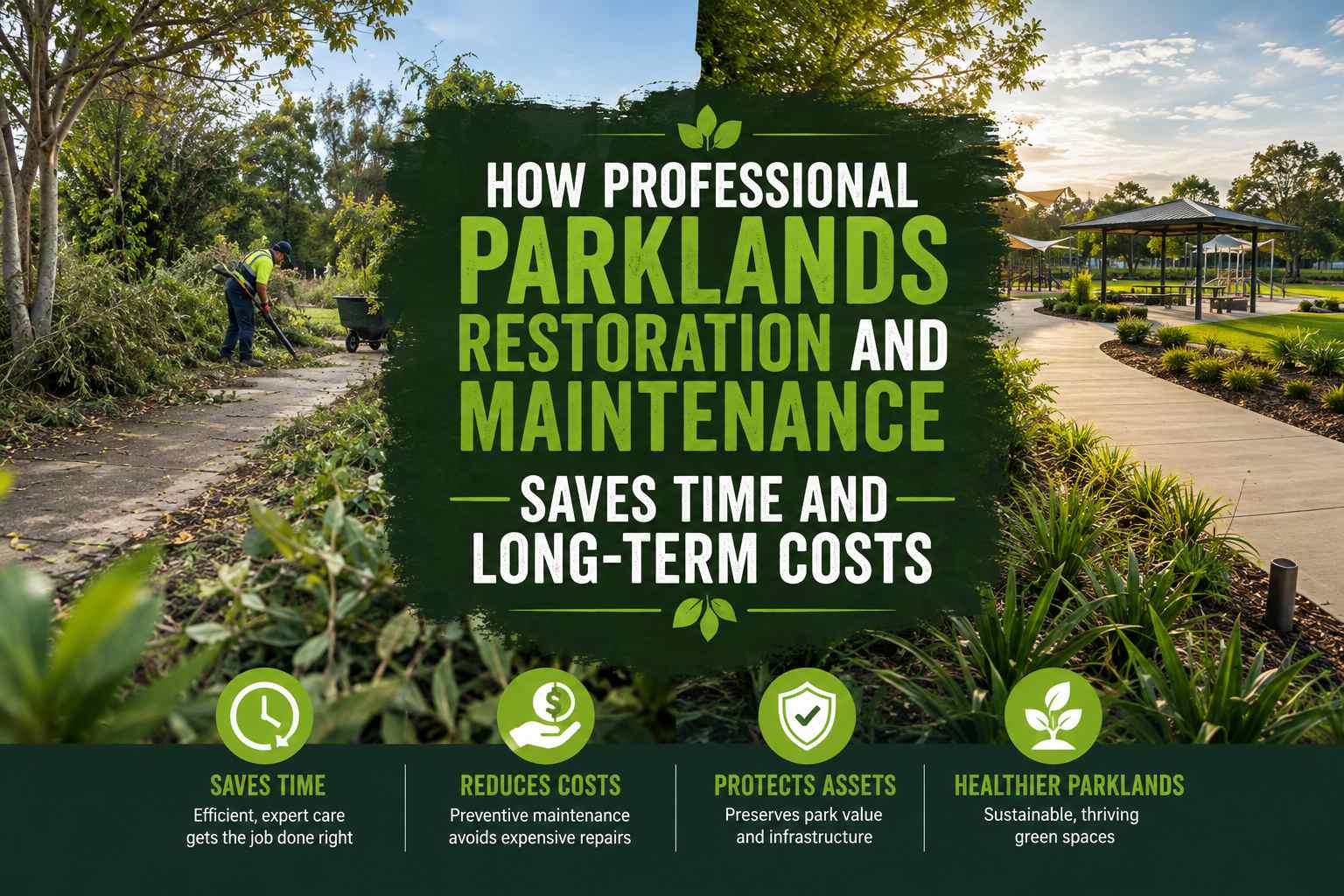
Australian urban spaces and regional parklands are under more pressure than ever. Between shifting weather patterns, heavy community foot traffic, and aggressive invasive species, managing open public space isn’t just about mowing lawns on a sunny afternoon.
It takes a strategic, long-term approach. For local councils, commercial developers, asset managers, and community committees, managing public land often comes down to a tough choice: do you keep patching up problems as they appear, or do you invest in structural parklands restoration and maintenance?
While quick fixes may look cheaper on a monthly budget sheet, expert parkland restoration services consistently prove the most cost-effective and time-saving route over time. Here is a clear look at how professional environmental management saves valuable resources, protects public safety, and keeps Australia’s green spaces thriving.
The Hidden Costs of Deferred Parkland Care

It is easy to push parklands restoration and maintenance down the priority list when other infrastructure demands pop up. However, public green spaces are active ecosystems. Left unchecked, minor issues can quickly compound into expensive hazards.
- Public Liability Risks: Overgrown roots tripping pedestrians, failing tree limbs, and degraded access tracks represent major safety hazards that invite costly claims and sudden emergency remediation fees.
- Erosion and Soil Degradation: Once topsoil washes away during heavy Australian downpours, re-establishing turf or native canopy takes three times longer and costs significantly more than preventive soil stabilisation.
- Invasive Weed Takeover: Noxious weeds like Lantana, Blackberry, and Woody Weeds choke out native flora rapidly. A minor weed patch ignored today turns into an expensive, large-scale chemical or mechanical clearing job next season.
- Asset Deterioration: Unmaintained park assets—such as wooden boardwalks, drainage channels, and walking paths—decay rapidly when surrounded by overgrown vegetation and poor drainage, leading to early replacement costs.
How Professional Parklands Restoration and Maintenance Helps in Saving Time and Costs
#1 Professional Planning Stops The “Do-Over” Cycle
- One of the biggest time-wasters in land management is repeating the same maintenance tasks month after month without addressing the root cause. If a low-lying park area turns into a mud pit every winter, constantly re-seeding the grass wastes money.
- Professional parklands restoration and maintenance begins with a thorough site assessment to diagnose the root cause. Is it poor soil compaction? Blocked civil drainage? Heavy compaction from foot traffic?
- By resolving underlying issues—such as installing proper sub-surface drainage, improving soil, or building designated reinforced pathways—restoration crews fix the problem permanently.
- Instead of spending money every few months to repair damage, you establish a resilient baseline that dramatically reduces routine maintenance.
#2 Smart Machinery and Specialised Equipment Save Labour Hours
Land restoration is labour-intensive without the right tools. Trying complex environmental work with standard commercial gardening tools takes weeks, drags out project timelines, and inflates labour budgets. Professional contractors deploy specialised civil and environmental machinery designed for tough Australian conditions:
- Non-destructive Hydro Excavation: Safely exposes underground utilities and tree roots without causing structural tree damage or utility strikes.
- Heavy-Duty Brush Cutters and Flail Mowers: Quickly clear dense scrub, thick woody weeds, and overgrown fire breaks in a fraction of the time required by hand crews.
- Custom Hydroseeding and Hydromulching Rigs: Cover vast, sloped, or eroded parkland acres rapidly, ensuring fast seed germination and immediate soil stabilisation.
By utilising high-performance machinery guided by experienced operators, a massive restoration project that would take weeks of manual labour can be executed safely and efficiently in just a few days.
3. Native Ecosystem Design Reduces Long-Term Watering and Care
- Australia’s climate is notorious for shifting between prolonged dry spells and sudden, heavy downpours. Parklands designed with delicate, non-native turf and exotic gardens require endless watering, expensive fertilisers, and constant trimming to survive.
- A major focus of modern parkland restoration services is establishing self-sustaining native ecosystems.
- By reintroducing indigenous trees, drought-tolerant native grasses, and deep-rooting groundcovers suited to the local climate, restored parklands naturally build resistance to local conditions.
- Over time, native habitats require significantly less supplemental irrigation, minimal chemical fertilisers, and fewer mowing cycles.
- This transition directly cuts ongoing utility bills and reduces weekly maintenance hours, freeing up budget for other community infrastructure projects.
#4 Protecting Civil Infrastructure and Drainage Assets
- Parklands are rarely just grass and trees—they are functional civil assets that handle stormwater run-off, protect local water tables, and safeguard surrounding property.
- When creek beds silt up, swales clog with debris, and retention basins overflow, the resulting flood damage to neighbouring roads, footpaths, and properties can be catastrophic.
- Professional parkland care integrates environmental landscaping with civil engineering principles.
- Keeping water channels clear, stabilising bank erosion with native plantings, and maintaining water detention zones prevent expensive civil repairs after major storm events.
How Civilcraft Makes the Difference
Delivering long-lasting parkland transformations requires a partner who understands both environmental biology and heavy civil execution. That is where Civilcraft comes in. With extensive experience managing civil infrastructure and open space projects across Australia, Civilcraft brings an integrated approach to parkland management.
Rather than relying on sub-contractors or piecemeal solutions, our team handles everything from initial earthworks, drainage installation, and soil remediation through to large-scale planting and ongoing vegetation management.
By combining specialised heavy equipment with a deep understanding of local environmental standards, Civilcraft delivers parkland projects on time and within budget—ensuring public spaces remain safe, functional, and visually striking for years to come.
Also Read:- What Causes Stormwater Drainage Problems in Sydney Commercial Properties
Investing in Sustainable Open Spaces
Treating parklands restoration and maintenance as an ongoing investment, not a reactive chore, is key to managing public land efficiently.
By partnering with experienced civil and environmental professionals like Civilcraft, managers can eliminate repetitive repair costs, reduce routine labour hours, and create resilient green spaces the Australian community can enjoy for generations.
FAQs
Q:- How do I know if a parkland area needs restoration instead of regular maintenance?
Ans:- If routine tasks like mowing and weeding fail to stop severe erosion, persistent flooding, native plant loss, or recurring weed outbreaks, the site requires structural parkland restoration rather than basic upkeep.
Q:- How long does parkland restoration take before noticeable improvements appear?
Ans:- Initial civil clearing, drainage improvements, and site shaping show immediate visual results within days, while full ecological establishment and dense plant coverage typically flourish within 3 to 6 months.
Q:- What is the difference between parkland restoration and landscape maintenance?
Ans:- Landscape maintenance focuses on routine cosmetic care like grass trimming and pruning, whereas parkland restoration re-engineers degraded land by fixing soil health, drainage, biodiversity, and ecosystem stability.
Q:- How can invasive weeds be permanently controlled during parkland restoration?
Ans:- Invasive weeds are managed long-term with a multi-phase approach that combines targeted removal, soil seed-bank treatment, and dense replanting of competitive native species that crowd out future weed growth.
Q:- What ongoing maintenance is required after a parkland restoration project is completed?
Ans:- Post-restoration care includes scheduled weed monitoring, watering young plants, structural asset inspections, and light seasonal pruning until the native ecosystem becomes self-sufficient.