
When people think about industrial expansion, they usually imagine big factories, heavy machinery, or high-tech manufacturing lines. But here’s the deal: none works well without one thing: Service Infrastructure. It’s the neurological system of industrial growth. Industries can’t work, grow, or compete globally without it. Let’s understand.
What Do We Mean by Service Infrastructure?
Service infrastructure is the systems, services, and buildings that help businesses run. It’s not just about power plants and highways. It covers a lot of important things, such as:
- Training centres for skilled workers
- A steady supply of water and power
- Services for telecommunications and IT
- Environmental and waste management systems
- Facilities for maintenance and engineering assistance
- Transportation systems include highways, ports, and airports
- Workers can get health care, housing, and community services
In short, it’s everything that keeps an industry from halting. You can build the most modern factory in the world, but you’re stuck if the power goes out or there are no highways to move goods.
Why Service Infrastructure is the Unsung Hero of Industrial Growth
Building units and buying machines are only part of industrial development. Businesses experience delays, higher prices, and lower efficiency without the right infrastructure services. Let’s discuss why infrastructure for the service sector is so important.
1. Smooth Operations = Higher Productivity
Imagine a factory that loses power four times a week. Machines stop, workers sit idle, and delivery deadlines are missed. Strong service infrastructure, including steady electricity, efficient transport, and communication systems, keeps things running without interruption. That directly translates into higher productivity and profitability.
2. Cost Reduction
Good infrastructure reduces unnecessary costs. Strong infrastructure helps industries save big.
- Efficient logistics mean less fuel wastage, faster delivery, and lower transportation costs.
- A clean water supply means reduced expenses on water treatment.
- Reliable IT networks mean fewer downtimes.
3. Attracting Investments
- No investor wants to put money in a place where roads are broken, electricity is unreliable, and basic services are missing. Infrastructure is one of the first things global companies look at before entering a new market. In fact, it’s a key driver in attracting foreign direct investment.
4. Worker Well-being and Retention
- It’s not just about machines; industries run on people. Workers need housing, healthcare, schools for their kids, and recreational spaces. When industries are backed by solid infrastructure, employee satisfaction goes up. Happier workers mean lower turnover, better productivity, and long-term stability.
5. Supporting Innovation and Growth
- Industries can’t stay stagnant. They need to grow, innovate, and adapt to new technologies. Advanced service infrastructure, such as high-speed internet, modern R&D centres, or specialised maintenance facilities, makes it easier for industries to explore new opportunities.
How Service Infrastructure Directly Shapes Industrial Hubs
Look at any industrial hub: Sydney in Australia, Silicon Valley in the US, Shenzhen in China. None of these success stories happened overnight. They were built on a carefully developed infrastructure. The pattern is clear: when service infrastructure is strong, industries bloom.
Silicon Valley thrived because of universities like Stanford and government-backed infrastructure services like research grants, skilled labour networks, and strong IT connectivity. Thanks to massive investments in ports, roads, energy supply, and worker housing, Sydney became a manufacturing powerhouse.
The Role of Infrastructure Services in Supporting Industries
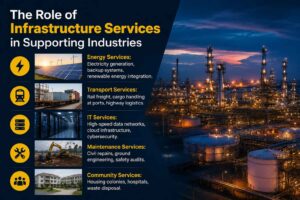
The term infrastructure services often gets thrown around, but what exactly does it mean in the industrial context? Here are some examples:
- Energy Services: Electricity generation, backup systems, renewable energy integration.
- Transport Services: Rail freight, cargo handling at ports, highway logistics.
- IT Services: High-speed data networks, cloud infrastructure, cybersecurity.
- Maintenance Services: Civil repairs, ground engineering, safety audits.
- Community Services: Housing colonies, hospitals, waste disposal.
These services ensure that industries don’t just survive but thrive.
Civilcraft and the Practical Side of Service Infrastructure
Now, let’s talk about a company that knows this space inside out:
When we say service infrastructure, it’s not just about building it once; it’s about maintaining, upgrading, and customising it for industrial needs. That’s where companies like Civilcraft step in. We specialises in industrial site maintenance and ground repair services.
For industries, especially those with heavy machinery and large-scale operations, the ground beneath matters more than you’d think. Weak or damaged flooring can lead to safety risks, equipment damage, and operational delays. We brings in expertise in:
- Industrial site maintenance to keep facilities running efficiently.
- Warehouse floor repair for safe storage and smooth movement of goods.
- Custom solutions tailored to the type of industry, be it logistics, manufacturing, or warehousing.
In short, Civilcraft ensures that industries don’t face unnecessary downtime due to poor infrastructure at the ground level. And let’s be honest, without this foundation, no amount of high-tech machinery can save the day.
Service Infrastructure = National Development
Strong infrastructure is good for the economy as a whole, not just for enterprises.
- Creating Employment: Building infrastructure produces thousands of jobs, from construction workers to engineers.
- Regional Balance: A good infrastructure ensures that companies aren’t just in big cities but also in rural communities.
- Export Competitiveness: Thanks to enhanced transportation and logistics, local goods can reach global markets faster and for less money.
- Sustainable Growth: Today’s infrastructure focuses on eco-friendly methods, renewable energy, and water recycling, all of which are good for the environment.
Challenges in Infrastructure Development
Of course, it’s not all smooth sailing. Building and maintaining infrastructure comes with several challenges:
- High Costs – Setting up advanced infrastructure requires heavy investments.
- Maintenance Issues – Infrastructure can degrade quickly if not maintained properly.
- Technology Gaps – Industries are advancing faster than infrastructure in some areas.
- Bureaucratic Delays – Policy approvals, land clearances, and red tape often slow down projects.
- Uneven Distribution – Some regions enjoy world-class facilities, while others still struggle with basics.
The good news is that, with public-private partnerships and companies like Civilcraft contributing at the ground level, these challenges are being addressed step by step.
Also Read:- How Civil Contractors Shape Modern Infrastructure Projects
Wrapping It Up
Industries can’t stand tall without a solid backbone: service infrastructure. It is a key part of industrial development since it lowers costs, boosts productivity, attracts investments, and ensures worker health.
Civilcraft and other companies show us that the ground under our factories is just as important as the machines inside them. When infrastructure is put first, industries don’t just develop; they thrive, stay strong, and establish standards for the future.
FAQs
Q:- What is service infrastructure in simple terms?
Ans:- It’s the set of systems and services, like electricity, transport, IT, and maintenance, that support industries and keep them running smoothly.
Q:- Why is infrastructure important for industries?
Ans:- Without it, industries would experience downtime, higher expenses, and lower output. Good infrastructure ensures stability and growth.
Q:- How do infrastructure services help industrial workers?
Ans:- They provide housing, healthcare, safety systems, and community facilities, which improve worker well-being and retention.
Q:- What role does Civilcraft play in industrial service infrastructure?
Ans:- Civilcraft specialises in industrial site maintenance and ground repair, ensuring industries operate safely and without disruptions.
Q:- How does service infrastructure support national growth?
Ans:- It generates jobs, attracts investments, boosts exports, and ensures balanced regional development.