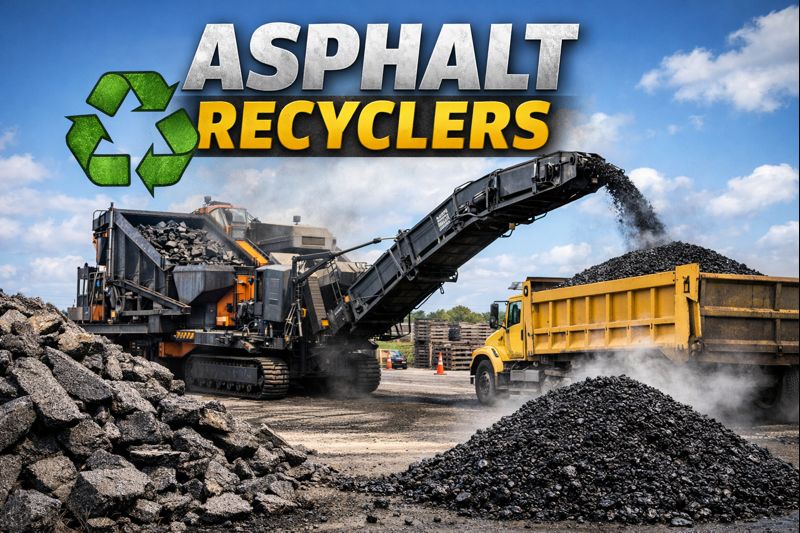
Roadworks already test everyone’s patience. Traffic cones everywhere, detours that make zero sense, and that one bloke holding a stop sign like it’s his life mission. Now imagine all of that, but slower, messier, and way more expensive. That’s what happens when old asphalt gets ripped out and dumped instead of reused.
This is where asphalt recyclers come in and quietly save the day. They’re not flashy. They won’t trend on social media. But on construction sites and road maintenance jobs across Australia, these recyclers are doing the kind of work that actually matters. Less waste. Lower costs. Faster jobs. Better roads. Let’s see their benefits in detail.
What Are Asphalt Recyclers?
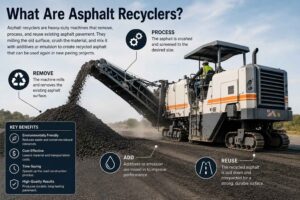
In simple terms, asphalt recyclers take old, damaged asphalt and give it a second life. Instead of tearing up roads and trucking the material to a landfill, recyclers heat, reprocess, and reuse it on-site or nearby. Think of it like leftovers done right. Yesterday’s road becomes today’s road, just stronger and smarter. An asphalt recycler is commonly used for:
- Pothole fixing
- Car parks and driveways
- Footpaths and service roads
- Road repairs and resurfacing
- Rural and remote road maintenance
And in a country as big as Australia, that flexibility matters a lot.
Why Asphalt Recyclers Are a Big Deal in Australia
Australia has long stretches of road, remote areas, and weather that loves to break asphalt just for fun. Transporting materials over long distances costs time and money. Dumping old asphalt costs even more. That’s exactly why asphalt recyclers make so much sense here. They allow construction and maintenance teams to work smarter instead of harder.
1. Massive Cost Savings
Let’s start with money. Using asphalt recyclers reduces costs by:
- Cutting down on new asphalt purchases
- Lowering landfill and disposal fees
- Reducing transport expenses
- Minimising labour time
Instead of paying to remove old asphalt and then paying again to bring new material in, recyclers keep the process tight and efficient. Same material. Same site. Less spending. For councils, contractors, and maintenance teams, that adds up fast.
2. Way Less Waste, Way More Sustainability
Asphalt is a recyclable product. Tossing it into a landfill is just lazy planning. Asphalt recyclers help reduce:
- Construction waste
- Demand for raw materials
- Emissions from long-haul transport
- Environmental impact from quarrying
In Australia, where sustainability targets are getting stricter, recycling asphalt isn’t just smart. It’s becoming expected. And honestly, reusing material that’s already there just makes sense.
3. Faster Project Turnaround
Nobody likes roadworks that drag on for weeks. Not drivers. Not residents. Not site crews. asphalt repairs and recyclers speed things up by:
- Allowing on-site recycling
- Eliminating material haulage delays
- Reducing downtime between stages
- Enabling quick patch and repair jobs
It is especially useful for maintenance works where roads need to reopen quickly. Less disruption means fewer complaints and smoother operations. That’s a win for everyone involved.
4. Perfect for Remote and Regional Areas
Australia isn’t exactly small. Some road projects are hours away from the nearest asphalt plant. Transporting fresh material to these sites can blow budgets before work even starts. Asphalt recyclers shine in these situations. They allow crews to:
- Reuse existing pavement
- Reduce reliance on distant suppliers
- Keep roads usable with minimal logistics
- Work efficiently in rural and remote regions
For regional councils and infrastructure teams, this is a game-changer.
5. Consistent Quality for Maintenance Jobs
There’s a myth that recycled asphalt means lower quality. That’s outdated thinking. Modern asphalt recyclers produce material that’s:
- Strong and durable
- Reliable for ongoing maintenance
- Suitable for patching and resurfacing
- Consistent when processed correctly
For potholes, cracks, and surface repairs, recycled asphalt performs extremely well. In many cases, it blends seamlessly with existing pavement. So no, asphalt recycling doesn’t mean “temporary fix.”
6. Lower Equipment and Labour Requirements
Traditional asphalt work often means multiple machines, extra crew members, and complex scheduling. Asphalt recyclers simplify that process. They help reduce:
- Overall operational complexity
- Number of machines on-site
- Labour-intensive handling
- Coordination issues
Fewer machines. Less chaos. More productivity. That’s something every site supervisor can appreciate.
7. Better Control Over Materials
When asphalt is recycled on-site or nearby, crews have more control over the final mix. Adjustments can be made based on conditions and project needs. That flexibility leads to:
- Improved repair longevity
- Better surface performance
- Fewer material inconsistencies
- Smarter use of existing resources
Instead of relying on pre-mixed deliveries, teams stay in control.
8. Ideal for Maintenance, Not Just Big Builds
Asphalt recyclers aren’t just for major road projects. They’re perfect for ongoing maintenance. For these jobs, recyclers are faster, cheaper, and far more practical than full-scale asphalt production.
- Pothole repairs
- Shoulder strengthening
- Small resurfacing works
- Car parks and access roads
The Bigger Picture: Smarter Roads, Smarter Spending
At the end of the day, these recyclers support a smarter approach to construction and maintenance. They help:
- Stretch budgets further
- Improve project efficiency
- Deliver durable road surfaces
- Reduce environmental impact
In a country dealing with growing infrastructure demands and tight budgets, that balance matters more than ever.
Also Read:- Why Reinforced Concrete Pipes Installation Is Key to Long-Term Drainage in Australia
Final Thoughts
Road construction doesn’t need to be wasteful, slow, or painfully expensive. Asphalt recyclers prove that there’s a better way to maintain and repair roads without cutting corners. They take what’s already there, improve it, and put it back to work. Simple idea. Big payoff.
For Australian construction and maintenance teams, these recyclers aren’t just a nice-to-have. They’re quickly becoming an essential kit. Less waste. Less waiting. Better roads. Hard to argue with that.
FAQs
Q:- What are asphalt recyclers used for?
Ans:- These recyclers are used to reuse old asphalt for road repairs, resurfacing, pothole fixing, and maintenance works.
Q:- Are recycled asphalt surfaces durable?
Ans:- Yes. When processed properly, recycled asphalt offers strong, long-lasting performance for most maintenance and construction needs.
Q:- Do asphalt recyclers save money?
Ans:- Yes. They reduce material, transport, and disposal costs, making projects more cost-effective.
Q:- Are asphalt recyclers suitable for small projects?
Ans:- Yes. They’re ideal for small repairs, local road maintenance, car parks, and access roads.
Q:- Why are asphalt recyclers popular in Australia?
Ans:- They work well for long distances, remote locations, tight budgets, and sustainability-focused construction and maintenance projects.