Nothing ruins the “curb appeal” of a home or the professional look of a commercial site like a driveway that looks like the surface of the moon.
Whether it’s a spiderweb of cracks or a pothole that’s slowly turning into a small pond, damaged pavement is more than just an eyesore. It’s a trip hazard and a vehicle killer.
In the harsh Australian climate, our roads and driveways take a beating. From the scorching summer sun that bakes the oils out of the surface to the heavy downpours that seep into gaps, bitumen repair is something every property owner has to face.
The good news? You don’t always need a massive road crew to fix the small stuff. Let’s dive into how you can handle road surface maintenance and when it’s time to call in the professionals.
Asphalt vs Bitumen Repair: What’s the Difference?

Before you grab a bucket of filler, you need to know what you’re standing on. While people use the terms interchangeably, there’s a slight difference in asphalt vs bitumen repair techniques.
- Bitumen is essentially the “glue.” In Australia, a bitumen driveway is usually “spray-and-seal,” where a layer of hot liquid bitumen is sprayed down and covered with aggregate (stones).
- Asphalt is a pre-mixed combination of that glue and stone, laid thick and compacted.
Repairing bitumen often involves “resealing” the surface to keep water out, whereas asphalt repairs usually involve cutting out chunks and replacing the “hot mix.” However, for small cracks and potholes, the DIY products you’ll find at the local hardware store often work for both.
How to Repair Bitumen Driveway Cracks
If you see cracks, act fast. Think of a crack like a cavity in a tooth; if you don’t fill it, the rot spreads to the “bone” (the base layer).
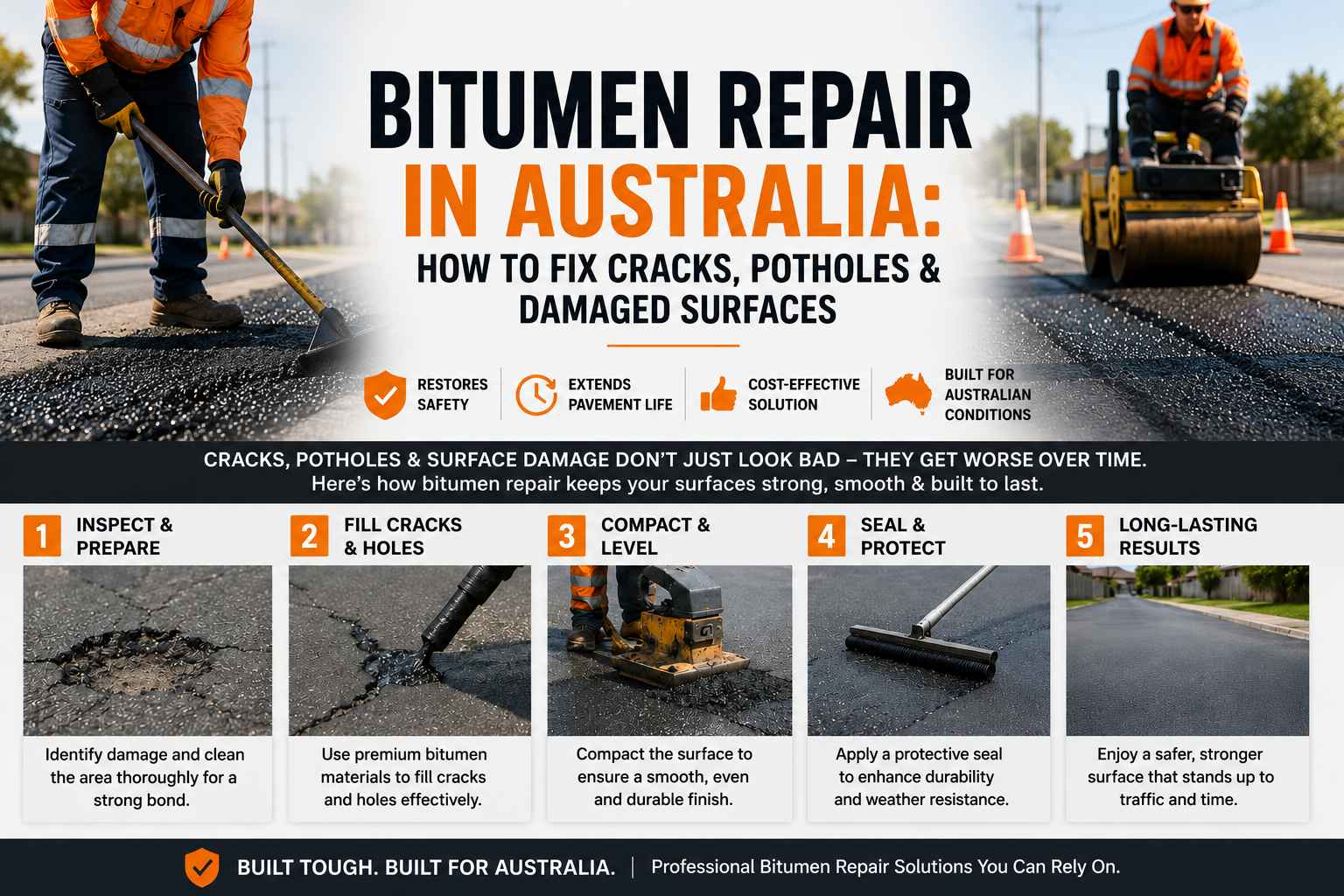
1. Clean it out
- You can’t fix what’s dirty. Use a stiff wire brush or a high-pressure hose to get rid of weeds, dirt, and loose stones. If you use water, let it dry completely; bitumen and water are not friends.
2. Fill the gaps
- For narrow cracks (less than 10 mm), a liquid crack filler is your best bet. You pour it in, level it with a scraper, and let it cure. For wider gaps, you might need a “mastic” filler which is a bit thicker and stays flexible as the ground moves.
3. Seal the deal
- Once the cracks are filled, applying a restorer or sealer over the whole area can help blend the repair and give the surface a fresh, black look.
Pothole Repair Methods: From DIY to Pro
Pothole repair methods generally fall into two categories: “Cold Mix” and “Hot Mix.”
- Cold Mix (The DIY Saviour): –
You can buy bags of cold mix asphalt at most Aussie hardware stores. You shovel it into the hole, level it off so it’s slightly higher than the surrounding ground, and whack it down with a heavy tamper or the tyre of your car. It’s a great temporary fix for driveways.
- Hot Mix (The Professional Standard): –
This involves heated asphalt that creates a much stronger bond. It requires specialised machinery and is the go-to for asphalt repair services by Civilcraft dealing with high-traffic roads or commercial car parks.
Road Surface Maintenance: Why Prevention is Cheaper
If you wait until you can see the dirt underneath your pavement, you’ve waited too long. Regular road surface maintenance is about keeping the “skin” of the bitumen intact. Oxidation from the Australian sun makes bitumen brittle.
When it’s brittle, it cracks. When it cracks, water gets under the surface and washes away the base. Suddenly, you aren’t just paying for a bucket of filler; you’re paying for a full excavation. A simple seal coat every 5–7 years can double the life of your pavement.
How Long Does Bitumen Last?
Generally, a well-laid bitumen spray-seal driveway will last between 10 to 15 years, while high-quality asphalt can go for 20 years or more. However, how long it lasts depends entirely on three things:
- The Base: If the dirt underneath wasn’t compacted properly, the bitumen will fail in months.
- Drainage: Standing water is the enemy.
- Maintenance: Filling those tiny cracks early.
Cost of Bitumen Repair Australia
Let’s talk numbers. The cost of bitumen repair Australia wide varies depending on the scale.
- DIY: A 20kg bag of cold mix costs around $25–$40. A 10L tub of crack filler is about $50–$80.
- Professional Patching: For a pro crew to come out and fix a few potholes properly, expect to pay a “call-out” or minimum job fee, usually starting around $500–$800.
- Resurfacing: To lay a new “skin” over an existing large driveway, you might be looking at $25–$50 per square metre.
How Civilcraft Can Help
For commercial projects, industrial sites, or complex road repairs, DIY bags of cold mix just won’t cut it. This is where Civilcraft steps in. As experts in Australian civil infrastructure, Civilcraft provides high-end asphalt repair services that go beyond just “filling a hole.”
We analyse the underlying cause of the failure, whether it’s poor drainage or sub-base instability, and provide a permanent engineering solution. From heavy-duty car parks to public road works, we ensure that the repair is as strong (or stronger) than the original surface.
Also Read:- Civil Construction in Australia: Complete Guide to Planning, Costs & Common Challenges
Conclusion
At the end of the day, bitumen repair is all about staying ahead of the damage. Grab a wire brush and some filler for those small driveway cracks this weekend, and you’ll save yourself thousands of dollars down the line.
But if your car park is starting to resemble a disaster zone, don’t DIY your way into a bigger mess; get the professionals to lay a foundation that lasts.
FAQs
Q:- How to repair bitumen driveway cracks on a budget?
Ans:- Clean the crack thoroughly with a wire brush, remove all debris, and use a store-bought liquid bitumen crack filler. Ensure you “overfill” slightly as the product may shrink as it dries.
Q:- What is the typical cost of bitumen repair in Australia?
Ans:- Small DIY fixes cost under $100. Professional services for commercial patches usually start at $500+, while full resurfacing can range from $25 to $50 per square metre depending on the area’s size.
Q:- Which pothole repair methods are best for high-traffic areas?
Ans:- For high-traffic or industrial sites, “Hot Mix” asphalt is the superior choice. It bonds more effectively to the existing surface and handles heavy vehicle loads better than “Cold Mix” alternatives.
Q:- Asphalt vs bitumen repair: which is easier?
Ans:- Bitumen repair (spray and seal) is often easier for small-scale DIY maintenance, like resealing a driveway. Asphalt repair is more durable but typically requires heavy compaction tools and “Hot Mix” materials for a professional finish.
Q:- How long does bitumen last in the Australian sun?
Ans:- With proper maintenance and regular sealing, a bitumen surface usually lasts 10–15 years. Without maintenance, the sun’s UV rays can cause significant cracking and failure in as little as 5–7 years.