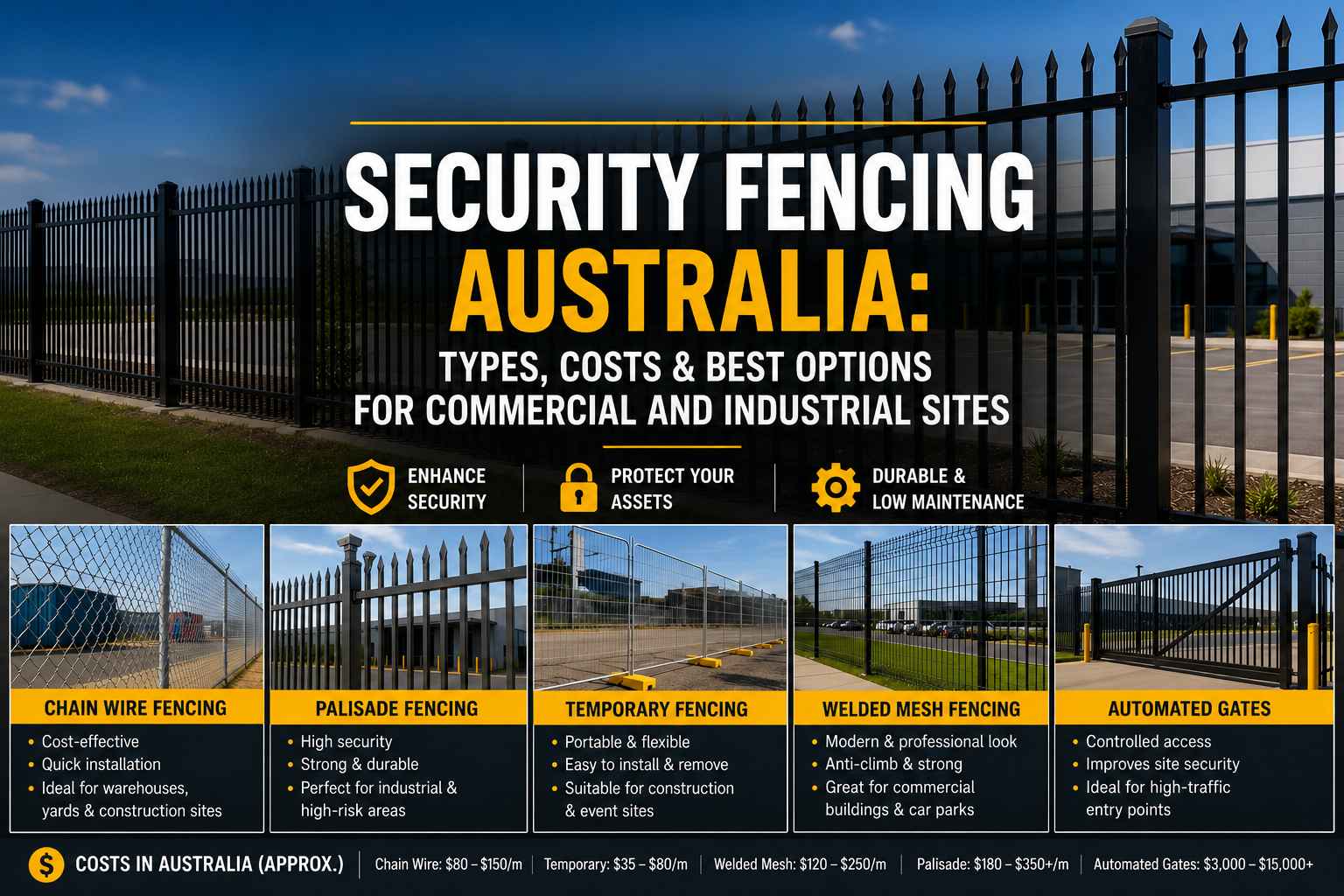
If you’ve spent any time around Australian development hubs lately, you’ve probably noticed that things are booming. But with big projects comes a big responsibility: keeping your gear, your people, and your perimeter safe. In the world of Australian infrastructure, security isn’t just about a “keep out” sign; it’s about physical barriers that actually do the heavy lifting.
Whether you’re managing a sprawling warehouse in Western Sydney or a high-rise project in Melbourne, getting your security fencing Australia strategy right is the difference between a smooth operation and a logistical nightmare. Let’s break down what you need to know about protecting your site without blowing the budget.
Do I Need Fencing for a Construction Site?
If you’re asking yourself, “Do I need fencing for my site?” The answer is a legally mandated “Yes.” In Australia, Workplace Health and Safety (WHS) regulations are pretty strict. You are responsible for ensuring that members of the public, especially kids or wandering pedestrians, don’t accidentally stumble into a hazardous area.
Beyond the legalities, a fence is your first line of defence. It marks your territory and tells opportunistic thieves that your site isn’t an easy target. Without it, your insurance premiums might skyrocket, or worse, your claim might be denied if something goes missing.
Prevent Theft on Construction Site: The “Layers” Approach
Theft is a massive drain on the Australian construction industry, with millions of dollars in tools and machinery vanishing every year. So, how do you prevent theft on construction site locations? You think in layers.
- The Perimeter: High-quality industrial fencing Australia wide acts as the primary deterrent.
- Access Control: Ensure gates are the strongest point of the fence, not the weakest. Use heavy-duty chains and smart locking systems.
- Visibility: Believe it or not, sometimes being able to see through the fence is better. It allows passing police patrols or security guards to spot unusual activity inside.
For major infrastructure projects, many developers turn to experts like Civilcraft. As a leading Australian civil construction company, Civilcraft understands that security fencing is just one piece of the puzzle in site management. We integrate robust fencing solutions into our broader project scopes to ensure that site integrity is never compromised from day one.
Best Fencing for Site Security: Choosing the Right Type
Not all fences are created equal. Depending on whether you’re looking for something permanent or just for the duration of a build, your options for security fencing Australia generally fall into three groups:
1. Chainwire (Cyclone) Fencing
- The bread and butter of industrial fencing Australia. It’s cost-effective, durable, and can be topped with barbed or razor wire for extra “bite.”
2. Pressed Spear Palisade Fencing
- If you want to send a message that says “Don’t even try it,” palisade is the way to go. These are those heavy-duty steel pickets with pointed tops. They are incredibly hard to climb and even harder to cut through.
3. Weldmesh Fencing
- This is a modern favourite for commercial sites. It looks a bit cleaner than chainwire and is made of thick steel wire welded at every intersection. It’s a great balance of aesthetics and “anti-climb” functionality.
How to Secure Construction Site Boundaries Effectively
If you’re wondering how to secure construction site perimeters effectively, it’s not just about the fence itself; it’s about the installation. A fence is only as strong as its footings.
On a long-term commercial project, you want your posts deeply recessed into concrete to prevent anyone from simply “lifting” the fence out of the way. Adding signage is another pro move. Warning signs about CCTV or “Authorised Entry Only” provide a psychological barrier that complements the physical one.
Temporary Fencing Cost Australia: What’s the Damage?
For most builders, “Temp Fence” is the go-to. But what is the temporary fencing cost businesses should expect? Generally, you’re looking at two options: renting or buying.
- Hiring: This is the most common route for construction site fencing. Prices usually start around $1.00 to $2.50 per meter per week, though this varies depending on the length of the contract and whether you need “extras” like shade cloth (for privacy) or bracing (for high-wind areas).
- Buying: If you have multiple projects lined up, buying your own panels can save you a fortune in the long run. A standard 2.4m panel with a concrete base and clamp can cost anywhere from $60 to $100 brand new.
Also Read:- Bitumen Repair in Australia: How to Fix Cracks, Potholes & Damaged Surfaces
The Civilcraft Standard
When dealing with complex civil works, companies like Civilcraft don’t just “throw up a fence.” They look at the terrain, the wind loads, and the specific security risks of the local area. Whether it’s protecting high-voltage equipment or securing a new roadworks site, their approach to industrial fencing Australia is about precision and durability.
Conclusion
Investing in high-quality security fencing Australia isn’t an “extra” cost; it’s an insurance policy for your peace of mind. From preventing kids from wandering into danger to stopping professional tool thieves in their tracks, the right fence keeps your project on track and your budget intact.
Whether you’re looking for the heavy-duty permanence of palisade or the quick-and-easy utility of construction site fencing, make sure you’re choosing a solution that meets Australian standards. Stay safe out there!
FAQs
Q:- How to secure construction site boundaries on a budget?
Ans:- The most cost-effective way is using standard chainwire or hired temporary fencing. Combine this with motion-activated solar lights to add a massive security boost without the need for expensive wiring.
Q:- Do I need fencing for construction site safety by law?
Ans:- Yes. Australian WHS laws require a “principal contractor” to ensure the site is secured from unauthorised access to prevent injury to the public.
Q:- What is the best fencing for site security against climbers?
Ans:- “Anti-climb” weldmesh or Palisade fencing are the winners here. They have narrow apertures or sharp tops that make it nearly impossible to get a foothold or handhold.
Q:- How much does temporary fencing cost in Australia?
Ans:- On average, hiring costs about $1–$2.50 per meter weekly. Buying your own panels usually pays for itself if your project lasts longer than 6–12 months.
Q:- Can I prevent theft on construction site locations with just a fence?
Ans:- A fence is a great start, but for total security, you should pair it with locked site boxes for tools, clear signage, and, if the budget allows, basic CCTV or remote monitoring.