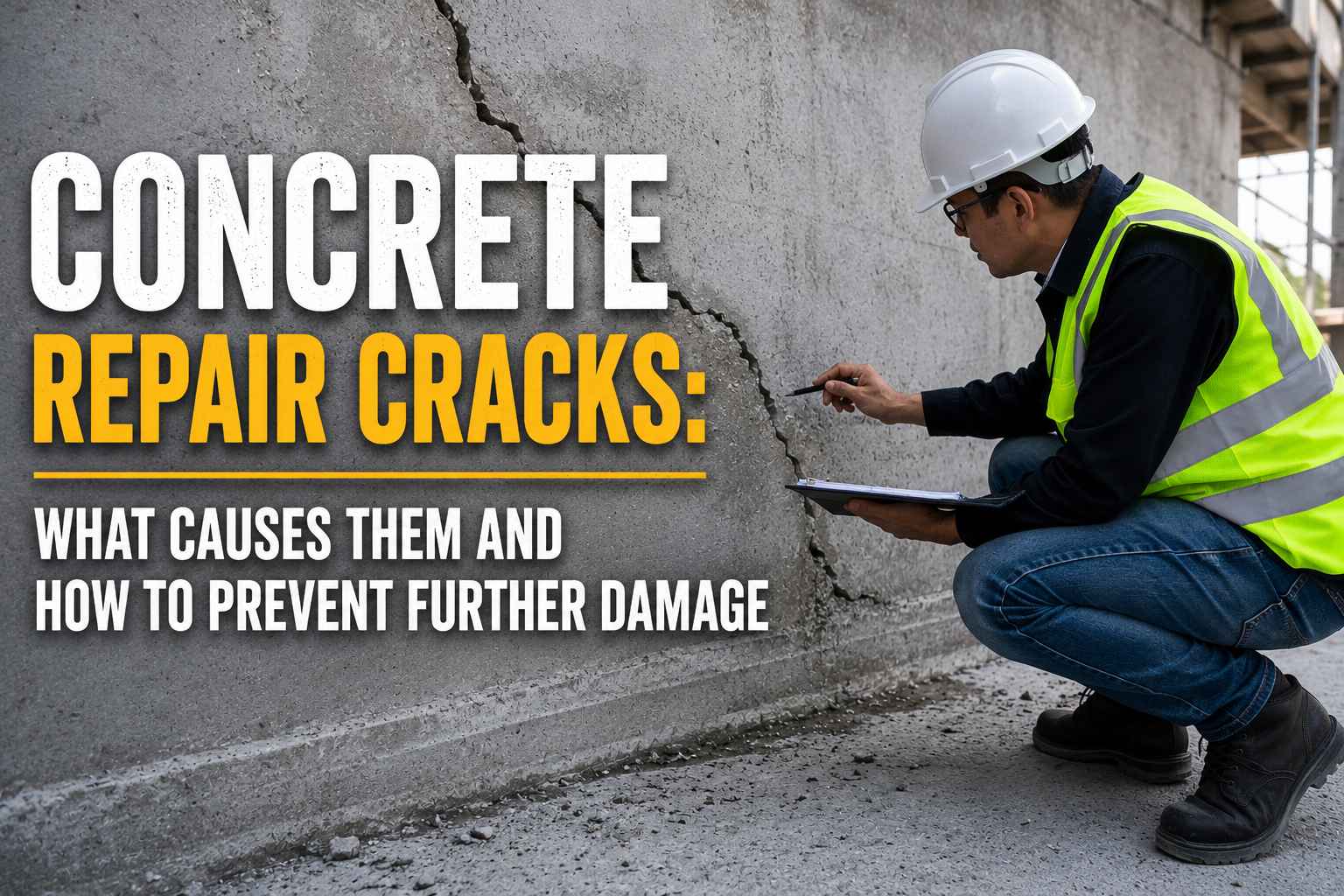
Seeing a fresh crack snaking across your driveway or patio is a bit of a heartbreaker. You spent the time and money to get that smooth, gray perfection, and now it looks like a giant spiderweb is taking over. But, relax, cracks are a natural part of concrete’s life cycle.
The trick is knowing when a crack is just a “beauty mark” and when it’s a cry for help. In this guide, we’re going to dive into the world of concrete repair cracks, why they happen, and how you can stop your pavement from turning into a jigsaw puzzle.
The Big Mystery: Why Does Concrete Crack After Installation?
It’s the question every homeowner asks: “I just poured this, so why is it already cracking?” Concrete is a bit like a moody teenager—it needs just the right environment to stay stable. Most of the time, the reason it cracks shortly after installation is shrinkage.
Concrete is full of water. As that water evaporates and the slab dries, it shrinks. If it dries too fast (especially on a hot Australian summer day), the tension becomes too much, and snap, you’ve got a hairline crack.
Other times, it’s about the “foundation.” If the soil underneath wasn’t compacted properly, the slab will settle unevenly. Think of it like trying to balance a plate on a pile of marshmallows; eventually, something is going to give.
Understanding the Damage: Are Concrete Cracks a Structural Problem?
Not all cracks are created equal. If you see a tiny, hair-thin line, it’s likely a “crazing” crack or a simple shrinkage issue. These are mostly a hit to your home’s curb appeal rather than a threat to the building. However, you should start paying attention if you notice:
- Vertical or Horizontal displacement: If one side of the crack is higher than the other.
- Rust stains: This suggests the internal steel reinforcement is starting to corrode.
- Width: If you can fit a coin (or worse, your pinky finger) in the gap.
In these cases, concrete surface damage is more than skin deep. Left alone, water will seep into those gaps, freeze, or cause the soil underneath to wash away, leading to a much more expensive headache down the road.
What is the Best Solution for Cracked Driveways?
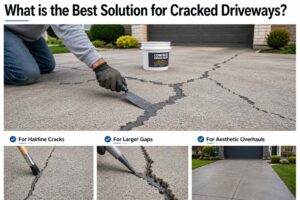
Driveways take a beating. Between the weight of your SUV and the constant sun exposure, they are prime targets for cracked concrete repair. The “best” solution usually depends on the size of the damage:
- For Hairline Cracks:- A high-quality liquid concrete filler or a masonry “crack stuffer” can seal the gap and prevent water from getting in.
- For Larger Gaps:- You might need a polymer-modified cement repair mortar. This stuff is designed to bond tightly to the old concrete and flex slightly with temperature changes.
- For Aesthetic Overhauls:- If the driveway is structurally sound but looks like a mess, a concrete resurfacing is the way to go. It’s like giving your driveway a “facelift” with a thin new layer of specialised concrete.
How Do You Repair Cracks in Concrete Permanently?
If you want a fix that actually lasts, you can’t just slap some caulk over the top and call it a day. A permanent repair requires a bit of “surgery.” The pros, like the team at Civilcraft, know that the secret to a lasting repair is preparation.
You have to “chase” the crack, which means using a grinder to widen it slightly into a V-shape. It gives the repair material more surface area to grip onto.
After cleaning out the dust and debris, you apply a high-strength epoxy or a specialised concrete patch. Civilcraft specialises in these high-stakes infrastructure and civil projects where “just okay” isn’t an option.
We understand that concrete repair cracks in a commercial or civil setting need to withstand massive pressure, so we use industrial-grade sealants and techniques that ensure the patch becomes one with the original slab.
Preventing Future Drama
While you can’t stop the earth from moving, you can give your concrete a fighting chance:
- Seal it:- Applying a high-quality sealer every 2–3 years keeps water and chemicals out of the pores.
- Manage Water:- Ensure your gutters and downspouts aren’t dumping water directly next to your concrete slabs.
- Mind the Roots:- If you have a massive gum tree growing two feet from your path, the roots will eventually win. Plan your landscaping accordingly!
Also Read:- Security Fencing Australia: Types, Costs & Best Options for Commercial and Industrial Sites
Final Thoughts
Concrete is tough, but it isn’t invincible. By catching surface damage early and using the right materials for concrete repair cracks, you can extend the life of your paths and driveways by decades.
And remember, for those big jobs where you need the heavy hitters, Civilcraft has the expertise to make sure the job is done right the first time. Keep it sealed, keep it clean, and don’t let those cracks get the better of you!
FAQs
Q:- Can I just use regular cement to fill a crack?
Ans:- Not really. Regular cement doesn’t have “bonding agents,” so it won’t stick to the old, dry concrete. It will likely just pop out the next time the temperature changes. Use a dedicated kit for concrete repair cracks instead.
Q:- How long does a concrete repair take to dry?
Ans:- Most DIY fillers are “touch dry” in about an hour, but you should wait at least 24 hours before driving a car over the repaired area.
Q:- Will the repair match my old concrete color?
Ans:- Usually, no. New concrete is darker than weathered, old concrete. If the color difference bothers you, consider staining or resurfacing the entire area after the cracks are filled.
Q:- Is it cheaper to repair or replace?
Ans:- Repairing is almost always significantly cheaper. However, if more than 30% of the slab is covered in deep cracks, replacement might be the more cost-effective long-term move.
Q:- Why did my crack come back after I fixed it?
Ans:- It usually happens if the “moving” cause wasn’t addressed. If the ground is still settling or sinking, the concrete will continue to crack, no matter how much filler you use. In these cases, you might need professional “slab jacking” or underpinning.