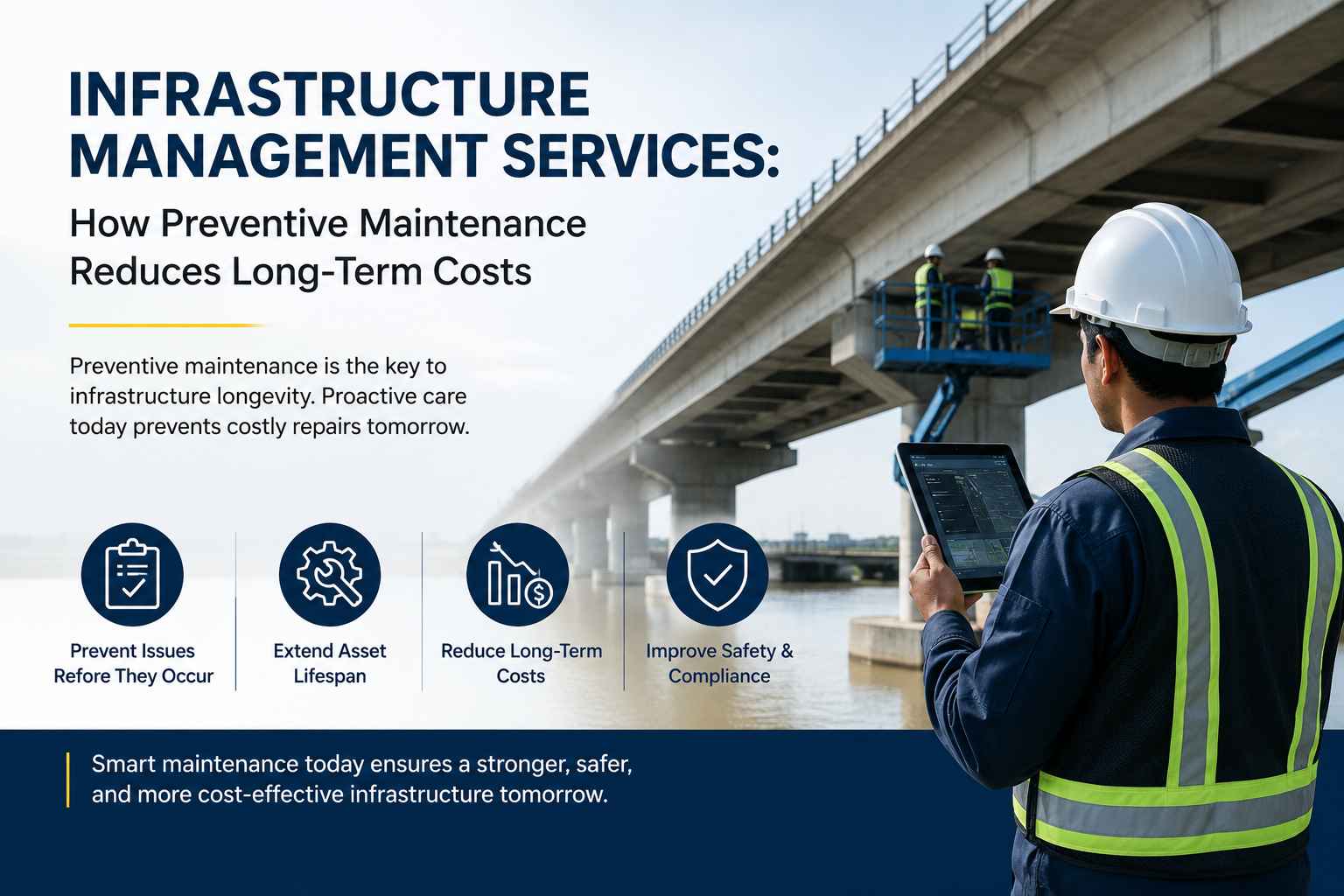
Nobody talks about infrastructure maintenance at dinner parties. But the moment a bridge closes unexpectedly, a stormwater drain floods a street, or a pothole swallows someone’s tyre, everyone’s suddenly very interested in who’s responsible for keeping things in shape.
The reality is that infrastructure management services are the quiet backbone of how Australia functions, from local council roads to large-scale civil assets. And when done right, they save an enormous amount of money over time.
What Are Infrastructure Management Services?
At its core, infrastructure management services cover the planning, maintenance, inspection, and long-term upkeep of physical assets: roads, drainage systems, bridges, retaining walls, footpaths, and more.
It’s not just about fixing things when they break. It’s about having a strategy so they don’t break in the first place. Think of it like your car. You can skip oil changes and ignore the warning lights, sure.
But eventually, you’re paying for a full engine replacement instead of an $80 service. The same logic applies to civil infrastructure, except the costs are multiplied by thousands, sometimes millions.
Why Preventive Maintenance Is the Smarter Play
There’s a reason “fix it before it breaks” has become standard thinking in asset-heavy industries. Reactive maintenance, waiting until something fails, is almost always more expensive than staying ahead of the problem.
Here’s a simple example: a small crack in a concrete path costs maybe a few hundred dollars to seal. Leave it for two years, water gets in, the base erodes, and now you’re looking at a full panel replacement.
That’s a tenfold cost increase, easy. Multiply that across an entire council’s worth of footpaths, and you’re talking about serious budget blowouts.
How Can Preventive Maintenance Reduce Repair Costs?
The answer is pretty simple: Early intervention is cheaper than crisis management. Regular inspections catch issues while they’re still minor. Scheduled servicing extends asset life significantly.
And documented condition assessments help prioritise spending so money goes where it’s actually needed, not just where things have already failed. For organisations managing large portfolios of assets, this isn’t just good practice, it’s financial common sense.
Why Councils Need to Take This Seriously
Local governments across Australia are under serious pressure. Ageing infrastructure, growing populations, tighter budgets, and increasing community expectations- it’s a tough combination. And the consequences of poor maintenance planning fall directly on ratepayers and residents.
Why is Infrastructure Maintenance Important for Councils?
As councils are legally responsible for the assets they own, the liability that comes with neglect is real. A poorly maintained footpath that causes a fall, or a drainage system that fails and floods private property, these aren’t just inconveniences.
They’re expensive, legal and reputational problems. Strong civil infrastructure maintenance programs give councils a defensible position.
They show due diligence, support long-term capital planning, and help communities trust that their rates are being spent wisely. It’s also increasingly expected by state governments when funding applications and audits are on the table.
It’s Not Just Councils — These Industries Need It Too

While local governments are the obvious example, the need for structured asset management services spans a much wider range of sectors.
- Utilities and government agencies maintaining access roads, embankments, and stormwater systems.
- Mining and resources companies managing remote infrastructure across large landholdings.
- Construction and civil contractors managing site infrastructure over long project lifespans.
- Transport authorities responsible for roads, bridges, and drainage networks.
- Property developers dealing with shared civil assets in subdivisions.
The common thread? Any organisation with significant physical assets needs a system, not just a spreadsheet, for tracking conditions, planning interventions, and managing risk over time.
What Good Infrastructure Management Actually Looks Like in Practice
It’s worth getting specific here, because “infrastructure management” can sound vague. In practice, it usually involves:
- Asset registers — a living database of what you own, where it is, how old it is, and what state it’s in.
- Maintenance schedules — planned interventions based on condition data, not just reactive callouts.
- Reporting and documentation — so decision-makers have the information they need to allocate budgets effectively.
- Lifecycle cost modelling — projecting out what assets will cost over the next 10, 20, or 30 years, so capital planning isn’t done blind.
- Regular condition assessments — getting qualified professionals on the ground to inspect assets and rate their condition against a standard framework.
When these pieces work together, organisations stop lurching from emergency to emergency and start making proactive, evidence-based decisions. That shift alone can dramatically reduce long-term expenditure.
How Civilcraft Fits Into the Picture
This is where a specialist provider makes a real difference. Civilcraft is an Australian company that works alongside councils and project managers to deliver practical infrastructure management services, grounded in real-world civil knowledge, not just theory.
- Our approach combines on-ground condition assessments, detailed reporting, and strategic maintenance planning to help clients get ahead of asset deterioration rather than constantly playing catch-up.
- Our team understands Australian standards, local government requirements, and the practical realities of working across regional and metropolitan environments.
- Whether it’s a scheduled maintenance program, a condition audit of existing assets, or support with long-term asset management planning, Civilcraft brings the kind of hands-on expertise that translates directly into cost savings and reduced risk for our clients.
Also Read:- Line Marking Services: Why Clear Markings Improve Safety and Traffic Flow
The Bottom Line
Cutting maintenance budgets might look like a win in the short term, but it almost always costs more later. Australia’s infrastructure stock is ageing, and the gap between what needs to be done and what’s actually being spent is widening in many jurisdictions.
The organisations that are doing it well, managing their assets proactively, scheduling maintenance before failure, and treating infrastructure as a long-term investment, are the ones avoiding the nasty surprises.
And with the right partner offering the best infrastructure management services, it doesn’t have to be complicated.
FAQs
Q:- What are infrastructure management services?
Ans:- These are services that cover the planning, inspection, maintenance, and long-term management of physical assets like roads, drainage, and bridges.
Q:- What industries need infrastructure management solutions?
Ans:- Councils, transport authorities, construction contractors, developers, utilities, and mining companies and any sector managing significant civil assets.
Q:- Does preventive maintenance actually save money?
Ans:- Yes, consistently. Fixing small issues early costs a fraction of what full repairs or replacements do once problems escalate.
Q:- How often should civil assets be inspected?
Ans:- It depends on the asset type and condition, but most best-practice frameworks recommend formal assessments every one to three years.
Q:- Can small councils afford structured asset management?
Ans:- Absolutely. Scalable programs exist for organisations of all sizes, and the cost of a maintenance program is almost always lower than the cost of deferred repairs.