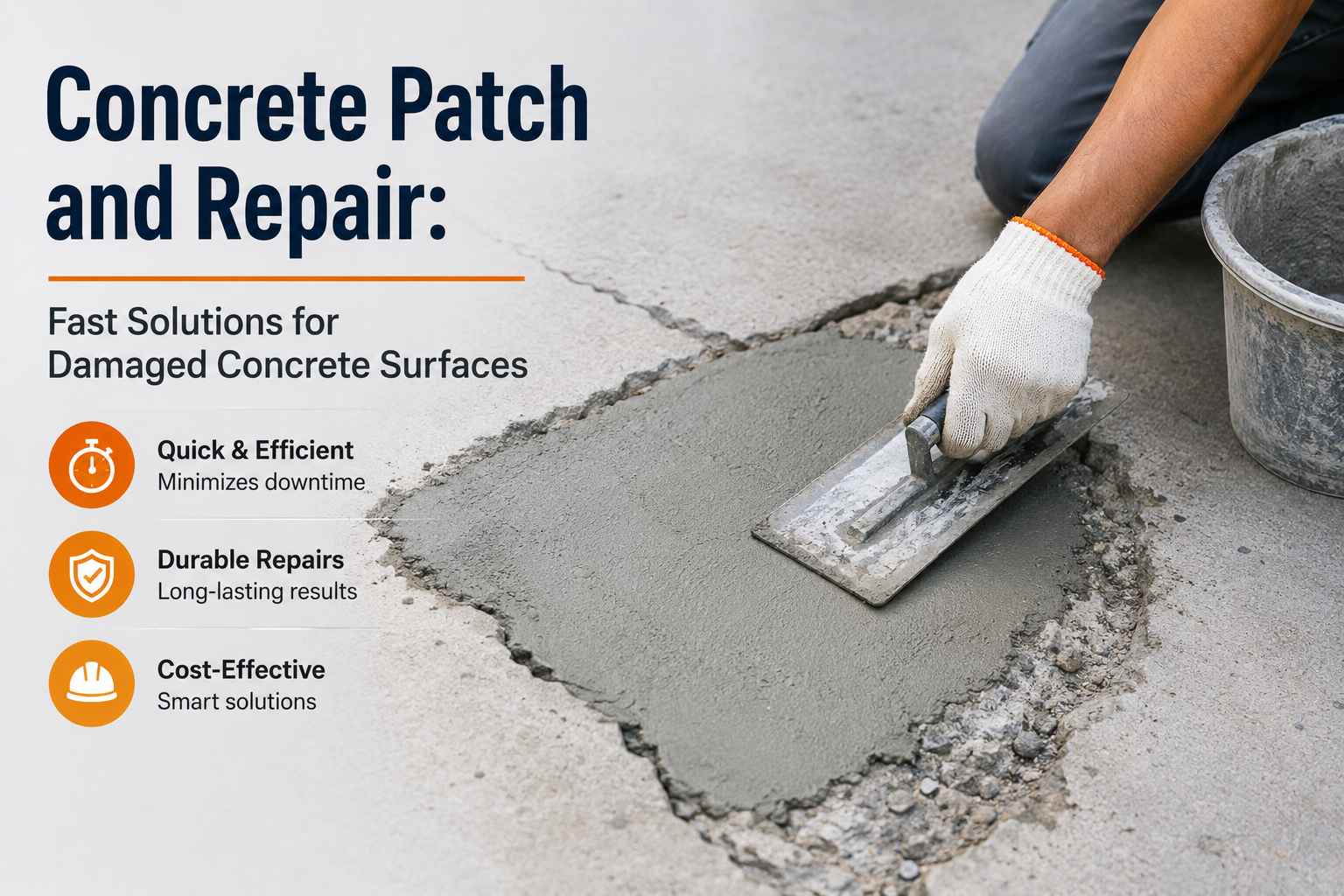
Concrete is one of those things most people don’t think about until it starts cracking. A small crack in a driveway. A chipped warehouse floor. A damaged pathway outside a commercial building.
At first, it seems like a minor issue. Then a few months later, the crack gets wider, water gets in, and the repair bill gets bigger. That’s why acting early matters.
In many cases, a proper concrete patch and repair job can restore the surface quickly and prevent much more expensive work later on. The key is knowing when a repair is enough and when the damage has gone beyond a simple fix.
Why Concrete Gets Damaged in the First Place
Concrete is tough, but it isn’t indestructible. Over time, surfaces are exposed to:
- Weather changes
- Water penetration
- Ground movement
- Chemical exposure
- Heavy vehicle traffic
- Age-related wear and tear
Eventually, these factors start showing up as cracks, surface scaling, holes, or uneven sections. The good news? Many of these problems can be fixed without completely replacing the slab.
What is the Best Material for Concrete Patch Repair?
The answer depends on the type of damage. For small cracks and surface defects, polymer-modified repair compounds are commonly used because they bond well to existing concrete and provide good durability.
- For deeper repairs, contractors often use high-strength repair mortars specifically designed for structural applications. The goal isn’t simply to fill the damaged area. The repair material must bond properly and withstand future stress.
- That’s why professional assessment is important. Using the wrong repair product may look good initially, but it will fail much sooner than expected.
Can Old Concrete Be Patched Successfully?
- Absolutely. In fact, a lot of successful concrete patch and repair projects involve older concrete surfaces. Age alone doesn’t mean concrete needs replacing.
- Many older driveways, pathways, warehouse floors, loading areas, and commercial slabs can be repaired successfully if the underlying structure remains sound.
- The important question isn’t how old the concrete is. The important question is whether the damage is cosmetic, surface-level, or structural. A well-executed repair can often extend the life of an existing surface for many years.
Resurfacing Repair: When a Simple Patch Isn’t Enough
Sometimes damage isn’t limited to one small area. You might have multiple cracks, surface wear, discoloration, or widespread deterioration across the slab.
That’s where concrete resurfacing repair becomes a practical solution. Instead of patching dozens of individual spots, resurfacing creates a new layer over the existing concrete. This approach can:
- Extend service life
- Improve appearance
- Restore surface strength
- Cover minor imperfections
- Reduce replacement costs
For commercial properties, especially, resurfacing often delivers a cleaner and more uniform finish compared to multiple visible patch repairs.
How Long Does Concrete Patch Repair Last?
This is probably the question property owners ask most often. The honest answer? It depends on the quality of the repair and the condition of the existing concrete. A properly completed repair can last for many years.
Factors that Influence Longevity Include:-
- Traffic levels
- Weather exposure
- Surface preparation
- Drainage conditions
- Repair materials used
- Quality of workmanship
A quick DIY patch might last a year or two. A professionally completed repair can often perform much longer under normal conditions. That’s why cutting corners ends up costing more later.
Why Fast Repairs Save Money
Many people delay repairs because the damage doesn’t seem urgent. Unfortunately, concrete rarely gets better on its own.
- Water enters cracks.
- Heavy traffic adds stress.
- Freeze-thaw cycles increase damage.
- Small defects gradually become larger problems.
A repair that might cost a few hundred dollars today can eventually become a replacement project costing thousands. That’s why early intervention usually delivers the best value.
How Civilcraft Can Help
When dealing with damaged concrete, choosing the right contractor is just as important as choosing the right repair method. That’s where Civilcraft comes in.
Civilcraft specialises in civil construction, infrastructure, and concrete repair solutions across a wide range of commercial and industrial projects. Our team helps assess damage properly before recommending the most suitable solution, whether that’s:
- Crack repairs
- Concrete patching
- Surface restoration
- Structural remediation
- Preventative maintenance
- Concrete resurfacing repair
One thing property owners appreciate is getting practical advice instead of being pushed toward unnecessary replacement work.
- Sometimes a repair is enough.
- Sometimes replacement is unavoidable.
- Sometimes resurfacing makes more sense.
The key is understanding which option delivers the best long-term outcome.
When Should Damaged Concrete Be Replaced Instead of Repaired?
Not every slab can be saved. There are situations where repairs become temporary fixes rather than long-term solutions. Replacement may be necessary when:
- Large sections have failed structurally
- Reinforcement corrosion is extensive
- Multiple repairs have already failed
- Severe settlement has occurred
- Safety risks are present
In these situations, continuing to patch damaged concrete may simply delay the inevitable. A professional inspection helps determine whether repair or replacement is the smarter investment.
Also Read:- Pressure Cleaning Concrete: Remove Stains, Dirt and Slippery Build-Up Effectively
The Bottom Line
Not every crack means you need a new slab. In many cases, timely concrete patch and repair work can restore damaged surfaces, improve appearance, and significantly extend the life of existing concrete.
Whether it’s a driveway, warehouse floor, commercial facility, or industrial site, addressing problems early leads to better results and lower costs.
The important thing is not waiting until minor damage becomes major damage. Because with concrete, small problems rarely stay small for long.
FAQs
Q:- What is concrete patch repair?
Ans:- Concrete patch and repair is the process of fixing cracks, holes, chips, and other damaged areas to restore the strength and appearance of an existing concrete surface.
Q:- Can old concrete be repaired?
Ans:- Yes, old concrete can often be repaired successfully if the underlying structure is still stable and the damage is not severe.
Q:- Is resurfacing cheaper than replacement?
Ans:- In many cases, concrete resurfacing is more cost-effective than full replacement because it restores the surface without removing and rebuilding the entire slab.
Q:- How long do concrete repairs last?
Ans:- A properly completed concrete repair can last for many years, depending on the repair method, materials used, and the amount of wear the surface experiences.
Q:- When should concrete be replaced?
Ans:- Concrete should be replaced when there is significant structural damage, severe settlement, extensive cracking, or when repairs are no longer a practical long-term solution.