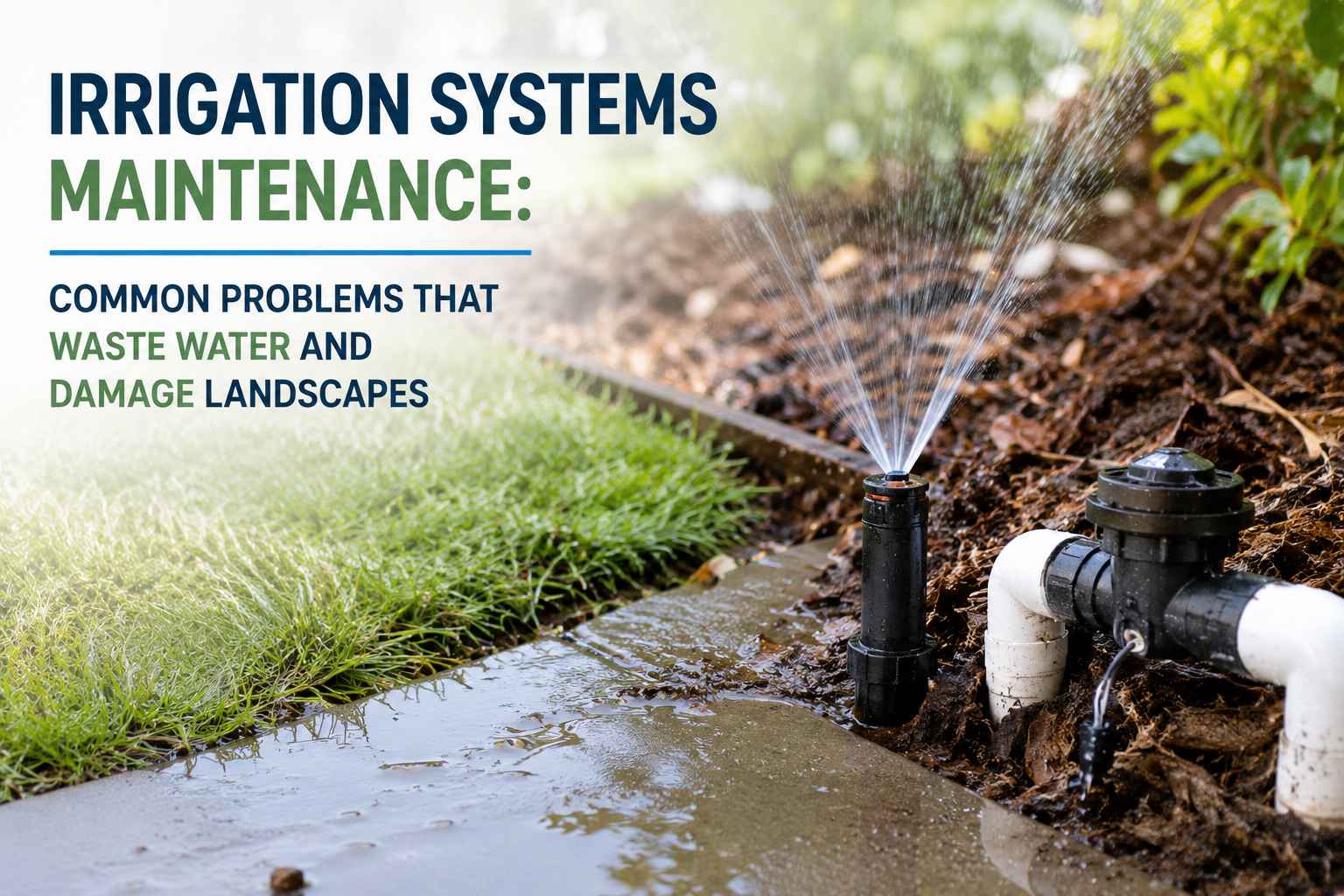
If you’ve stepped outside lately, you already know the Australian sun doesn’t mess around. Whether you are managing a sprawling corporate park, a local sporting oval, or a beautifully landscaped property, keeping that greenery alive requires a serious amount of water.
But a lot of that precious water never actually reaches the roots. Without regular irrigation systems maintenance, an underground watering setup can quickly transform from a lifesaver into a hidden money pit.
From cracked pipes under a sunbaked lawn to clogged nozzles and misaligned spray patterns, minor glitches can quietly waste thousands of litres of water and leave your turf looking patchy and parched.
Let’s break down the most common irrigation headaches that lead to water waste and landscape damage across Australia, and how proactive care keeps your grounds pristine.
The Hidden Costs of Deferred Irrigation Maintenance
In Australia, water is one of our most strictly managed resources, and commercial water rates aren’t getting any cheaper. When a system is left to run on autopilot, two major issues usually collide:
- The Water Waste Multiplier: A single broken sprinkler head can leak or misdirect over 90,000 litres of water in just one season. Multiply that across a large commercial layout, and your next utility bill will deliver some serious sticker shock.
- Landscape Destruction: Overwatering suffocates soil, leading to root rot, fungal outbreaks, and drowned turf. On the contrary, underwatering creates unsightly brown patches that can ruin your property’s curb appeal and require expensive re-turfing.
To keep your grounds healthy without draining your budget, you need to catch these issues before they turn into emergencies.
4 Common Problems That Waste Water and Damage Landscapes
1. The Dreaded Pressure Drop
- Ever noticed a line of sprinklers that used to spray a robust mist now just feebly sputtering water onto the dirt? You can see farmers asking, “Why is my irrigation system losing pressure?“ A sudden loss of pressure is almost always a sign of an underground issue.
- The most common culprit is a line break—usually caused by shifting soil, invasive tree roots, or someone accidentally nicking a pipe during a landscaping project.
- It can also be caused by a malfunctioning backflow preventer or a failing main valve that isn’t opening fully.
- When pressure drops, the system can’t achieve full head-to-head coverage. It leaves large “dry zones” in your landscape while the area directly surrounding the underground leak becomes a muddy, waterlogged swamp.
2. Leaky, Weeping Sprinkler Heads
- A system shouldn’t be dripping water when it’s supposed to be turned off. So, what causes sprinkler systems to leak? Constant weeping or puddling around the base of a sprinkler head is usually caused by two things: a damaged wiper seal inside the head, or “low head drainage.”
- Low head drainage happens when a system is installed on a slope; when the zone shuts off, all the residual water left in the pipes naturally drains out of the lowest head.
- To fix this, professional irrigation repair services will typically install check valves on the lower heads. It traps the water inside the lines between cycles, preventing erosion and stopping constant water waste.
3. Clogged Nozzles and “Overspray”
- Australia’s soil and bore water can be incredibly harsh on fine machinery. Over time, tiny grains of sand and mineral scale build up inside sprinkler nozzles.
- It distorts the spray pattern, creating dry rings or misting so fine that the wind carries the water away before it ever hits the grass.
- Similarly, if your heads have drifted out of alignment, you might be beautifully irrigating your concrete pathways, retaining walls, or car parks instead of your garden beds.
4. Controller Chaos and Outdated Schedules
- If your irrigation controller is still set to its mid-summer schedule when autumn rains hit, you are literally flushing money down the drain. Controllers require seasonal recalibration.
- Outdated backup batteries can also wipe your custom settings after a standard power flicker, resetting the system to a generic, inefficient factory default.
How Smart Commercial Properties Stay Efficient
Knowing the problems is only half the battle. To truly protect your budget and your grass, you have to look at the bigger picture of resource management.
How can I reduce water waste in irrigation systems?
- The absolute best way to cut down on waste is to upgrade to smart irrigation technology. Modern commercial systems utilise weather-based smart controllers (smart ET controllers) and soil moisture sensors.
- Instead of running on a rigid timer, these systems check local Australian weather feeds in real-time. If it rained heavily in Sydney or Melbourne last night, the system automatically skips its morning cycle.
- Additionally, switching high-evaporation spray zones to sub-surface drip irrigation ensures that water is delivered directly to the root zone, completely eliminating wind drift and evaporation loss.
Partnering with Civilcraft for Complete Infrastructure Care
For major commercial, industrial, and public sector properties, irrigation doesn’t exist in a vacuum; it is part of a broader civil ecosystem that includes stormwater management, pavement, and landscape structures. That’s where Civilcraft comes in.
As a trusted name in comprehensive civil construction and asset maintenance across Australia, Civilcraft understands how underground utilities interact with your broader property footprint.
Integrating your professional sprinkler system maintenance with experienced civil contractors ensures that line repairs, drainage upgrades, and landscape reinstatements are handled seamlessly without disrupting your daily operations or damaging surrounding infrastructure.
Also Read:- Concrete Patch and Repair: Fast Solutions for Damaged Concrete Surfaces
Concluding Statement
Need to protect your commercial landscape and rein in your utility costs? Connect with a team that understands local conditions, civil infrastructure, and precision irrigation systems maintenance to get your system running flawlessly.
FAQs
Q:- How often should irrigation systems be serviced?
Ans:- Commercial systems should be comprehensively serviced at least four times a year, ideally at the start of each season. It allows tech experts to adjust run times to match changing seasonal evaporation rates and catch minor wear-and-tear before it leads to system failures.
Q:- Can a minor leak really affect my commercial water bill that much?
Ans:- Yes, absolutely. A single stuck-open valve or a fractured lateral line running undetected underground can waste tens of thousands of litres per week, rapidly inflating your commercial water utility charges.
Q:- Why are my sprinkler heads misting instead of spraying?
Ans:- Misting indicates that your water pressure is too high. When water is forced out at excessive pressure, it turns into a fine fog that evaporates instantly in the Australian heat. Installing pressure-regulating heads solves this instantly.
Q:- What is the advantage of subsurface drip irrigation?
Ans:- Subsurface drip lines apply water directly underneath the soil layer. Because the water never hits the open air, evaporation loss is slashed by up to 50%, making it highly effective for windy areas or garden beds.
Q:- Should I blow out my lines for winter in Australia?
Ans:- Unlike parts of North America or Europe, most populated regions of Australia do not experience the deep, prolonged ground freezes that require full system “blowouts.” However, winter is the perfect time to shut down unnecessary zones and perform deep component overhauls.