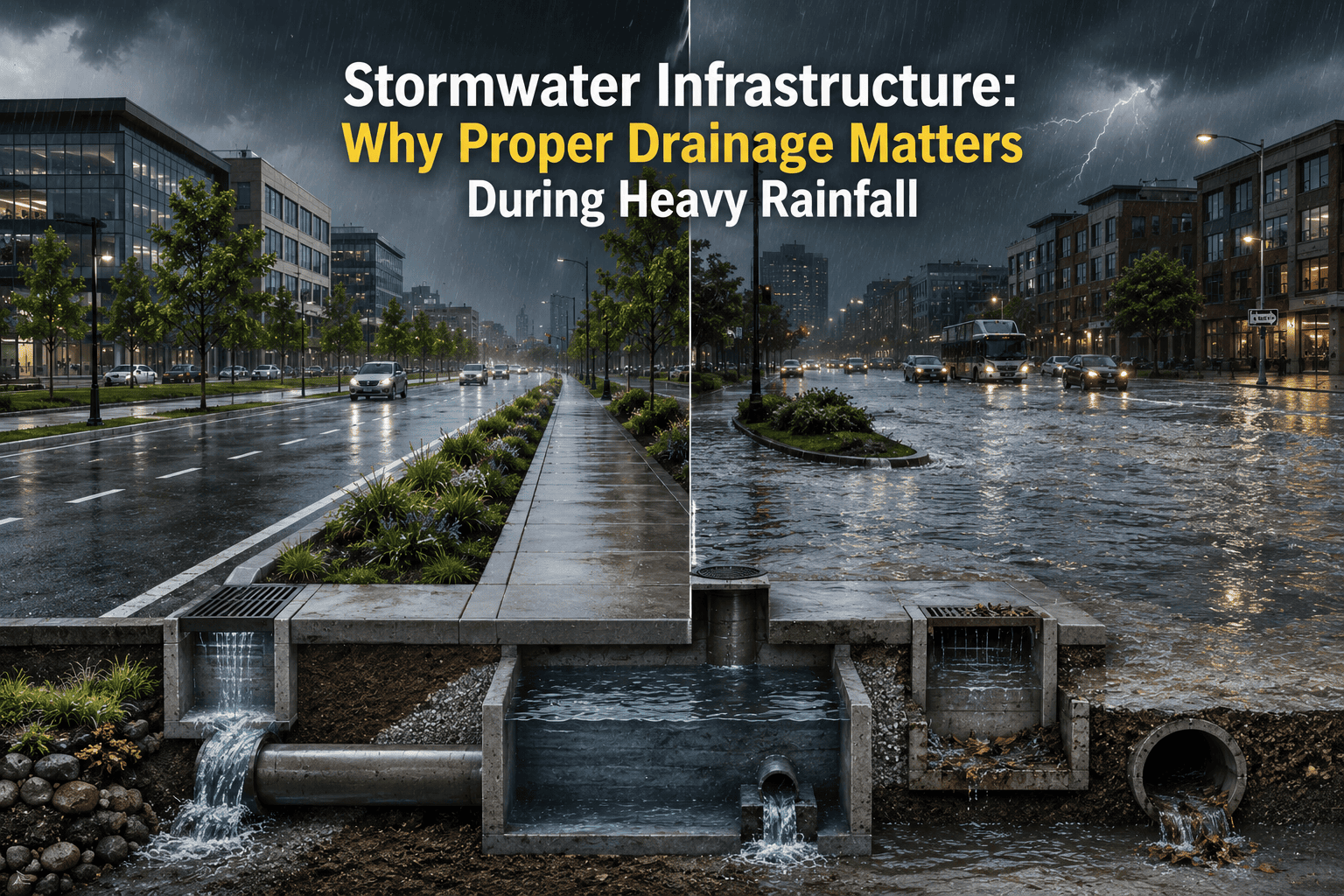
We’ve all watched it happen. You’re sitting inside, listening to the sound of torrential rain slamming against the roof, and within minutes, the street outside starts looking less like a road and more like a raging river. In Australia, weather extremes are just part of the package deal.
We bounce from bone-dry droughts to intense, sudden downpours that drop a month’s worth of rain in a single afternoon. When that sky opens up, there is an invisible network under our feet doing some serious heavy lifting. We are talking about stormwater infrastructure.
It’s one of those things you completely forget exists until it stops working. But having robust, well-designed stormwater drainage systems isn’t just about avoiding a soggy lawn; it’s an absolute necessity for keeping our communities safe, dry, and structurally sound.
Why is Stormwater Management Important in Australia?
Australia’s climate presents a very unique set of challenges for engineers and urban planners. Because our landscapes alternate between long, dry spells and sudden, violent deluges, our soil often can’t absorb water quickly enough when a massive storm hits.
In built-up urban areas, where concrete, asphalt, and rooftops cover the ground, the water has nowhere to go. Without a highly efficient water management infrastructure in place, urban areas would completely flash flood every single time a storm rolled through.
Proper management ensures that rainwater is captured, channeled safely away from homes, treated to remove pollutants, and directed back into our waterways without causing environmental or structural chaos. It’s the frontline defense for our cities against the unpredictable forces of nature.
What Causes Stormwater Drainage Failure?
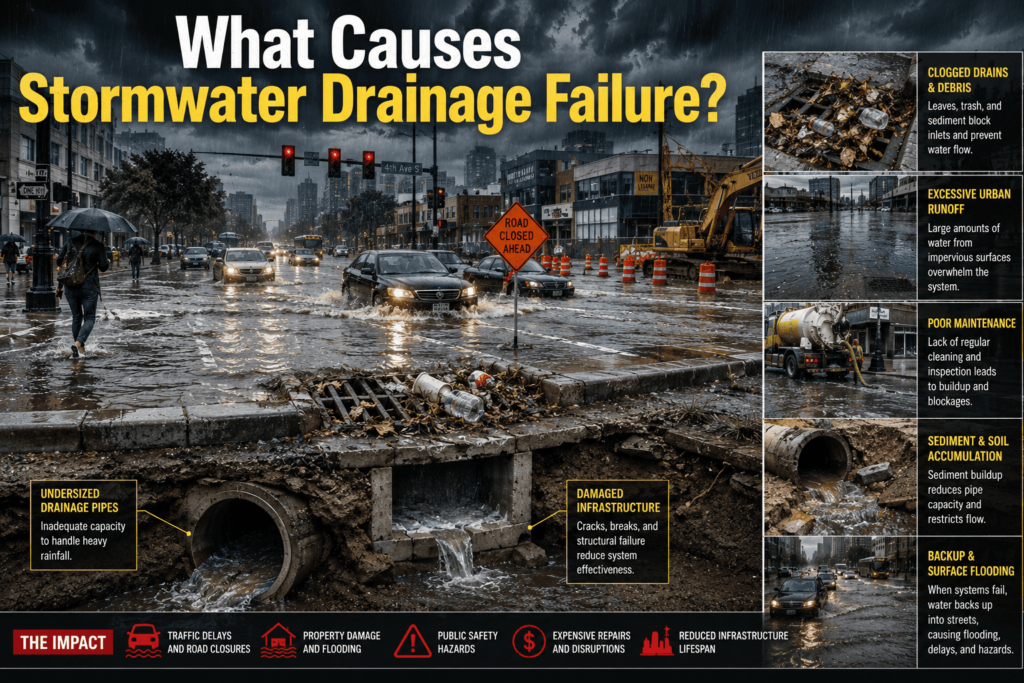
When a drainage system fails during a heavy downpour, the results are instant and incredibly messy. But what actually causes these systems to give up when we need them most? It usually comes down to three main culprits:
- Undersized Pipes: Many older Australian suburbs are still relying on pipes designed decades ago. As cities grow and more concrete is poured, the sheer volume of runoff increases, completely overwhelming the old system’s capacity.
- Structural Collapse: Ground movement, heavy vehicle traffic overhead, and invasive tree roots can crack, shift, or completely crush underground pipes, stopping water dead in its tracks.
- Debris and Silt Accumulation: Leaves, twigs, plastic trash, and construction silt get washed into grates, building up over time until the pipe is choked.
Also Read – Concrete Restoration: How to Bring Old and Damaged Surfaces Back to
How Can Blocked Drains Damage Infrastructure?
It’s easy to think a blocked drain is just a temporary problem that will clear up once the rain stops. But when water gets backed up because of a failure in stormwater drainage, it doesn’t just sit there quietly—it actively destroys things.
When water can’t flow through its designated pipes, it finds the path of least resistance. It pools next to roads, seeps under pavements, and saturates the sub-grade soil. It softens the foundation beneath our infrastructure.
Over time, this trapped water causes roads to crack, creates dangerous potholes, triggers land structural shifts, and can even compromise the concrete foundations of commercial buildings. The financial cost of repairing this hidden water damage completely dwarfs the cost of maintaining a clear drain.
How Often Should Stormwater Systems Be Inspected?
To prevent minor blockages of stormwater infrastructure from turning into catastrophic failures, regular check-ups are non-negotiable. Ideally, asset managers and local councils should arrange for comprehensive stormwater inspections at least once a year, preferably right before the storm or wet season kicks off.
Additionally, an immediate inspection should always be triggered after any unusually severe weather event to ensure no major structural shifts or massive debris blockages occur. Catching a cracked pipe or a buildup of silt early means you can fix it with routine maintenance rather than an expensive, emergency excavation down the line.
Also Read – Irrigation Systems Maintenance: Common Problems That Waste Water and Damage Landscapes
Shielding Our Communities: How Civilcraft Can Help
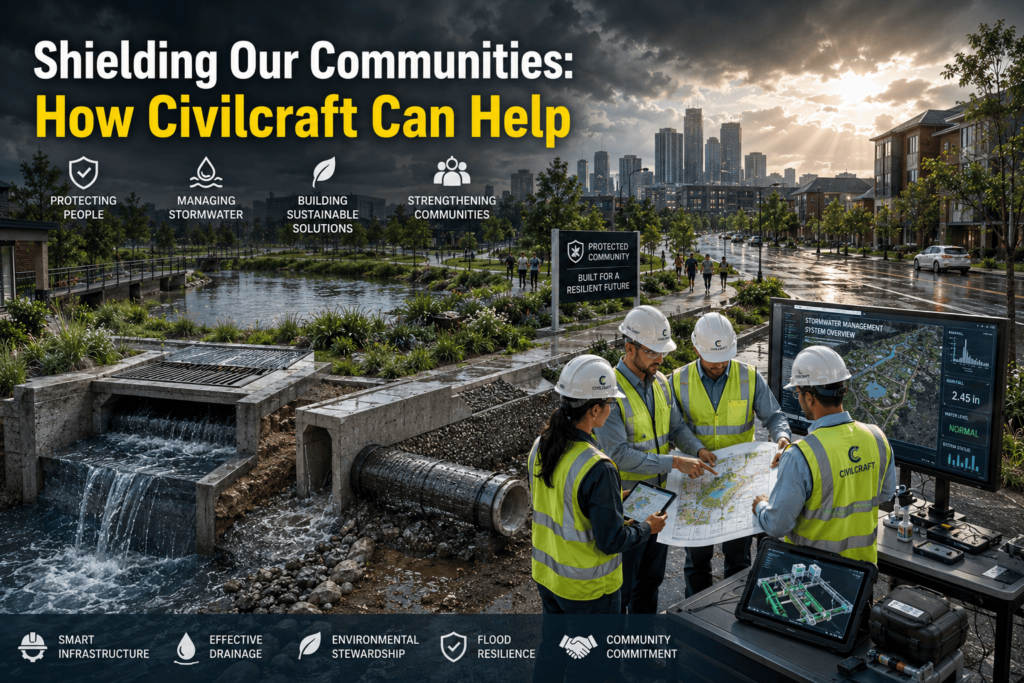
Designing, building, and maintaining robust stormwater infrastructure isn’t a DIY job; it requires civil engineering expertise and heavy-duty capabilities. That is exactly where Civilcraft comes into action.
Civilcraft specialises in delivering top-tier civil construction and infrastructure solutions tailored specifically to withstand Australia’s brutal weather cycles.
Whether it’s upgrading outdated council drainage networks, installing massive gross pollutant traps to keep waterways clean, or constructing high-capacity pits and pipe systems for commercial developments, Civilcraft has the experience to get it done right.
We don’t just lay pipes; we analyse the landscape to build resilient, long-lasting infrastructure that keeps communities safe and dry, even when the worst of the elements strike.
Final Thoughts
Ultimately, investing in robust stormwater infrastructure is the only way to safeguard our communities against unpredictable, heavy downpours. Contact the civil engineering experts at Civilcraft today to ensure your next drainage project is built to handle the Australian elements!
FAQs
1. What is the difference between a sewer and a stormwater drain?
Sewer systems carry wastewater from toilets, sinks, and showers directly to a treatment plant. Stormwater drains, on the other hand, are designed solely to collect rainwater runoff from roofs and roads and carry it directly out to local creeks, rivers, and the ocean.
2. Can tree roots really break underground concrete stormwater pipes?
Absolutely. Tree roots are incredibly smart—they can sense the moisture leaking from tiny cracks or joints in a pipe. Once they find a way in, they grow rapidly inside the pipe, creating a massive, hairy web that traps debris and completely blocks water flow.
3. Who is responsible for maintaining stormwater infrastructure?
Generally, local councils are responsible for maintaining public street drains, main pipelines, and large pits. However, property owners are completely responsible for the maintenance of all downpipes, gutters, and private drainage pipes located within their property boundaries.
4. What are gross pollutant traps (GPTs)?
GPTs are specialised physical barriers built into stormwater networks. They act like giant colanders, catching large pieces of trash, plastic bottles, leaves, and shopping trolleys before they can wash out into our beautiful natural rivers and oceans.
5. How do engineers determine what size stormwater pipes to use?
Engineers look at historical weather data to calculate what they call a “1-in-20-year” or “1-in-100-year” storm event. They then calculate the total surface area of roofs and roads in the catchment zone to ensure the pipes are wide enough to handle that massive volume of water.