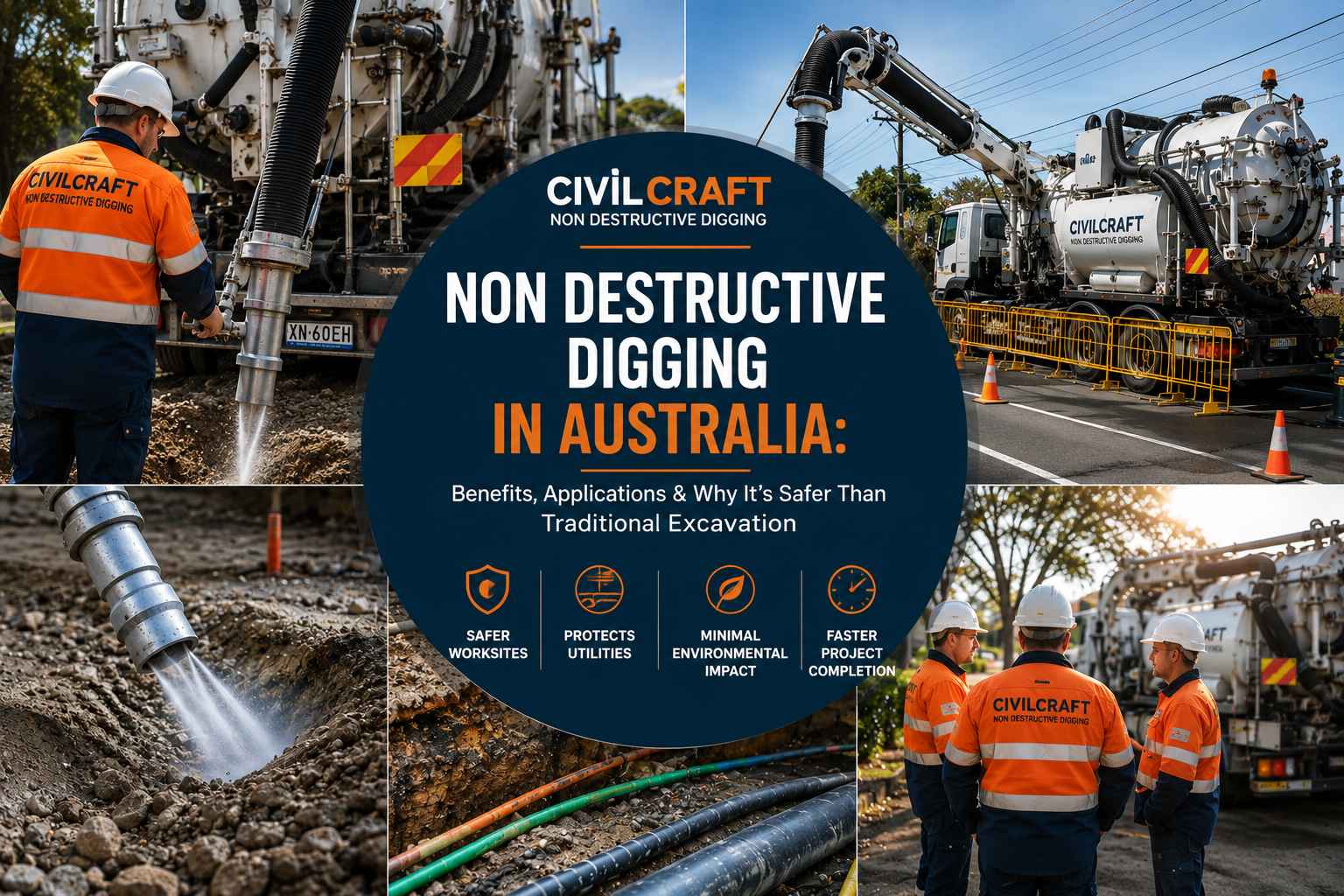
Have you ever walked past a major construction site or roadwork project in Australia and noticed a massive truck using a giant hose to suck up dirt instead of an excavator digging it up?
It looks a bit strange at first—like someone trying to vacuum their front yard—but you are actually watching one of the biggest revolutions in modern construction: Non Destructive Digging (NDD).
For decades, the standard way to dig a hole was to bring in a massive excavator or a couple of blokes with shovels and hope for the best. But under Australia’s streets lies a massive, tangled web of fiber-optic cables, gas lines, high-voltage power grids, and water mains.
Hitting just one of these can cause massive utility blackouts, cost thousands of dollars in repairs, and put workers’ lives at risk.
If you want to get a project done safely without destroying hidden infrastructure, turning to non destructive digging Australia wide is the smartest move you can make. Let’s break down exactly what this technology is, how it works, and why it is rapidly becoming the gold standard across the country.
What is non destructive digging and how does it work?
To put it simply, non destructive digging—often called hydro excavation or vacuum excavation—is a process that uses high-pressure water combined with a powerful vacuum system to safely remove soil.
Instead of sharp steel teeth ripping through the earth, the process uses a specialized water lance to blast a precise stream of water onto the ground. This water quickly turns the hard, compacted dirt into a soft slurry or mud.
Simultaneously, a massive vacuum hose positioned right above the excavation point sucks that mud directly into a holding tank on the back of a truck. What makes NDD truly brilliant is its selectivity.
While the high-pressure water effortlessly cuts through clay, rock, and tightly packed soil, it is completely harmless to tougher materials like plastic conduits, copper pipes, or rubber tree roots. It strips away the earth, leaving the hidden utilities completely exposed and entirely undamaged.
Why is non destructive digging safer than traditional excavation?
When you compare NDD to traditional mechanical digging, the safety benefits are night and day. There are three major reasons why non destructive digging Australia operators favor this method over traditional excavation:
1. Eliminating Asset Damage (The “Dial Before You Dig” Safety Net)
Even if you check your Before You Dig Australia (BYDA) plans diligently, those maps aren’t always 100% accurate. Traditional excavator buckets can slice through a gas main or shatter a fiber-optic bundle in a fraction of a second. Because NDD only displaces the soil, it eliminates the risk of utility strikes completely.
2. Keeping Workers Out of the Danger Zone
Traditional trenching often requires workers to jump down into deep, narrow holes with shovels to manually clear away dirt around pipes. This exposes them to dangerous trench cave-ins or accidental electrocution if they strike a live line. NDD is operated completely from the surface using wireless remotes and long hoses, keeping workers entirely out of harm’s way.
3. Precision and Micro-Excavation
An excavator bucket is a blunt instrument; it has to dig a massive hole just to find one small pipe. NDD can dig a tiny, surgical hole—often called a “pothole”—no wider than a dinner plate straight down to the exact spot where a utility is buried. This means less surface destruction, less traffic disruption, and far less clean-up afterward.
When should non destructive digging be used in Australia?
While NDD is an incredible tool, it doesn’t mean we are throwing away standard excavators for good. Mechanical digging is still great for moving massive amounts of clear, open earth where nothing is buried underneath. However, you should absolutely use non destructive digging in Australia for the following applications:
- Utility Locating and Potholing: Visually verifying the exact depth, direction, and size of buried cables before major construction work begins.
- Civil Infrastructure & Roadworks: Working in highly congested urban environments like Sydney, Melbourne, or Brisbane, where the ground is a maze of old and new pipes.
- Tree Root Aeration and Preservation: Clearing away soil around the roots of protected native trees without damaging the root systems, allowing arborist work or pipe installations to happen safely.
- Remote Excavation: When a digging site is inside a tight alleyway, behind a building, or under a low ceiling where a massive machine simply cannot physically fit. The vacuum hoses can easily extend over 100 meters away from the actual truck.
Also Read:- Stormwater Infrastructure: Why Proper Drainage Matters During Heavy Rainfall
Conclusion
At the end of the day, non destructive digging in Australia is all about working smarter and safer instead of just pushing harder. By swapping out heavy steel buckets for the precision of water and vacuum power, Australian construction projects can move faster, avoid multi-million dollar utility accidents, and keep workers safe on the job site every single day.
FAQs
Q. What utilities can be located using non destructive digging?
Ans:- NDD can safely expose all utilities, including gas lines, fiber-optic internet, high-voltage electric cables, water mains, and sewer pipes.
Q. How much does non destructive digging cost in Australia?
Ans:- Hourly wet-hire rates for an NDD truck typically range between $180 to $350 AUD per hour, depending on the truck’s capacity and location.
Q. Can NDD cut through solid rock?
Ans:- High-pressure water handles clay and soil easily, but highly dense, solid rock layers may require specialized mechanical assistance first.
Q. Is hydro excavation environmentally friendly?
Ans:- Yes, it avoids harsh chemicals, prevents toxic soil run-off, and keeps surrounding tree root systems completely intact.
Q. What happens to the mud sucked up by the truck?
Ans:- The wet slurry is stored securely in the truck’s tank and driven to an authorized EPA waste-disposal facility to be recycled or processed.