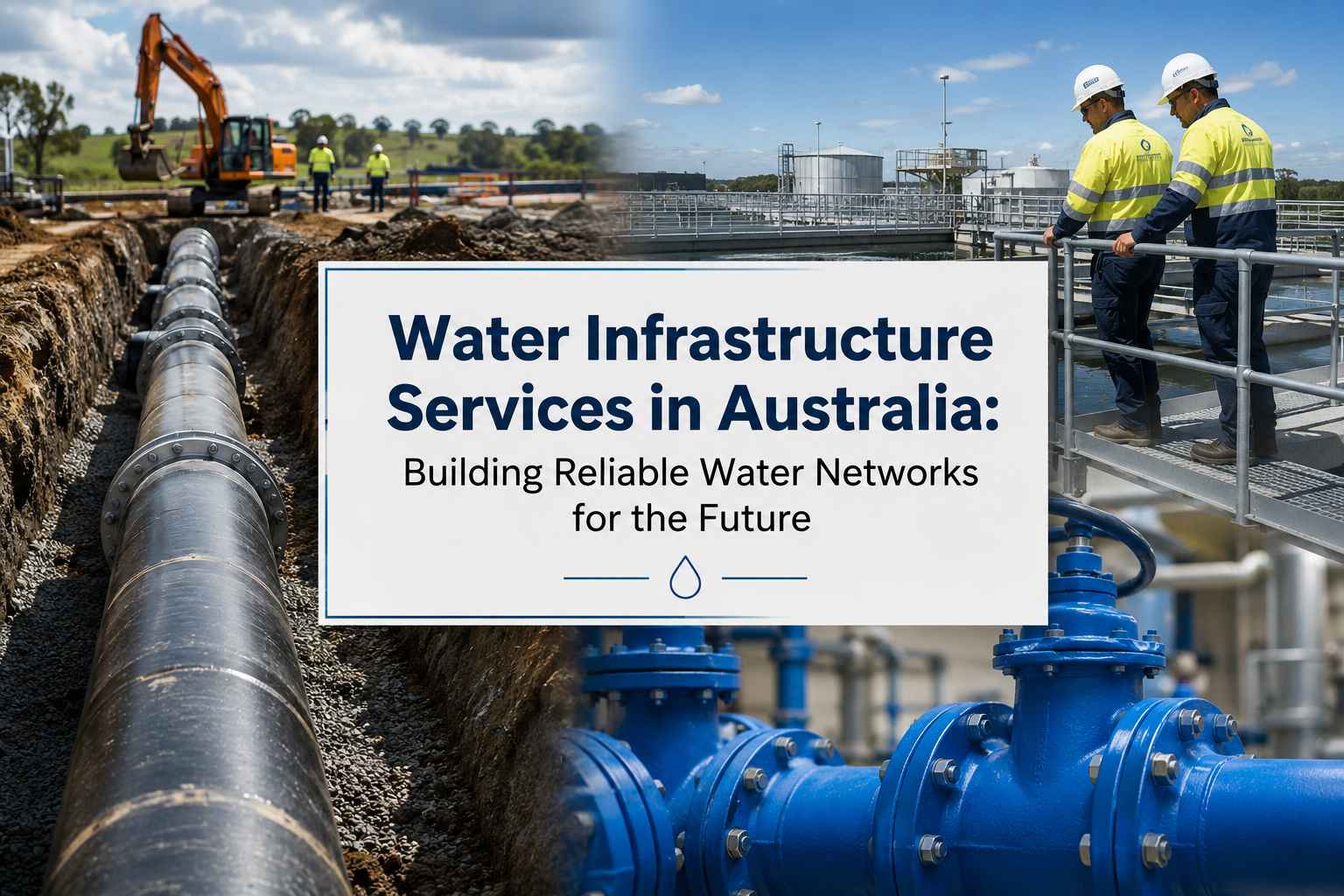
When you turn on the tap, jump in the shower, or watch the sprinklers keep your local footy oval green, you’re witnessing a massive, silent engine at work. Behind every drop of clean water is a sprawling network of pipes, treatment plants, and smart tech working around the clock.
Across Australia, keeping these networks running smoothly is a monumental task. As our population grows and our climate serves up everything from intense droughts to sudden floods, our water infrastructure services are being put to the test.
At Civilcraft, we live and breathe this stuff. We know that building and maintaining these systems isn’t just about pouring concrete or laying pipes—it’s about securing the future of our communities. Let’s dive into what goes on behind the scenes to keep Australia’s water moving.
What are Water Infrastructure Services in Australia?
Water infrastructure services encompass the engineering, construction, maintenance, and upgrading of everything required to manage our water lifecycle. It spans three distinct, massive networks that keep our towns and cities functioning:
- Potable (Drinking) Water Networks:- The treatment plants, reservoirs, and pressurised pipelines that deliver safe, clean drinking water straight to your kitchen sink.
- Wastewater Networks:- The critical underground systems that safely carry sewage and greywater away from homes and industries to treatment facilities, protecting public health.
- Stormwater and Drainage Systems:- The pits, pipes, culverts, and retention basins designed to capture heavy rainfall, prevent local flooding, and safely direct runoff back into our waterways.
In Australia, these services are a collaborative effort. They are delivered by specialised civil contractors working alongside local councils, state water authorities, and utility providers to ensure compliance with strict environmental and health standards.
Why is water Infrastructure Important for Australian Communities?
Australia is famously the driest inhabited continent on Earth. Our relationship with water is unique, making reliable infrastructure a literal lifeline.
First and foremost, robust water systems protect public health and safety. Without secure wastewater management and dependable water treatment, modern urban living would collapse. Clean water keeps businesses running, hospitals operating, and homes safe.
Secondly, these networks drive economic and regional growth. You can’t build a new residential estate, open a manufacturing plant, or expand a regional hub without first securing its water supply.
Finally, proper infrastructure is our best defense against climate resilience. As weather patterns become more unpredictable, modern infrastructure allows communities to:
- capture stormwater more effectively,
- recycle wastewater for industrial use, and
- mitigate devastating flood risks to homes and businesses.
What Projects are Included in Water Infrastructure Services?
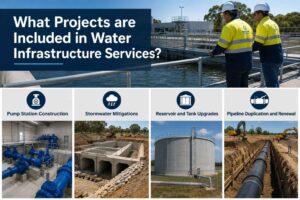
The sheer variety of work required to keep our water flowing is staggering. No two projects are exactly alike, but a standard civil construction pipeline generally includes:
- Pump Station Construction: Building and upgrading the mechanical beating hearts of the network, which push water uphill and across massive geographical distances.
- Stormwater Mitigations: Installing massive precast culverts, gross pollutant traps (which catch trash before it hits rivers), and constructing naturalised wetlands to slow down floodwaters.
- Reservoir and Tank Upgrades: Constructing and maintaining massive concrete and steel storage assets to ensure towns have adequate water reserves during peak demand or emergencies.
- Pipeline Duplication and Renewal: Replacing aging, corroded water mains with high-density polyethylene (HDPE) or mild steel cement-lined (MSCL) pipes to prevent catastrophic bursts and water loss.
How Do Water Infrastructure Upgrades Improve Reliability?
If you’re living in an area with older infrastructure, you know the frustration of unexpected water main breaks or localised flash flooding during summer storms. Upgrading these networks is how we move from a reactive “fix it when it breaks” mindset to proactive reliability.
Modern upgrades introduce smart monitoring technology, like IoT acoustic sensors that can detect a microscopic leak in a pipe weeks before it actually bursts.
By replacing brittle, 60-year-old earthenware or cast-iron pipes with flexible, durable modern materials, we drastically reduce network pressure failures.
Furthermore, upgrading treatment plants and pump stations means they can handle higher volumes and adapt to changing source water quality, ensuring that even during heavy environmental runoff, your tap water remains crystal clear.
How Do Councils Maintain Water Infrastructure Assets?
Local councils and water authorities bear the heavy responsibility of managing billions of dollars’ worth of buried assets. They don’t just wait around for a leak to show up on a citizen’s report; asset management is a highly strategic science.
Councils maintain water infrastructure assets through a mix of preventative maintenance and advanced diagnostics. They regularly deploy CCTV robotic cameras down sewer and stormwater lines to check for structural cracks, sagging, or invasive tree roots.
They also use structured Asset Management Plans (AMPs) to track the age and health score of every single asset in their footprint.
When an asset nears the end of its predictable lifespan, councils partner with experienced civil contractors like Civilcraft to schedule renewals before a failure occurs, keeping community disruption to an absolute minimum.
Also Read:- Non Destructive Digging in Australia: Benefits, Applications & Why It’s Safer Than Traditional Excavation
Building a Resilient Future with Water Infrastructure
Water is a finite, precious resource, and the networks that carry it are the unsung heroes of society. As we look down the line at the next few decades of population growth and shifting climates, investing in top-tier water infrastructure services is the foundation of our future.
At Civilcraft, we’re proud to play our part, partnering with authorities to engineer and construct water networks that Australians can rely on for generations to come. For any assistance, just CONTACT us right away!
FAQs
Q:- How long do underground water pipes typically last?
Ans:- Depending on the material, traditional pipes last 50 to 80 years. Modern polyethylene and protected steel pipes can last over 100 years.
Q:- What causes most water main bursts in Australia?
Ans:- Soil shifting due to extreme wet-and-dry weather cycles causes the ground to move, cracking older, rigid iron or clay pipes.
Q:- How does stormwater differ from wastewater?
Ans:- Stormwater is untreated rainwater from roofs and roads that flows directly into local rivers. Wastewater comes from drains and toilets and must go to a treatment plant.
Q:- What is “trenchless technology” in water upgrades?
Ans:- It’s a modern method where new pipes are relined or bored underground without digging up roads, drastically reducing community disruption.
Q:- Why do councils focus so heavily on stormwater management?
Ans:- Proper stormwater management prevents urban flooding, protects properties from water damage, and keeps pollutants out of natural marine environments.