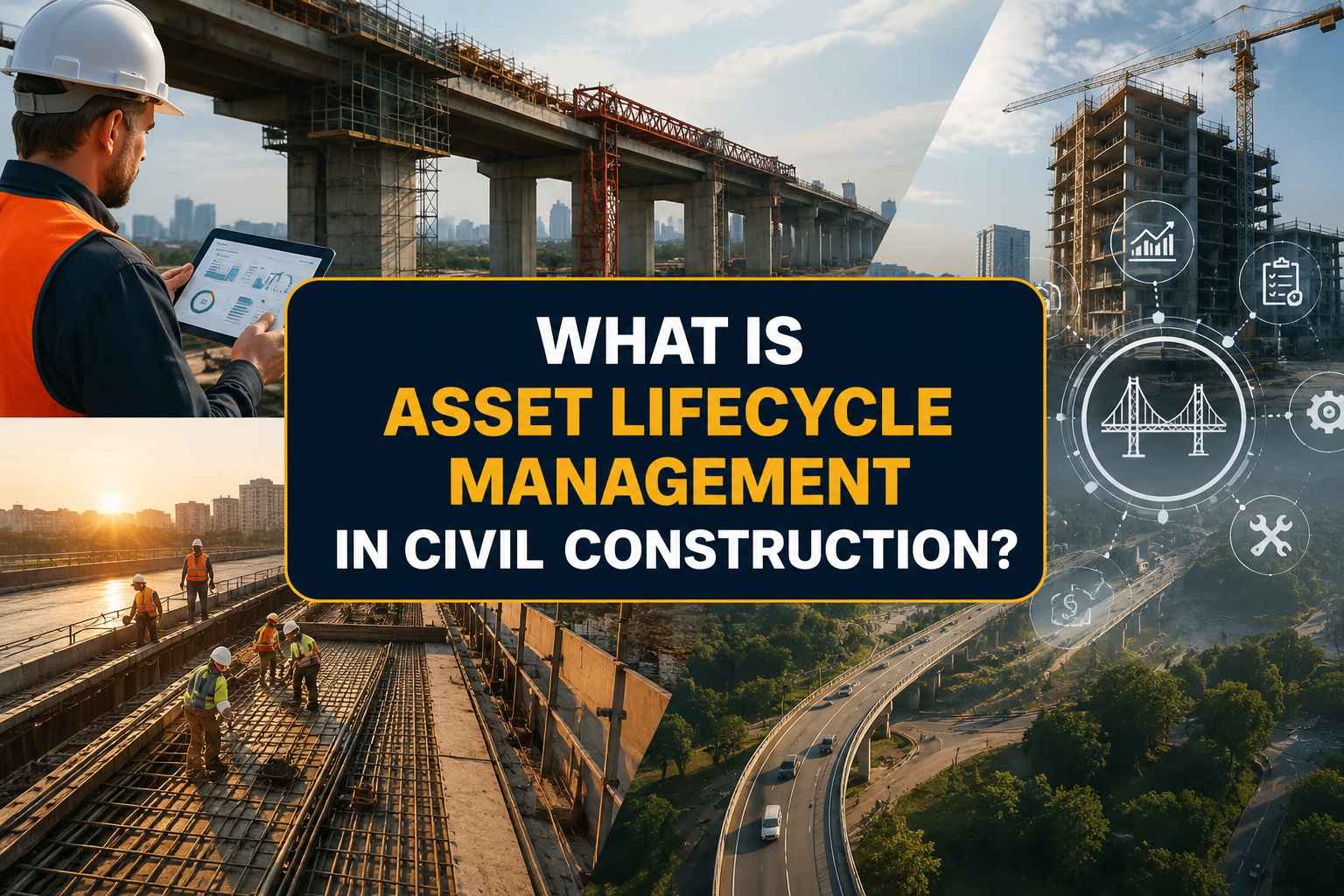
Imagine you are driving over a massive concrete bridge, pulling your truck into a high-traffic logistics park, or watching a plane land smoothly on an airport runway. You probably aren’t thinking about the thousands of hours of engineering that keep that concrete from cracking under pressure.
But behind every road, runway, and structural foundation, there is a silent powerhouse process keeping our world moving safely. Welcome to the world of asset lifecycle management in civil construction.
In simple terms, it is the ultimate strategy for managing an engineering project from the absolute first day a spade hits the dirt until the day it needs to be safely decommissioned or replaced.
For huge industries, governments, and property developers, this approach isn’t just a “nice-to-have” option; it is a mandatory survival guide for infrastructure. Let’s break down exactly how it works, why it matters, and how it keeps our modern world from crumbling.
Infrastructure Lifecycle Explained
To master the big picture, we first have to answer a foundational question: What is an infrastructure lifecycle? Think of it just like the human lifecycle, but for concrete, steel, and asphalt. An infrastructure asset doesn’t just appear out of nowhere and last forever. It goes through distinct, predictable stages over its lifetime.
During the initial planning stage, engineers sit down to model what the structure needs to achieve. Next comes the construction phase, where the design comes to life. The longest part of the journey is the operations and maintenance stage, where the asset actively does its job for years or decades.
Finally, when the structure reaches the end of its useful life, it hits the rehabilitation or disposal phase, where it is either entirely rebuilt or safely retired. Asset lifecycle management is the art of overseeing this entire journey to extract the maximum value out of every dollar invested.
Major Reasons for Infrastructure Deterioration
Nothing lasts forever, especially when it is exposed to the elements and heavy industrial use. But what causes this deterioration in the first place? It usually comes down to a combination of four major troublemakers:
- Environmental Factors: Mother Nature is tough. Extreme heat causes materials to expand, bitter winter cold causes them to contract, and heavy rainfall can wash away crucial subgrade support layers.
- Chemical Attack: Carbonation, salt spray in marine environments, and industrial chemical spills actively eat away at concrete surfaces and corrode internal steel reinforcement bars.
- Poor Initial Drainage: If water cannot escape a site efficiently, it pools underneath heavy pavements, softening the ground and leading to massive potholes or structural shifting.
- Heavy Traffic Loads: Constant pounding from heavy-duty logistics trucks, commercial aircraft, or dense commuter traffic creates micro-fractures in concrete and asphalt over time.
Why Is Lifecycle Planning Necessary?
If you wait for a bridge to crack or a major highway to develop massive potholes before you fix it, you are already too late. That is exactly why lifecycle planning is important.
It shifts the entire civil construction industry away from “panic mode” (reactive fixes) and moves it into “smart mode” (proactive preservation). Here is a clear look at why strategic planning completely changes the financial and operational game for asset owners:
How Do Engineers Calculate Maintenance Schedules?
Civil engineers don’t just guess when a road needs to be resurfaced or when a structural foundation needs reinforcement. So, how do engineers calculate these schedules? They rely on a highly calculated blend of advanced tech and data modeling called “whole-of-life modeling.”
Engineers use specialised sensors embedded in structures to track vibrations and stress shifts in real time. They perform regular physical risk and condition assessments to grade materials on a strict deterioration curve.
By feeding historical weather data, traffic volume statistics, and material stress levels into advanced asset management software, they can pinpoint exactly when an asset will need a touch-up long before the human eye can spot a flaw.
How Do You Extend Asset Life?
You achieve it by combining high-quality engineering right from the start with hyper-targeted preventive maintenance.
- Applying Protective Coatings: Coating exposed concrete and steel structures with advanced anti-carbonation and moisture-resistant sealants stops chemical attacks in their tracks.
- Use Advanced Materials: Implementing cutting-edge, high-durability polymer asphalt mixes and heavily reinforced concrete foundations gives structures a much stronger head start.
- Timely Asphalt Crack Sealing: Sealing small surface cracks immediately stops moisture from seeping deep into the sub-base, completely preventing costly potholes.
- Flawless Drainage Systems: Keeping water completely away from structural bases using expertly engineered stormwater drainage systems prevents structural erosion.
How Civilcraft Can Help in Asset Lifecycle Management
When you are dealing with high-security Defence sites, bustling international airports, complex ports, or heavily trafficked logistics parks, you cannot afford to work with amateur contractors.
- You need a highly specialised partner who genuinely understands the high-stakes game of whole-of-life asset protection. That is exactly where Civilcraft steps into the spotlight as an industry leader.
- As a premier, trusted risk solution specialist and experienced Lead Contractor in civil construction and ground maintenance, Civilcraft provides an elite, comprehensive suite of turnkey engineering solutions. They completely take the stress out of managing complex infrastructure by offering a streamlined, end-to-end service model.
- Civilcraft‘s elite in-house capabilities span the entire spectrum of asset lifecycle management. Our team of highly qualified civil engineers, project managers, and operations experts design bespoke solutions tailored precisely to your operational and financial objectives.
- Whether it is laying down ultra-durable heavy-duty concrete and asphalt pavements, executing complex structural foundation work, or resolving critical stormwater drainage challenges, they bring unmatched technical precision to every project.
- What truly sets Civilcraft apart is our specialised ability to execute highly complex, time-critical maintenance and repair works in incredibly difficult operational environments, completely without disrupting your day-to-day operations.
By leveraging innovative technologies, cutting-edge practices, and rigorous preventive maintenance programs, Civilcraft doesn’t just build infrastructure; we actively extend the physical lifespan and presentation of your multi-million dollar assets, driving down long-term costs while keeping your sites completely safe.
Also Read:- Preventative Asphalt Maintenance for Australian Ports in 2026
Conclusion
Effective asset lifecycle management is about making informed decisions at every stage, from planning and construction to maintenance and long-term care.
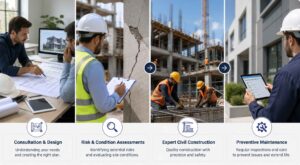
A proactive approach helps extend asset life, reduce unexpected costs, improve safety, and keep infrastructure performing at its best. By combining expert assessments, quality construction, and ongoing maintenance, organisations can protect their investments and ensure reliable performance for years to come.
FAQs
Q:- What is an infrastructure lifecycle?
Ans:- An infrastructure lifecycle represents the entire four-stage developmental path of a civil asset, moving seamlessly from its initial planning and construction to long-term operations and final disposal.
Q:- What causes infrastructure deterioration?
Ans:- Infrastructure deterioration is primarily triggered by continuous heavy traffic loading, intense environmental weather shifts, chemical attacks, and poor drainage setups.
Q:- Why is lifecycle planning important?
Ans:- Lifecycle planning is absolutely vital because it prevents unexpected structural failures, slashes emergency repair bills, and ensures zero operational downtime.
Q:- How do architects calculate maintenance schedules?
Ans:- Engineers calculate precise schedules by pairing comprehensive field condition assessments with whole-of-life data modeling software.
Q:- How do you extend asset life?
Ans:- You extend an asset’s life by utilising premium construction materials, implementing excellent drainage designs, and executing strict, proactive preventive maintenance.