Sydney is famous for its gorgeous harbour, stunning beaches, and iconic sunny weather. But when the skies open up and a heavy coastal storm rolls through, Sydney doesn’t mess around.
The city’s intense downpours can dump massive amounts of water in a very short window—and if your business isn’t prepared, you’ll quickly run into serious stormwater drainage problems Sydney commercial properties face all too often.
A flooded carpark, water seeping into a warehouse bay, or soggy soil around an office foundation isn’t just an eyesore. It causes costly structural damage, disrupts daily business operations, and creates major safety hazards for employees and clients alike.
So, what is actually happening underground that turns a heavy rainy day into an absolute nightmare for commercial property owners? Let’s break down the primary culprits behind these drainage disasters and how you can stay ahead of them.
Top 6 Causes of Stormwater Drainage Problems in Sydney
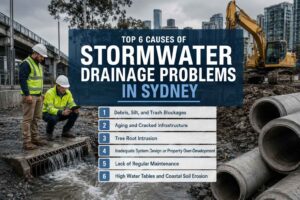
Here are the top 6 causes of stormwater drainage problems in Sydney:
1. Debris, Silt, and Trash Blockages
- Commercial sites—especially industrial parks, shopping centers, and office complexes—see heavy vehicle and foot traffic every single day.
- Over time, outdoor surfaces accumulate leaf litter, soil, gravel, oil residue, plastic wrappers, and shipping debris. When heavy rain hits, all that loose debris gets swept straight into your grates and pit inlets.
- If your drainage pipes aren’t regularly cleared out, this debris builds up inside the lines like a clogged artery. Water backs up rapidly, flooding your loading docks, walkways, and carparks in a matter of minutes.
2. Aging and Cracked Infrastructure
- Many of Sydney’s established commercial hubs feature drainage systems that were installed decades ago.
- Over time, ground movement, heavy vehicle traffic rolling over buried pipes, and natural ground settling can cause underground pipes to crack, collapse, or shift out of alignment. Once a pipe breaks, two things happen:
- Dirt and surrounding soil wash inside, causing massive structural blockages.
- Water leaks out into the surrounding soil, weakening the sub-base under your concrete slabs or asphalt driveways, leading to potholes or dangerous structural sinking.
3. Tree Root Intrusion
- Sydney’s lush greenery is fantastic for curb appeal, but aggressive tree roots love nothing more than seeking out moisture underground. Even a microscopic hairline crack in a PVC or concrete drain pipe allows tiny root tendrils to enter in search of water.
- Once inside, those roots feast on the nutrients and expand into thick, stubborn web-like mats. These root balls trap passing debris and eventually choke off water flow entirely, causing major stormwater drainage issues across the property.
4. Inadequate System Design or Property Over-Development
- Sydney’s commercial footprint is constantly growing. Over the years, many older commercial buildings have been extended, carparks expanded, or extra storage sheds built.
- When you increase the amount of hard, impermeable surfaces (like concrete or roofing) on a site, you drastically increase the volume and speed of surface water runoff during a storm.
- If the original stormwater infrastructure was designed for a smaller footprint, it simply won’t have the capacity to handle heavy flash flooding. The system gets overwhelmed instantly, causing surface ponding and localized flooding.
5. Lack of Regular Maintenance
- Out of sight, out of mind—until water is rising toward your front door! The absolute biggest driver behind commercial drainage failures is neglect. Drains are designed to work quietly under your feet, so it’s easy to forget about them until a storm hits.
- Skipping routine stormwater drainage maintenance allows minor sediment buildups, small root incursions, and minor pipe cracks to escalate into catastrophic failures when you least expect it.
6. High Water Tables and Coastal Soil Erosion
- Sydney’s unique geography—from its coastal sandstone bedrock to high groundwater levels in low-lying areas—adds extra pressure to underground pipe systems.
- During extended rainy periods, the surrounding soil becomes completely saturated, raising the groundwater level. This puts tremendous external hydrostatic pressure on buried stormwater pipes.
- If your property sits on sandy or shifting soil, this excess moisture can cause the ground underneath to erode or collapse. When the surrounding earth shifts, it causes underground stormwater pipes to sag (creating “bellies” where water pools) or dislodge completely.
Over time, these structural shifts trigger severe stormwater drainage problems Sydney commercial properties struggle to fix without professional excavation.
How Commercial Property Owners Can Stay Ahead
The good news is that most stormwater disasters are completely preventable with a proactive approach:
- Schedule Seasonal Pit Clears: Have a commercial drainage specialist clean out your storm pits, silt traps, and grates before the summer storm season hits.
- Keep Outdoor Surfaces Clean: Regular sweeping of carparks and loading docks drastically reduces the amount of silt & garbage entering your stormwater pits.
- Get a CCTV Drain Inspection: A high-definition camera survey inside your underground lines spots cracks, sagged pipes, and root intrusions before they cause a full backup.
Also Read:- How Often Should Commercial Concrete Surfaces Be Inspected and Maintained?
Final Thoughts
A heavy storm in Sydney shouldn’t mean a crisis for your business. By understanding what causes these underground failures and taking a proactive stance on maintenance, you can protect your property investment.
If you know these stormwater drainage problems in Sydney by Civilcraft you can also keep your operations running smoothly and keep water right where it belongs, flowing safely away from your site!
FAQs
Q:- What causes stormwater drainage problems in Sydney?
Ans:- They are primarily caused by debris blockages, aggressive tree root intrusion, aging damaged pipes, inadequate drainage capacity, and severe coastal storms.
Q:- How can businesses prevent stormwater flooding on commercial properties?
Ans:- Prevent flooding by scheduling routine pit cleaning, keeping carparks clear of debris, inspecting underground pipes annually, and installing pit filters.
Q:- What are the signs of a damaged stormwater drainage system?
Ans:- Common signs include persistent puddles in carparks, slow-draining water after rain, foul damp odors, gurgling noises, and cracking or sinking concrete slabs.
Q:- How often should commercial stormwater drainage systems be inspected?
Ans:- Commercial stormwater systems should be inspected and cleaned at least twice a year—ideally before and after the peak storm season.
Q:- Who is responsible for maintaining stormwater infrastructure on commercial sites?
Ans:- The commercial property owner or facility management team is legally responsible for maintaining all private stormwater infrastructure up to the council connection point.