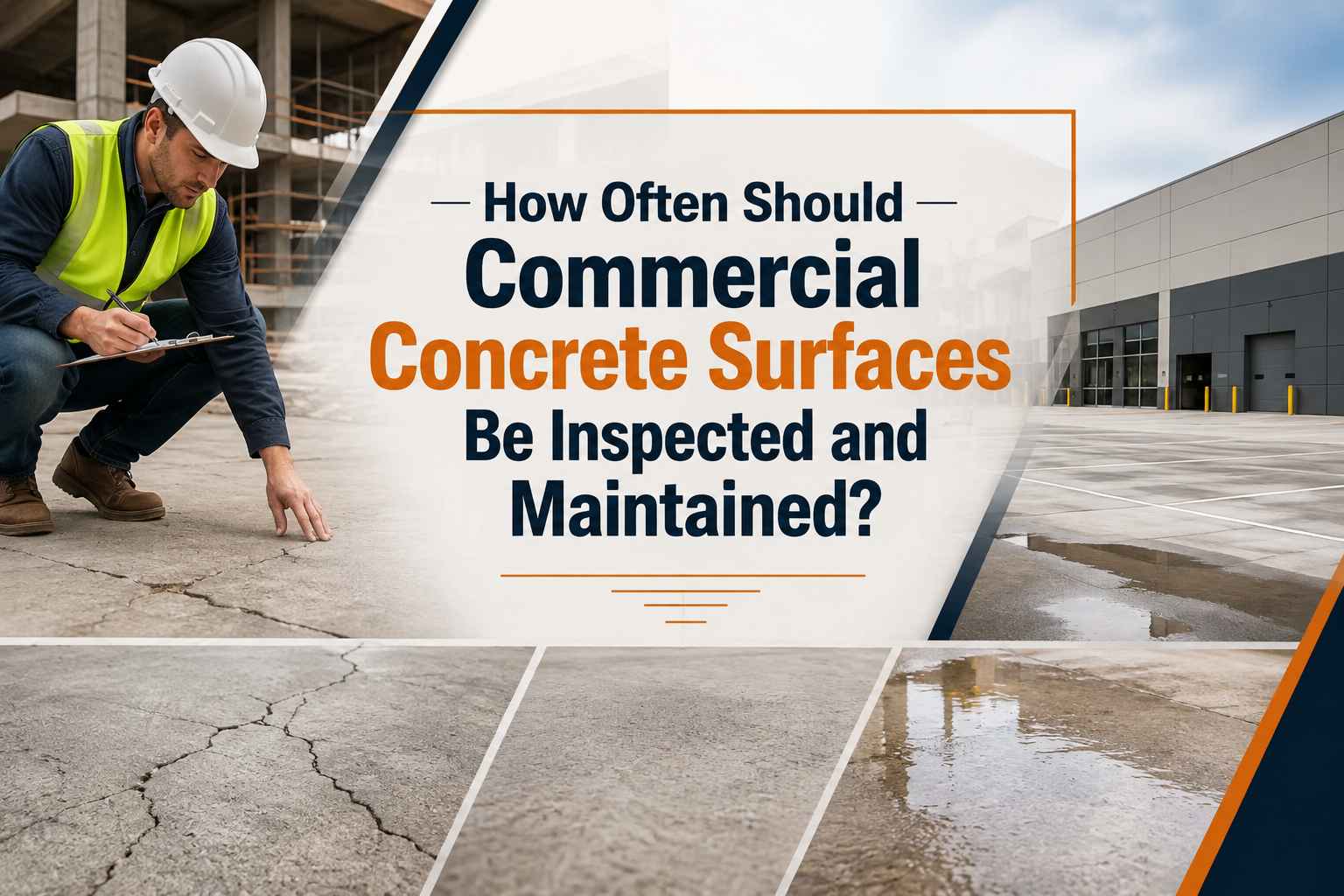
Walk into any bustling Aussie warehouse, logistics hub, or retail centre, and one unsung hero is holding the whole operation together: the concrete slab. It bears the brunt of heavy forklifts, delivery trucks, foot traffic, and the brutal Australian sun day in, day out.
Because concrete feels practically indestructible, it’s easy to take it for granted, until a hairline crack turns into a costly tripping hazard. Staying on top of commercial concrete maintenance isn’t just about keeping your facility looking sharp; it’s about safety, operational efficiency, and saving t
ousands of dollars down the track.
Whether you manage an industrial estate in Sydney, a loading dock in Melbourne, or a commercial carpark in Brisbane, keeping a regular eyes-on schedule for your concrete is essential. Here’s a practical guide on how often you should inspect your slabs, what signs to look for, and how to keep your surfaces performing at their best.
The Inspection Schedule: How Often Is Often Enough?
There’s no one-size-fits-all rule for every property, but as a solid rule of thumb, commercial concrete should undergo three levels of inspection:
1. Weekly to Monthly Visual Walkthroughs (In-House)
- Your site managers, safety officers, or maintenance crews should keep an eye out during regular floor sweeps. They should look for fresh oil spills, chip points around joints, or standing water. Catching small issues early prevents minor cosmetic flaws from becoming structural headaches.
2. Bi-Annual Seasonal Audits
- In Australia, extreme weather changes take a toll on heavy-duty slabs. Autumn and spring are ideal times to conduct a structured walkthrough. Check expander joints, slab edges, and drainage paths after intense summer heatwaves or heavy winter rains.
3. Annual Professional Inspections
- At least once a year, bring in experienced civil and concrete specialists to evaluate the structural integrity of your facility. Companies like Civilcraft specialise in assessing commercial assets, identifying hidden sub-grade movement, slab deflection, or joint deterioration before they impact your daily operations.
What Does Regular Commercial Concrete Maintenance Involve?
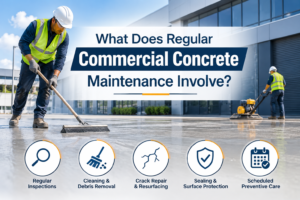
Effective commercial concrete maintenance isn’t complicated, but it does require consistency. Depending on your facility’s daily traffic, a proactive upkeep routine usually includes:
- Regular Sweeping and Scrubbing: Dust, grit, and industrial debris act like sandpaper under forklift tires, gradually wearing down the surface paste. Industrial power scrubbing removes abrasive particles and aggressive chemical spills before they eat into the matrix.
- Joint Sealant Upkeep: Control joints allow concrete to expand and contract naturally. When the sealant dries out, cracks, or peels away, water and debris sink down into the sub-base, leading to slab movement or joint spalling.
- Surface Resealing: Outdoor carparks and high-traffic indoor floors benefit from periodic re-application of protective sealers. A quality sealer blocks moisture ingress, prevents oil staining, and guards against UV degradation.
Indicative Signs You Need Commercial Concrete Repair
Even with the best routine care, heavy industrial use eventually causes wear. Spotting damage early allows you to schedule targeted commercial concrete repair during downtime rather than scrambling during an emergency breakdown. Keep a lookout for these common red flags:
- Rust Staining: Reddish-brown stains bubbling up through cracks usually indicate that the internal steel reinforcement is corroding.
- Spalling or Flaking: When the top layer of concrete chips away, exposing the aggregate underneath, moisture enters much faster.
- Corner and Joint Breaking: Known as joint spalling, this happens when hard-wheeled forklifts repeatedly strike unsealed or uneven joint edges.
- Cracks with Height Differences: A crack is one thing, but if one side of the crack is higher than the other (slab displacement), you likely have sub-grade movement or moisture erosion beneath the slab.
When these issues pop up, bringing in civil concrete specialists like the team at Civilcraft ensures repairs are done right the first time using heavy-duty, rapid-set epoxies or structural underpinning.
Protecting Aussie Concrete from Unique Environmental Factors
Australian commercial facilities face harsh environmental conditions that accelerate wear and tear. In coastal regions, airborne salt can penetrate porous unsealed concrete, causing internal rebar oxidation.
In inland areas, severe thermal expansion from 40°C+ summer days puts massive stress on control joints. Meanwhile, indoor logistics centers contend with constant vibration and heavy point loads from high-reach stackers.
Tailoring your concrete surface maintenance to your specific local environment—whether that means applying salt-resistant silane sealers near the coast or high-impact joint fillers in busy distribution hubs—doubles the lifespan of your concrete investment.
Why Prevention Beats Replacement Every Single Time
Replacing an industrial concrete slab isn’t just expensive; it halts your business. Ripping out damaged concrete, re-compacting the sub-base, pouring new concrete, and waiting for it to cure can shut down a loading bay or warehouse aisle for weeks.
Routine commercial concrete maintenance costs a small fraction of a full slab replacement. By budgeting for minor joint repairs, crack injections, and surface seals each year, you protect your capital investment, keep your workforce safe from trip hazards, and maintain a professional facility for clients and staff.
Also Read:- How to Extend the Life of Concrete Driveways and Commercial Surfaces in Australia
Keeping Your Business Grounded on Solid Footing
At the end of the day, consistent commercial concrete maintenance is one of the smartest operational investments a facility manager can make. By pairing simple daily upkeep with annual professional checks from trusted industry experts like Civilcraft, you ensure your slabs stay smooth, safe, and ready to handle whatever heavy lifting your business demands.
FAQs
Q:- How often should commercial concrete surfaces be inspected?
Ans:- Commercial concrete surfaces should be checked informally every month and receive a comprehensive professional inspection at least once a year.
Q:- What are the signs that a commercial concrete surface needs repair?
Ans:- Key signs include deep or widening cracks, uneven slab height, flaking surface edges (spalling), crumbling expansion joints, and rust stains.
Q:- How do you maintain concrete floors in warehouses and industrial facilities?
Ans:- Maintain industrial floors by sweeping grit daily, cleaning oil spills immediately, replacing damaged joint sealants, and applying heavy-duty protective sealers every few years.
Q:- When should commercial concrete be repaired instead of replaced?
Ans:- Concrete should be repaired if the damage is localised to surface cracks, minor spalling, or isolated joints while the underlying sub-base remains structurally sound.
Q:- What is the best way to extend the life of commercial concrete surfaces?
Ans:- The best way to extend lifespan is combining proactive sweeping and joint sealing with timely professional repairs from specialists like Civilcraft.