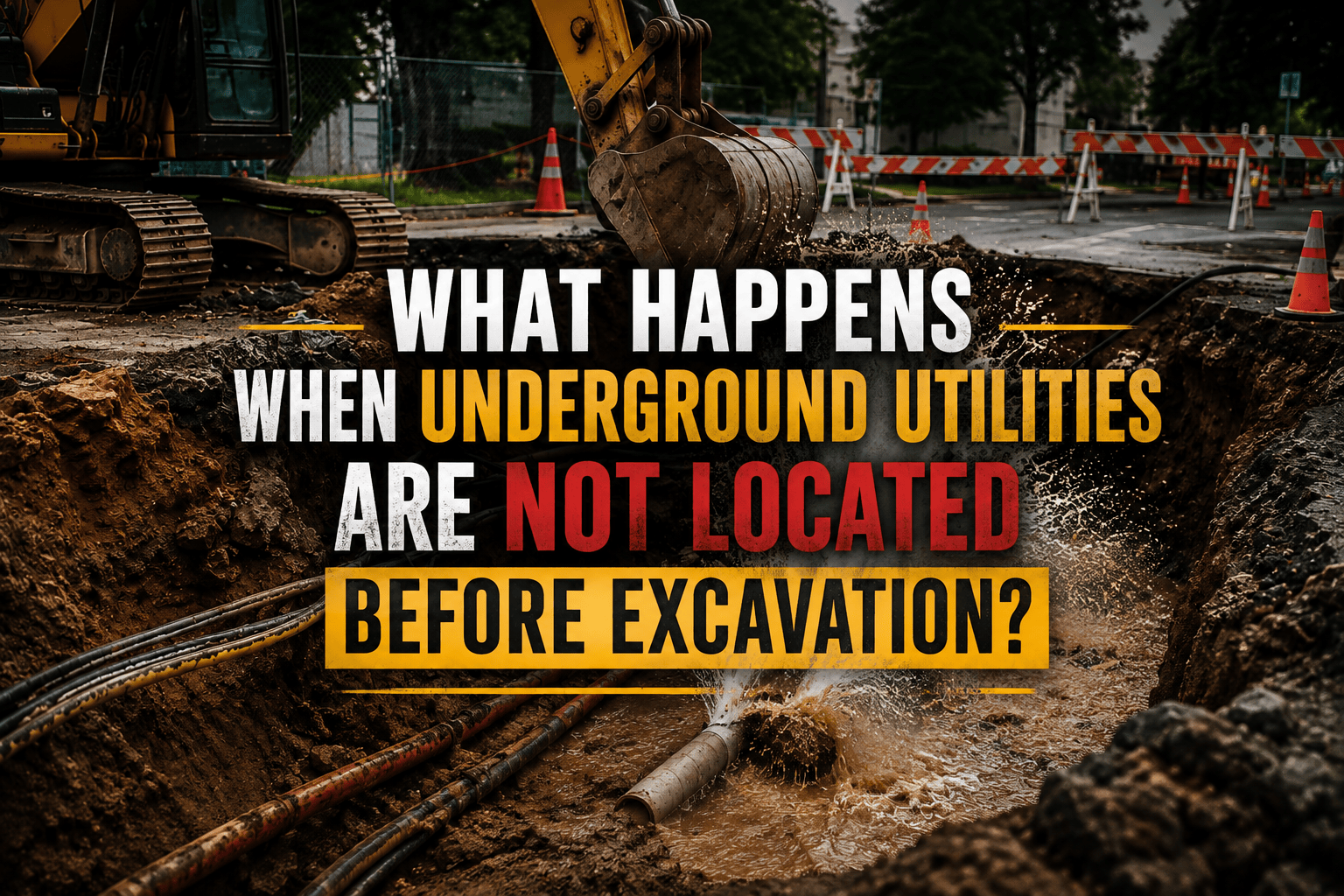
Imagine: you’re working on a site upgrade, a backyard landscaping project, or a civil construction job anywhere from suburban Melbourne to regional Western Australia. You’ve mapped out your plan, you’re eager to get the excavator moving, and—bam!—the steel bucket of your machine crunches into something it definitely shouldn’t have.
Suddenly, water is geysering twenty feet into the air, local internet cables are shredded, or worse, a gas line is ruptured. Sirens blare, emergency services lock down the street, and your project grinds to an immediate, expensive halt.
It sounds like a tradie’s worst nightmare, but it happens way more often than you’d think across Aussie worksites. Let’s yarn about what actually goes down when underground utilities aren’t located before excavation, why those maps can sometimes catch you off guard, and how modern methods are saving project managers from absolute disaster.
The Hidden Maze Beneath Our Feet
Drop a pin almost anywhere in urban Australia, and you are standing on top of a spaghetti bowl of vital infrastructure. We’ve got high-voltage power lines, telecommunication fibre optics, gas mains, stormwater drains, and potable water pipes snaking just beneath the topsoil.
When property owners or contractors skip proper underground utility locating, they are essentially playing a high-stakes game of Russian roulette with a backhoe.
What Happens When Things Go Wrong?
Striking an unlocated service isn’t just a minor inconvenience; it kicks off a massive chain reaction:
- Reputational Damage:- Word travels fast in the Australian construction and trade industries. Being known as the crew that sliced through the local internet trunk line is a quick way to torpedo future contract bids.
- Project Shutdowns and Legal Nightmares:- Work stops instantly. If a council or utility provider finds you neglected due diligence or skipped pre-excavation checks, you could face heavy regulatory fines, stop-work orders, and potential legal action.
- Catastrophic Safety Hazards:- Hitting a live electrical cable can cause fatal electrocution, severe arc flashes, or explosions. Rupturing a high-pressure gas line creates an immediate fire and evacuation hazard for the entire neighbourhood.
- Eye-Watering Financial Penalties:- Underground service damage doesn’t just cost time; it costs a fortune. Utility asset owners will bill you directly for emergency repairs, lost commodity supplies (like 1000s of litres of water), and emergency response crews.
Why Relying on Plans Alone Isn’t Enough
Most responsible builders know to submit a Before You Dig Australia (BYDA) request before dropping a shovel in the dirt. Blueprint plans are brilliant, but they come with a catch: ground shifting, soil erosion, and decades of undocumented property alterations mean pipes and cables aren’t always exactly where the 10-year-old CAD drawing says they are.
- This is precisely why modern sites rely heavily on non destructive digging to physically “pothole” or daylight utilities before letting heavy machinery loose.
- Instead of crossing your fingers and hoping a 15-tonne excavator bucket doesn’t bite into a live conduit, non destructive digging uses high-pressure water and industrial vacuum suction to clear soil safely.
- Because non destructive digging relies on fluid dynamics rather than tearing steel teeth, it strips away the earth while leaving delicate plastic or copper utilities completely unharmed. It provides surgical precision, allowing you to visually verify depths without risking underground service damage or unexpected project delays.
- Contractors integrating non-destructive measures into their workflows find that it dramatically lowers insurance claims, keeps workers safely out of deep manual trenches, and keeps local infrastructure humming along without a glitch.
In fact, professional civil teams routinely specify non destructive digging as a mandatory pre-requisite step for any urban excavation project.
The Real Cost of Skipping the Legwork: Looking at the Big Picture

When deadlines are tight, and clients are breathing down your neck, it is painfully tempting to rush through the pre-construction phase. Grabbing an excavator and ripping into the topsoil feels fast and efficient—right up until the moment your machine clips an uncharted telecommunication line and knocks out internet connectivity for half a commercial precinct.
- The ripple effects of skipping proper utility location extend far beyond a single broken pipe. Think about the lost productivity of your crew standing around waiting for an emergency response team, the ripple effect on subcontractors whose schedules are suddenly thrown into chaos, and the nightmare of filing incident reports with workplace health and safety regulators.
- In many cases, the financial fallout of a single preventable utility strike wipes out the entire profit margin of a project. By shifting your mindset from reactive repair to proactive verification, you transform risk management into a competitive advantage.
- Taking the extra hour to map a site thoroughly, verify asset depths, and plan your excavation approach builds a culture of safety and precision that clients and asset owners respect.
At the end of the day, the most efficient construction project isn’t the one that starts the fastest—it’s the one that finishes on schedule, without a single emergency vehicle showing up on site.
Also Read:-What Is Preventative Infrastructure Maintenance and Why Does It Matter?
Conclusion
Excavating safely across Australia’s complex urban and regional landscapes requires more than just good intentions and a set of old blueprint maps. Skipping proper utility verification is an expensive gamble that puts worker safety, local infrastructure, and project timelines directly in the line of fire.
By combining thorough asset searches with precise non destructive digging techniques like hydro-excavation, contractors can eliminate guesswork by Civilcraft. Taking the time to locate and expose underground lines before heavy machinery touches the soil ensures your project stays on budget, compliant, and—most importantly—completely incident-free.
FAQs
Q. What happens if you hit an underground utility while digging?
You risk severe personal injury from electrocution or gas leaks, massive financial liabilities for emergency repairs, legal penalties, and prolonged project shutdowns.
Q. How does non destructive digging prevent underground service damage?
It uses controlled water pressure to break up soil and a vacuum system to remove it, exposing buried assets without the mechanical impact risks of traditional steel excavator buckets.
Q. When should vacuum excavation be used?
It should be used whenever you are excavating in congested urban areas, near known utility lines, or during “potholing” phases to verify the exact depth of underground services prior to heavy mechanical digging.
Q. Is non destructive digging safer than traditional excavation?
Yes. It eliminates the risk of utility strikes and keeps workers safely out of hazardous, unstable trenches by allowing remote-controlled surface operation.
Q. How can I locate underground services before excavation?
Start by submitting a request through Before You Dig Australia (BYDA) to review asset maps, hire professional locators with electromagnetic equipment, and use non destructive digging to verify service locations on site visually.