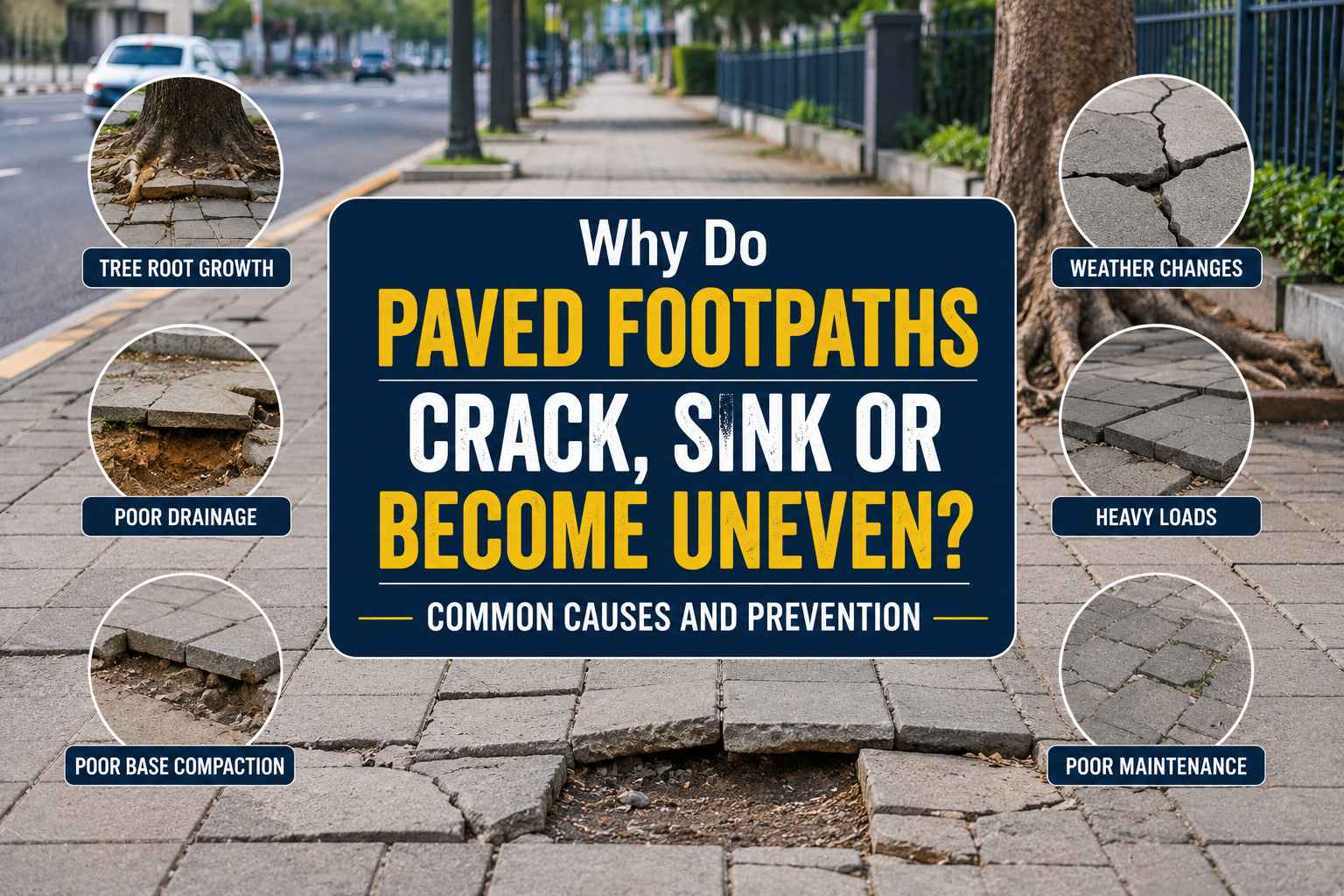
Have you ever walked down a suburban street or stepped out into your backyard and tripped over a lifted paver? It is super annoying, and let’s be honest, it is a massive safety hazard.
A well-laid paving footpath looks neat, adds value to a property, and handles daily foot traffic like a champ. But over time, things can go pear-shaped. Pavers crack, sink, and turn into a messy obstacle course.
If you have ever wondered why this happens, let’s break down the common culprits behind paved footpath problems and how to stop them in their tracks—especially under harsh Aussie conditions.
The Harsh Australian Climate
Australia’s weather is brutal on outdoor surfaces. We swing from baking 40-degree summer heat to freezing winter mornings, heavy downpours, and long dry spells.
- Extreme Heat and Expansion:
When the sun beats down day after day, concrete bases and clay pavers expand. If there are no proper expansion joints, that pressure has to go somewhere. Usually, it ends up pushing pavers upward, causing buckling or cracking.
- Heavy Rains and Soil Movement:
Much of Australia features reactive clay soils. When it rains heavily, the clay swells up. When it dries out, it shrinks and cracks. This constant shifting beneath your footpath paving in Australia projects creates hollow spots, causing pavers to sink.
Common Causes for the Cracking & Sinking of a Paving Footpath
Poor Base Preparation:-
- Everything in paving comes down to what you can’t see. If the foundation is dodgy, the surface won’t last. If a contractor skips proper compaction or skimps on the crushed rock sub-base, the ground will naturally settle over time under the weight of foot traffic.
- Once the sub-base settles unevenly, your neat paving footpath follows suit, creating annoying dips and puddles.
Drainage Disasters:-
- Water is enemy number one for paving. If rain has nowhere to go, it pools right under your pavers. When water gets trapped, it washes away the bedding sand layer.
- This leaves empty pockets beneath the pavers. Every time someone walks over that spot, the paver dips downward into the void. Over time, poor drainage leads to widespread sinking and loose joints.
Tree Roots and Heavy Loads:-
- Sometimes the damage comes from right below or right above. Aggressive tree roots search out moisture underneath paved paths.
- As roots grow and thicken, they physically lift pavers clean out of alignment. On the flip side, if someone drives a heavy vehicle or delivery van over a standard pedestrian paving footpath, the bedding layer crushes instantly, shattering the stones.
How to Prevent and Fix Paved Footpath Issues
The good news? You can prevent most of these headaches with smart building practices:
- Build a Solid Base: Never cut corners on sub-base depth and compaction.
- Ensure Proper Slope: Grade the path so rainwater runs off to the sides instead of soaking underneath.
- Use Edge Restraints: Keep your outer pavers locked in tight with concrete haffing or edge restraints so they cannot drift apart.
- Fix Trip Hazards Early: If you spot a raised paver, lift it out, re-level the bedding sand with a trowel, and tap the paver back down flush with a rubber mallet.
The Vital Role of Jointing Sand and Maintenance
Laying down pavers and walking away is a recipe for long-term trouble. One of the most overlooked parts of maintaining a neat paving footpath is the jointing sand between the stones.
- When jointing sand washes away during heavy storms or blows out over time, it leaves wide gaps between the pavers.
- Once those gaps open up, water flows directly into the bedding layer below, softening the foundation and allowing individual stones to wobble, shift, and crack under pressure.
- To keep your footpath paving Australia projects looking sharp and lasting for years, top up your jointing sand annually.
- Using a polymeric sand is a game-changer; it sets firm like a light mortar when activated with water, locking the pavers together while allowing for natural ground movement.
Sweeping it in regularly stops weeds, prevents ants from nesting, and seals the surface against water damage.
Spotting Early Warning Signs Before Damage Spreads
Catching paved footpath problems early can save you hundreds of dollars in major repairs. Most paths don’t just collapse overnight; they give you plenty of warning signs if you know what to look for.
Keep an eye out for fine hairline cracks across clay or concrete pavers, white powdery residue indicating moisture issues, or slight rocking when you step on specific spots. If a single paver starts to dip or click under your foot, address it immediately.
Ignoring a minor wobble for a few weeks lets water pool underneath, turning a five-minute fix into a massive relaying job. Routine check-ups after heavy winter rains or intense summer heatwaves ensure your outdoor paths remain safe for family, guests, and everyday foot traffic.
Also Read:- What Happens When Underground Utilities Are Not Located Before Excavation?
Conclusion
A gorgeous, durable paving footpath is an investment that enhances curb appeal and keeps your property safe. While Australia’s shifting clay soils, heavy downpours, and scorching sun can test outdoor surfaces, you can beat the elements with proper planning.
By prioritising a rock-solid sub-base, installing reliable edge restraints, maintaining proper drainage, and keeping up with routine jointing and sand maintenance, you can completely avoid costly paved footpath problems with Civilcraft. A little proactive care goes a long way in ensuring your paths stay level, stable, and trip-free for years to come.
FAQs
Q:- Why do paving footpaths become uneven?
Ans:- They become uneven due to soil shifting, washed-out bedding sand, tree root growth, or poor sub-base compaction during installation.
Q:- What causes pavers to sink after installation?
Ans:- Trapped water washing away the underlying sand layer and inadequate compaction of the sub-base are the main causes of sinking pavers.
Q:- How do you prevent cracks in a paved footpath?
Ans:- Use flexible base materials, include proper expansion joints, and ensure adequate drainage to handle ground movement.
Q:- Can poor drainage damage a paved footpath?
Ans:- Yes, standing water softens the sub-base and washes away bedding sand, leading directly to sinking and shifting pavers.
Q:- How do you fix a trip hazard caused by uneven paving?
Ans:- Lift the affected pavers, add or remove bedding sand to level the area, relay the pavers, and sweep fresh jointing sand into the gaps.