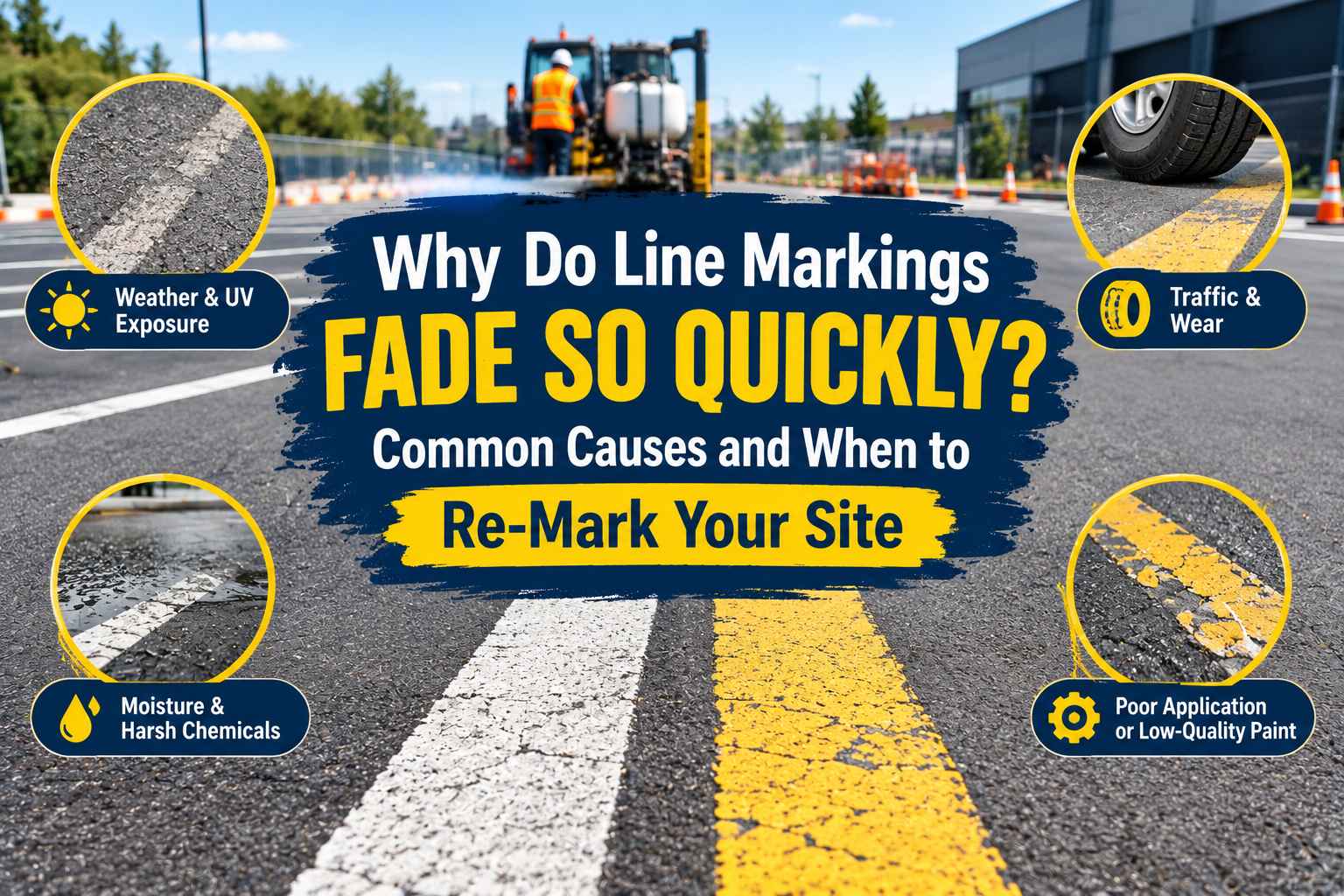
Have you ever pulled into a shopping centre car park or walked across a busy commercial warehouse floor and noticed that the lines guiding you are completely ghosted, faded, or chipped away into oblivion? It is one of those things you rarely think about until it’s gone.
Suddenly, cars are parking across two bays, forklift drivers are guessing where pedestrian walkways are, and you’re left wondering: didn’t we get those lines painted a minute ago?
If you manage a commercial property, maintaining crisp, bright boundaries isn’t just about curb appeal—it’s a core part of safety compliance and traffic management.
But why do those crisp painted stripes wear down so frustratingly fast? Let’s take a look at the real-world causes behind fading lines, what you can do to prevent it, and how to know when it’s time to call in professional line marking services to refresh your site.
The Daily Grind: Why Lines Take a Beating
To understand why paint disappears, you have to look at what those lines endure every single day. Whether you are dealing with an outdoor asphalt car park or an indoor concrete distribution hub, the surface markings are subjected to a constant barrage of physical stress.
Friction and Mechanical Wear
- Every time a car turns its wheels over a parking bay line, or a 3-tonne forklift drags its rubber tires across a warehouse aisle, a microscopic bit of paint gets sheared away.
- This friction is relentless. High-traffic zones like entry ramps, loading docks, and primary driving lanes experience the worst of it, wearing down thin coats of paint in a matter of months.
The Brutal Impact of Weather and UV Exposure
- If your property is exposed to the elements, Mother Nature is working overtime against your paintwork. Intense UV rays break down the chemical bonds in low-quality binders, making the pigment chalky, brittle, and prone to flaking off.
- Add in heavy downpours, thermal expansion from baking summer heat, and sudden temperature drops, and outdoor surfaces become a brutal environment for any coating.
The Hidden Trap of Poor Surface Preparation
- Here is a dirty little secret in the trade: a paint job is only ever as good as the surface underneath it.
- If a contractor rushed the job and painted over grease, oil stains, loose dust, or moisture without proper cleaning or etching, the paint never truly bonded with the concrete or asphalt. Within a few months, traffic vibration causes the paint to peel off in sheets.
Indoor vs. Outdoor Challenges
Not all fading is created equal. The environment your lines live in dictates entirely how they degrade over time.
The Outdoor Asphalt Struggle
- Outdoor car parks face thermal shock, pooling water, and blazing sunshine. Asphalt is also flexible, expanding and contracting with the weather, which can stress rigid paints if they aren’t formulated to flex with the pavement.
The Indoor Concrete Reality
- Inside a warehouse or distribution center, you don’t have to worry about rain or UV rays. Still, you do have chemical spills, industrial sweeping machines, battery acid leaks, and heavy steel-wheeled pallet jacks chewing up the floor.
- This is where specialised safety line marking becomes vital to ensure workers and machinery stay safely separated.
Spotting the Signs: When Is It Time to Re-Mark?
Waiting until your lines are totally invisible is a recipe for minor fender benders, delivery delays, or even workplace safety violations. So, how do you know when it’s time to book a maintenance crew?
Fading Visibility and Night Hazards
- If drivers or pedestrians have to blink to make out a pedestrian crossing or directional arrow—especially at night or during wet weather—you’re past due for a refresh.
Workplace Compliance Risks
- In an industrial workspace, clear lines dictate where machinery can go and where pedestrians are safe. If your designated walkways are wearing thin, you could be risking non-compliance with local work health and safety guidelines.
Post-Construction and Resurfacing
- If you’ve recently had potholes patched, cracks filled, or the whole lot resealed, your old layout has been wiped out and needs a complete remark.
- Investing in expert line marking Australia by Civilcraft providers ensures that the job uses correct formulations, compliant sizing, and proper layout planning to keep your site running safely and looking sharp.
Key Takeaways for Line Marking Services

- Primary Culprits:- Line markings fade due to heavy vehicle friction, harsh UV weather exposure, and poor initial surface preparation.
- Maintenance Timeline:- Most commercial sites need their lines refreshed every 12 to 24 months to maintain safety and visibility.
- Best Solution:- Hiring professional contractors ensures the correct high-durability paints and proper application techniques are used for long-lasting results.
Also Read:- Why Do Sandstone Block Walls Move, Crack or Lean? Warning Signs Property Owners Should Know
Wrapping It Up
At the end of the day, fading line markings are an inevitable part of managing a busy property, but staying ahead of them saves you from major headaches, liabilities, and messy traffic jams.
Whether it’s the blistering Aussie sun, aggressive forklift traffic, or just standard wear and tear chipping away at your surfaces, keeping your boundaries crisp and clear is a smart investment.
By partnering with professional line marking services and scheduling regular touch-ups, you’ll keep your car park or warehouse running smoothly, looking sharp, and—most importantly—safe for everyone who uses it.
FAQs
Q:- Why do car park line markings fade?
Ans:- Constant vehicle tire friction, harsh UV sunlight, pooling rainwater, and surface dirt wearing down the paint binders all contribute to rapid fading.
Q:- How often should commercial line markings be renewed?
Ans:- Most commercial car parks and busy sites require a fresh coat every 12 to 24 months, depending on traffic volume and the quality of the original paint.
Q:- What causes warehouse floor markings to wear away?
Ans:- Heavy forklift traffic, dragging pallets, constant turning friction, and chemical spills or industrial cleaning fluids breaking down weak coatings.
Q:- Which type of paint is best for outdoor line marking?
Ans:- Heavy-duty solvent-based, chlorinated rubber, or two-pack epoxy and thermoplastic materials offer the highest durability and weather resistance for outdoor surfaces.
Q:- Can new line marking be applied over old markings?
Ans:- Yes, provided the old paint is firmly adhered and not flaking; however, scraping or blasting old flaking layers first ensures a much longer-lasting bond.