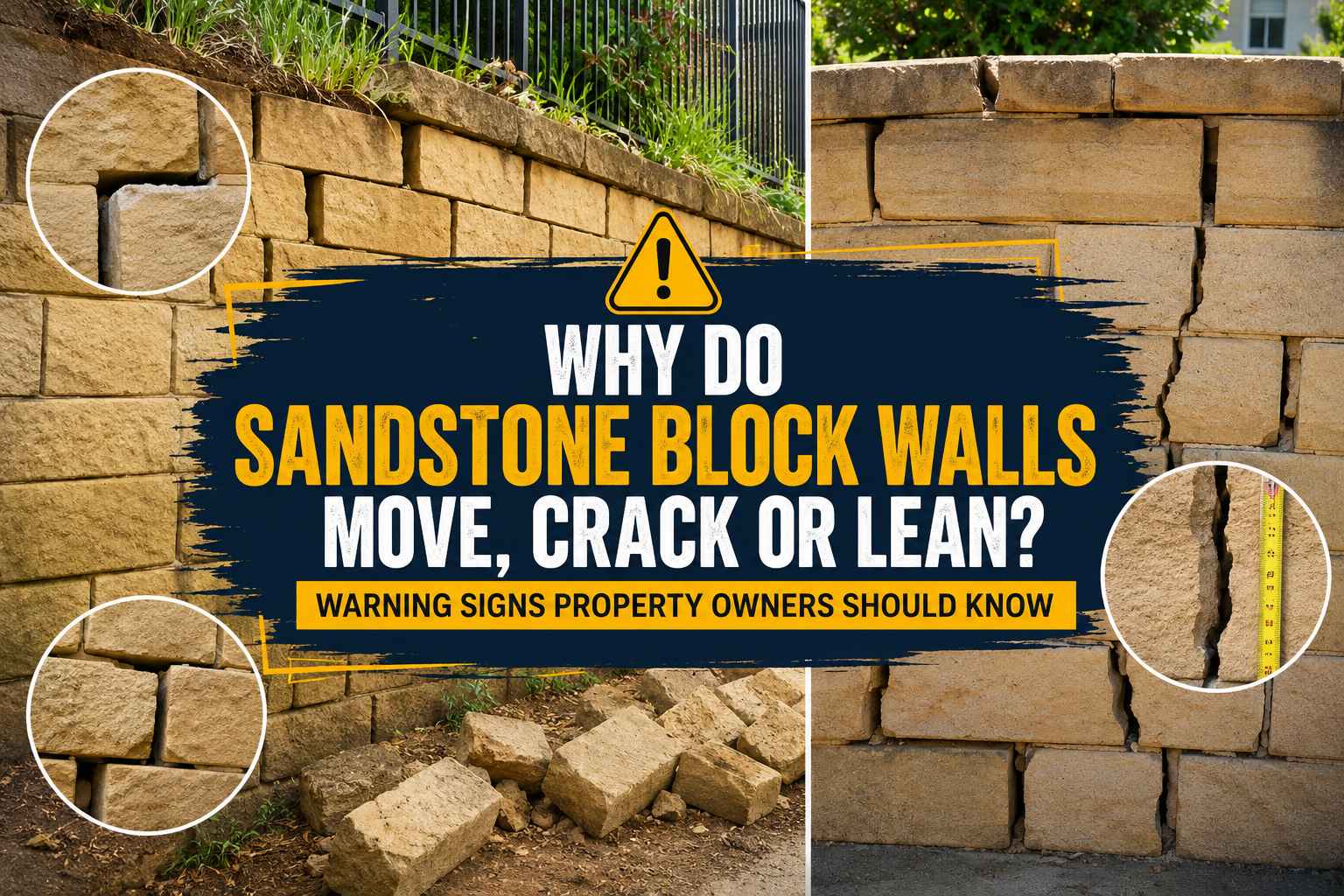
There’s something undeniably gorgeous about natural stone in a landscape. If you’ve got sandstone block walls holding up your garden beds, framing your driveway, or terracing a sloping backyard, you already know how much character and warmth they bring to a property. They look timeless, almost like they’ve been part of the landscape forever.
So, when you wander out with your morning coffee and notice something feels… off, maybe a block is jutting out, a gap is widening, or a hairline fracture has turned into a gaping split- it can instantly ruin your morning.
If you’ve been staring at your yard wondering what on earth is going on, take a deep breath.
You aren’t alone, and your walls aren’t entirely doomed just yet. Let’s break down why these structures shift, crack, or lean, what warning signs to keep on your radar, and how you can tackle the problem before it turns into a backyard disaster.
Why is My Sandstone Retaining Wall Leaning?
A leaning wall is usually what panics homeowners the most. When you look down the line of your sandstone retaining walls and notice they are starting to bow, tilt, or belly outward, gravity is usually winning a battle it shouldn’t be.
Most of the time, a lean comes down to pressure. Soil is remarkably heavy, especially when it’s wet. If a wall wasn’t built with enough thickness, doesn’t have a proper setback (sloping slightly back into the hill), or lacks adequate backfill drainage, the sheer weight of the earth behind it will push it forward.
Another major culprit? Tree roots. We love planting majestic trees near our retaining walls for shade and beauty, but aggressive root systems expand underground over the years. As those roots grow, they act like natural hydraulic jacks, pushing against the back of the wall and forcing the heavy sandstone blocks out of alignment.
What Causes Cracks in Sandstone Block Walls?
Walking out to find a cracked sandstone wall is heartbreaking. Sandstone is a sedimentary rock; it’s durable, but it’s also porous and can be somewhat brittle depending on the specific quarry it came from.
When cracks appear, they usually tell a story about stress, movement, or material fatigue. Here are the usual suspects behind those fractures:
- Ground Settlement:
The earth beneath your walls isn’t static. It shifts, settles, and compacts over time. If the foundation footing wasn’t poured deep enough or compact enough, one section of the wall might sink while the rest stays put, tearing right through the blocks.
- Freeze-Thaw Cycles:
Water gets into the tiny pores of the sandstone. When temperatures drop below freezing, that water expands into ice. Ice takes up more room than liquid water, acting like a wedge inside the stone, slowly prying it apart from the inside out.
- Shoddy Mortar or Joint Failure:
If your wall was built with mortar, that mortar is almost always going to fail before the stone does. As mortar degrades, the individual blocks shift, rub against each other, and crack under uneven pressure.
- External Impact:
Sometimes it’s as simple as backing a car too close to the driveway wall or a heavy mower slamming into the lower tier.
When Does a Leaning Retaining Wall Become Dangerous?
Not every slight tilt means your entire backyard is about to avalanche, but you definitely shouldn’t ignore it either. So, where is the line? When does a leaning wall cross from being an aesthetic annoyance into a genuine safety hazard? You need to pay attention to the scale and context of the movement:
- Height Matters: A knee-high garden wall that has tilted a couple of degrees is mostly a cosmetic headache. However, a four-or-five-foot retaining wall that is leaning poses a massive physical danger, especially to children and pets playing nearby.
- The “Rule of Thumb” for Leaning: Generally, if a wall leans more than ten to fifteen percent of its total height, or if the top courses are visibly displacing away from the base, it has lost its structural integrity.
- Sudden Movement: If a wall moves overnight—say, after a torrential downpour—that’s an emergency red flag.
Are blocks starting to slide out completely? Is the ground at the top of the wall sinking or forming tension cracks? Are there structural elements (like a fence or patio) depending on that wall?
If you answer yes to any of these, the wall is actively failing and could collapse suddenly. Stay away from the base of the wall and keep family members and guests clear until a professional can evaluate it.
Can a Damaged Sandstone Retaining Wall Be Repaired?

It depends on how far gone the damage is, but very often, yes. You don’t always have to tear the whole thing down and start from scratch, though sometimes that is the safest and most cost-effective long-term solution. Here is how professionals typically look at repairing Sandstone Block Walls by Civilcraft:
- Fixing Drainage First: If water caused the issue, repairing the wall without fixing the drainage is just throwing money away. Contractors will often install ag-pipes, core-drill weep holes, or add a drainage swale behind the wall to relieve pressure.
- Repointing and Patching: For minor cracks and deteriorating mortar joints, cleaning out the old material and repointing with fresh, compatible mortar can breathe new life into the structure.
- Tie-Backs and Helical Anchors: For walls that are starting to lean but are otherwise structurally sound, engineers can install earth anchors or tie-backs—essentially heavy-duty steel rods driven deep into the stable soil behind the wall to physically anchor and pull it back into place.
- Partial Rebuilding: If a specific section has blown out or crumbled, a skilled mason can carefully dismantle the damaged area, fix the base foundation, and relay the sandstone blocks cleanly.
Also Read:- Why Do Paved Footpaths Crack, Sink or Become Uneven? Common Causes and Prevention
Wrapping Up
At the end of the day, dealing with movement, cracks, or a lean in your sandstone block walls is just part of the ongoing adventure of property ownership. These walls work hard every single day fighting against gravity, weather, and shifting earth, so it’s natural that they show a bit of wear and tear over the years.
The secret isn’t expecting them to stay pristine forever; it’s catching the warning signs early. A little bit of proactive maintenance, keeping an eye on drainage, and addressing minor cracks before they swallow a whole block can save you thousands of dollars down the track.
FAQs
Q: Can I fix a leaning sandstone wall myself?
Ans: Minor tilts might be manageable, but significant structural leans require a professional engineer or mason.
Q: How often should I check my retaining walls?
Ans: Inspect your walls at least twice a year and immediately after heavy storms or prolonged wet seasons.
Q: Will sealing sandstone prevent cracks?
Ans: Applying a breathable masonry sealer helps reduce water absorption and freeze-thaw damage, though it won’t stop ground movement.
Q: Are hairline cracks in sandstone normal?
Ans: Yes, minor surface settling cracks are common, but you should monitor them closely to ensure they don’t widen.
Q: Do all sandstone walls need drainage pipes?
Ans: Yes, almost every retaining wall needs some form of backfill drainage to prevent catastrophic hydrostatic water pressure build-up.