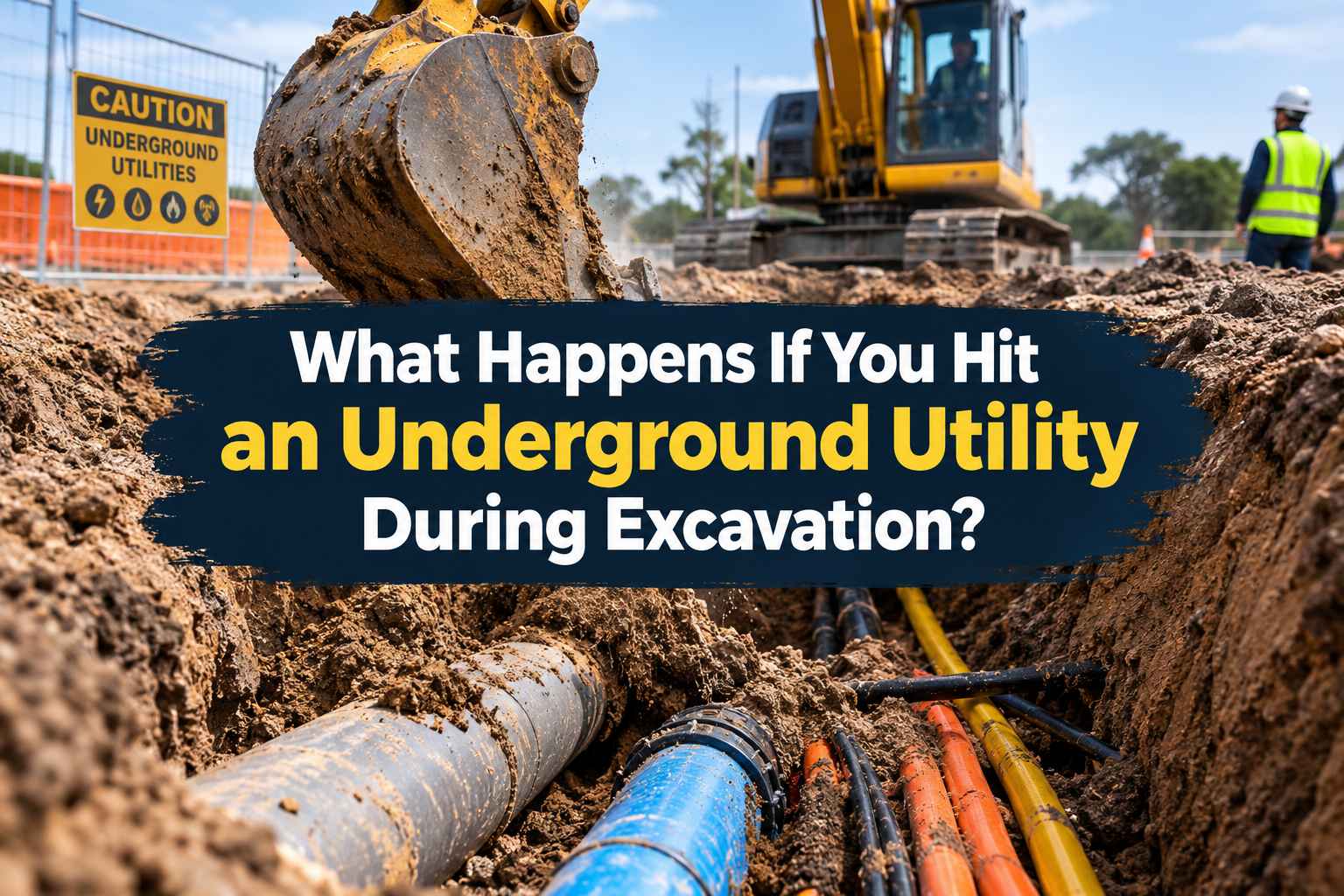
A routine excavation can become a serious safety incident the moment a bucket hits a buried cable or pipe. The consequences can include electric shock, gas release, flooding, service outages, project delays and asset damage. Safe Work Australia requires excavation risks to be managed and says underground essential services information must be available before excavation starts.
So, what happens after a strike?
Stop the work, keep people clear, and treat the service as hazardous until the relevant authority confirms it is safe.
What To Do If You Hit an Underground Utility
Do not keep digging to see what happened.
Your Immediate Response Should Focus on People First:
- Stop excavation and isolate the work area.
- Keep workers and the public away from exposed infrastructure.
- Do not touch or move damaged cables, pipes or conduits.
- Follow the site’s emergency response procedure.
- Contact the relevant asset owner or emergency service.
- Call 000 if there is an immediate threat to life.
The response can vary depending on the utility. An electrical strike can create shock, burns or fire hazards. A damaged gas service can create a fire or explosion risk, while a ruptured water main can quickly affect surrounding ground and property.
For electrical work, Safe Work Australia recommends identifying underground lines and using appropriate controls, including insulated hand tools where relevant.
What Happens if an Underground Electrical Cable is Damaged?
Treat it as potentially energised.
A cable does not need to spark visibly to present a danger. Keep clear, prevent others from entering the area and contact the relevant electricity authority for further direction.
How Are Underground Services Located Before Excavation?
A utility plan is a starting point, not permission to dig blindly.
Before You Dig Australia recommends lodging a free enquiry at least one business day before work begins. Its current best-practice guidance also makes an important distinction: asset plans show infrastructure in the vicinity, but they do not necessarily pinpoint the exact location.
For higher-risk or congested sites, the process should typically involve:
“Plan → Prepare → Locate → Pothole → Protect → Proceed”
That means reviewing service plans, checking visible clues such as pits and marker posts, using competent locating services where required, and physically verifying services before mechanical excavation.
Safe Work Australia’s excavation code recognises potholing and underground locating equipment, including electromagnetic cable locators and ground penetrating radar, as methods for identifying buried services.
Why Non Destructive Digging Matters
Mechanical excavation is built for moving soil efficiently. Around critical underground assets, precision becomes much more important.
Non Destructive Digging Services use methods such as hydro excavation and vacuum extraction to expose buried infrastructure while reducing the need for mechanical excavation directly around the asset.
BYDA specifically identifies hand digging and hydro vacuum extraction as possible potholing methods, subject to the asset owner’s requirements.
NDD Can Help With:
- Confirming the position and depth of buried services
- Exposing cables and pipes before trenching
- Working around congested underground corridors
- Reducing mechanical contact with existing infrastructure
- Supporting safer civil construction and maintenance
Civilcraft provides hydro/vacuum truck services that include non destructive digging, hydro excavation and trenching for situations where traditional excavation may be dangerous or impractical.
NDD is not a replacement for proper planning. It is one of the practical controls that can help reduce excavation risk when used correctly.
Who Is Responsible for Underground Utility Damage?
There is no single answer for every project.
Responsibility may depend on the contract, asset owner requirements, available service information, excavation methods, site controls and applicable state or territory laws.
For commercial projects, keep clear records of the work completed before digging, including:
- BYDA enquiries and service plans
- Locator reports
- Potholing results
- Site photographs and markings
- Risk assessments and SWMS where applicable
- Communications with asset owners
Safe Work Australia states that underground essential services information must be made available to workers, principal contractors and subcontractors.
Good records do more than satisfy paperwork requirements. They show how the excavation risk was identified and managed.
Also Read:- Why Civil Construction Projects Get Delayed
Safer Excavation Starts Before the First Bucket
The cheapest utility strike is the one that never happens.
For projects involving Underground Services Australia, buried infrastructure should be located, verified and protected before heavy excavation gets underway. Where conventional digging creates unnecessary risk, Non Destructive Digging Services can provide a controlled method for exposing critical assets.
Civilcraft supports commercial, infrastructure, government and property projects with hydro/vacuum excavation and NDD capabilities.
Find the service first. Protect it. Then dig.
FAQs
Q:- What should you do if you hit an underground utility while excavating?
Ans:- Stop work, secure the area, keep people away from the service and contact the relevant asset owner or emergency service. Call 000 where there is an immediate threat to life.
Q:- What happens if an underground electrical cable is damaged during excavation?
Ans:- It can create serious electrical hazards, including electric shock, burns and fire. Treat the cable as hazardous and follow the site’s emergency procedure.
Q:- How can underground utilities be located before digging?
Ans:- Use BYDA information, review asset-owner requirements, inspect the site, use competent locating methods and pothole where required to physically verify services.
Q:- Is non destructive digging safer around underground services?
Ans:- NDD can reduce the risk associated with mechanical excavation around buried infrastructure by using controlled methods such as hydro excavation and vacuum extraction. The appropriate method depends on the asset and site conditions.
Q:- Who is responsible for underground utility damage during excavation?
Ans:- Responsibility depends on the project’s specific circumstances, contractual arrangements, asset-owner requirements and applicable laws. It should be established based on the facts of the incident rather than assumed.