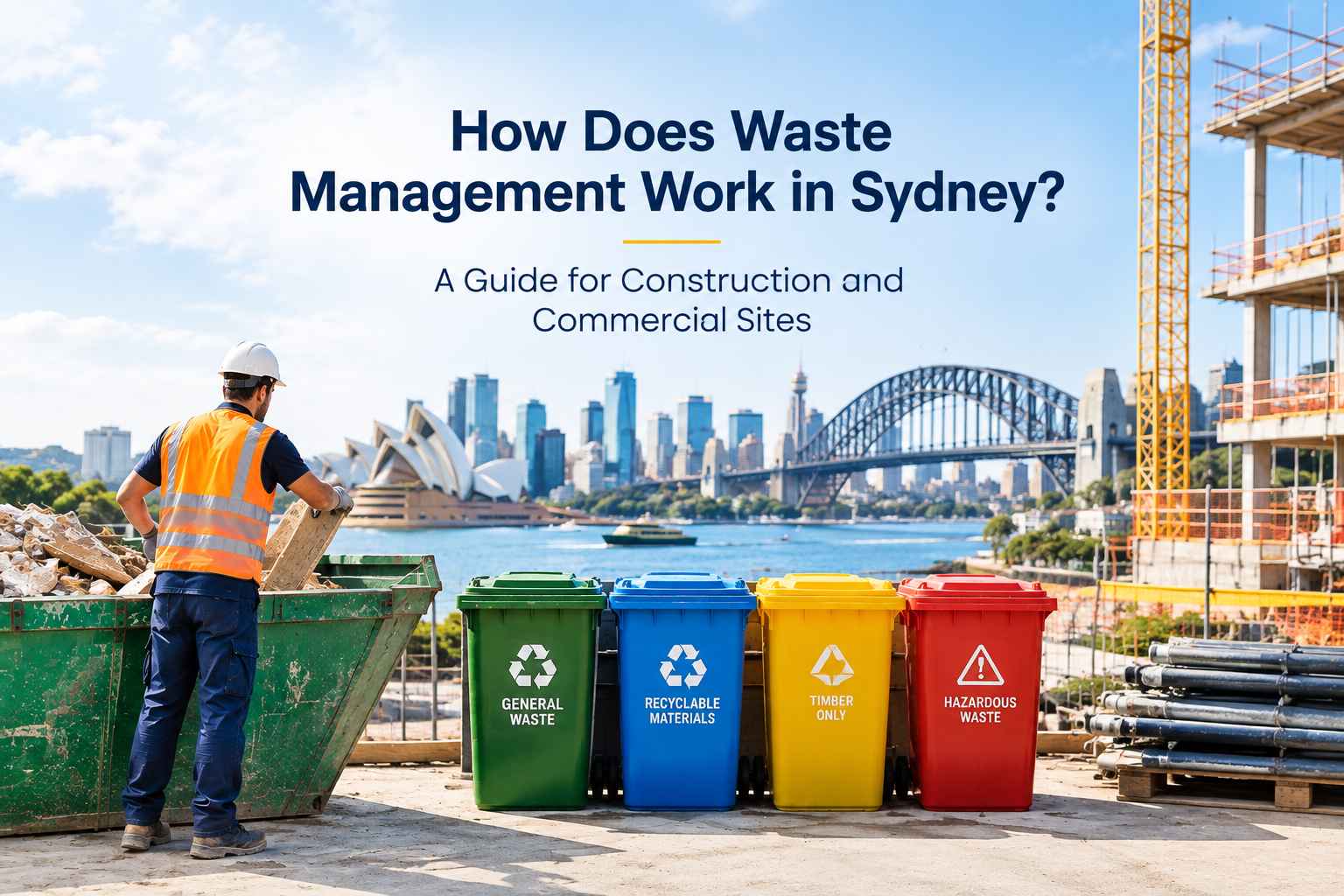
A full skip bin is easy to spot. The bigger risk is what happens after it leaves your site. Sydney construction and commercial projects need a clear system for identifying, separating, storing, transporting and recovering or disposing of waste through lawful channels. The scale is significant: NSW generated 22.4 million tonnes of waste in 2024-25, while construction and demolition waste generation increased by 7% during that year.
What Does Waste Management Include in Sydney?
For developers, asset managers and site operators, managing waste can involve far more than arranging a collection.
Typical Activities Include:
- Identifying and classifying waste
- Separating materials at the source
- Providing suitable on-site storage
- Organising recycling and resource recovery
- Managing commercial and construction waste collections
- Handling soil, spoil and excavation material
- Managing concrete, bricks, asphalt, timber and plasterboard
- Controlling contaminated or hazardous materials
- Arranging lawful transport and disposal
- Maintaining records and checking waste contractors
The planning happens early.
Before demolition, excavation or construction begins, project teams can map expected waste streams, establish storage areas and define contractor responsibilities.
That small amount of preparation can prevent a surprisingly messy problem later.
How Is Construction Waste Managed in Sydney?
Concrete is only part of the story.
Construction and demolition activities can generate soil and rock, asphalt, bricks, concrete, plasterboard, timber, vegetation, asbestos and contaminated soil, depending on the project.
A Sensible Workflow Is:-
Identify → Separate → Store → Transport → Recover or Dispose → Record
- Source separation deserves particular attention. Clean concrete, metals, timber and other recoverable materials are easier to process when they have not been mixed with unsuitable waste.
- Compliance matters just as much.
- NSW requirements state that waste must be transported to a place that can lawfully receive it. Waste owners and transporters can have responsibilities under these requirements, making contractor selection an important part of project control.
What Types of Waste Can Commercial Services Handle?
Every site has its own waste fingerprint.
An office might produce mostly cardboard, paper and general rubbish. A warehouse can add pallets, packaging and damaged stock. A refurbishment can change the picture overnight.
Depending On The Provider and Waste Classification, Commercial Services May Handle:-
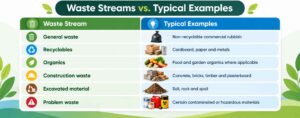
The right collection arrangement depends on volume, waste type, storage capacity, vehicle access and operating patterns.
For businesses in the City of Sydney area, commercial waste collection arrangements are made independently rather than being included in standard council rates.
How Often Should a Business Arrange Waste Collection?
Weekly is not automatically right.
Neither is daily.
Collection frequency should reflect what the site actually generates. A busy warehouse may fill containers rapidly, while a small office could need considerably less capacity. Construction volumes can also shift sharply between excavation, structural work and fit-out stages.
Check:-
- Waste volumes and composition
- Container capacity
- Available storage space
- Collection access
- Operating hours
- Current project stage
- Segregation requirements
If bins regularly overflow, the collection schedule or container mix probably needs reviewing.
How Can Businesses Reduce Construction and Commercial Waste?
The best waste reduction strategy begins before purchasing materials.
- Accurate quantity estimates, careful storage, reuse and source separation can reduce avoidable disposal. Project owners can also include waste requirements in procurement documents and subcontractor agreements.
- There is a direct financial consideration.
- For 2026-27, the NSW waste levy for the Metropolitan Levy Area is $180.20 per tonne, effective from 1 July 2026. Sydney is within this levy area.
- Less avoidable waste can therefore mean less material sent for disposal and better use of project resources.
Food businesses should also monitor current requirements. From 1 July 2026, certain NSW food businesses with capacity for 3,960 litres or more of general waste per week are subject to requirements concerning separation of food and garden organics.
When Waste Management Becomes Part of Civil Works
Some waste problems cannot be solved by adding another bin.
Excavation, drainage, infrastructure maintenance and work around operating facilities can create material that needs specialist removal, controlled handling or equipment suited to restricted environments.
Civilcraft provides hydro/vacuum truck services for non-destructive digging, excavation, waste management and cleaning. Its civil construction and maintenance services also support property, facility, government and infrastructure projects.
This matters when waste handling is connected to a wider civil works program rather than being a standalone collection requirement.
What Should a Sydney Site Manager Check?
Before Work Begins, Ask Five Practical Questions:
- What waste will the project generate?
- Which materials can be reused or recovered?
- Where will each waste stream be stored?
- Who is authorised to transport and receive it?
- What records need to be retained?
The answers create a much clearer chain of responsibility. They also make it easier to spot problems before they become expensive.
Also Read:- What Happens If You Hit an Underground Utility During Excavation?
Keep Waste Under Control From Day One
Waste becomes easier to manage when it is treated as part of the project, not an afterthought.
For Sydney construction, infrastructure and commercial sites, that means planning the waste streams, checking disposal pathways and adapting collection arrangements as site conditions change.
Where excavation, maintenance and waste handling overlap, Civilcraft can support the civil works with practical equipment and site-focused services.
FAQs
Q:- What does waste management include in Sydney?
Ans:- It can include classification, segregation, storage, collection, recycling, transport, resource recovery, disposal and record keeping.
Q:- How is construction waste managed in Sydney?
Ans:- Waste is identified and separated by material and risk, then directed to appropriate recovery, recycling or lawful disposal facilities.
Q:- What types of waste can commercial waste services handle?
Ans:- Depending on the provider and classification, services may cover general waste, recyclables, organics, construction materials, excavated material and selected problem wastes.
Q:- How often should a business arrange waste collection?
Ans:- There is no universal frequency. Collection should match the site’s waste volume, storage capacity, operating schedule, access and waste types.
Q:- How can businesses reduce construction and commercial waste?
Ans:- Plan quantities carefully, protect materials from damage, reuse suitable products, separate recoverable materials and monitor disposal volumes.