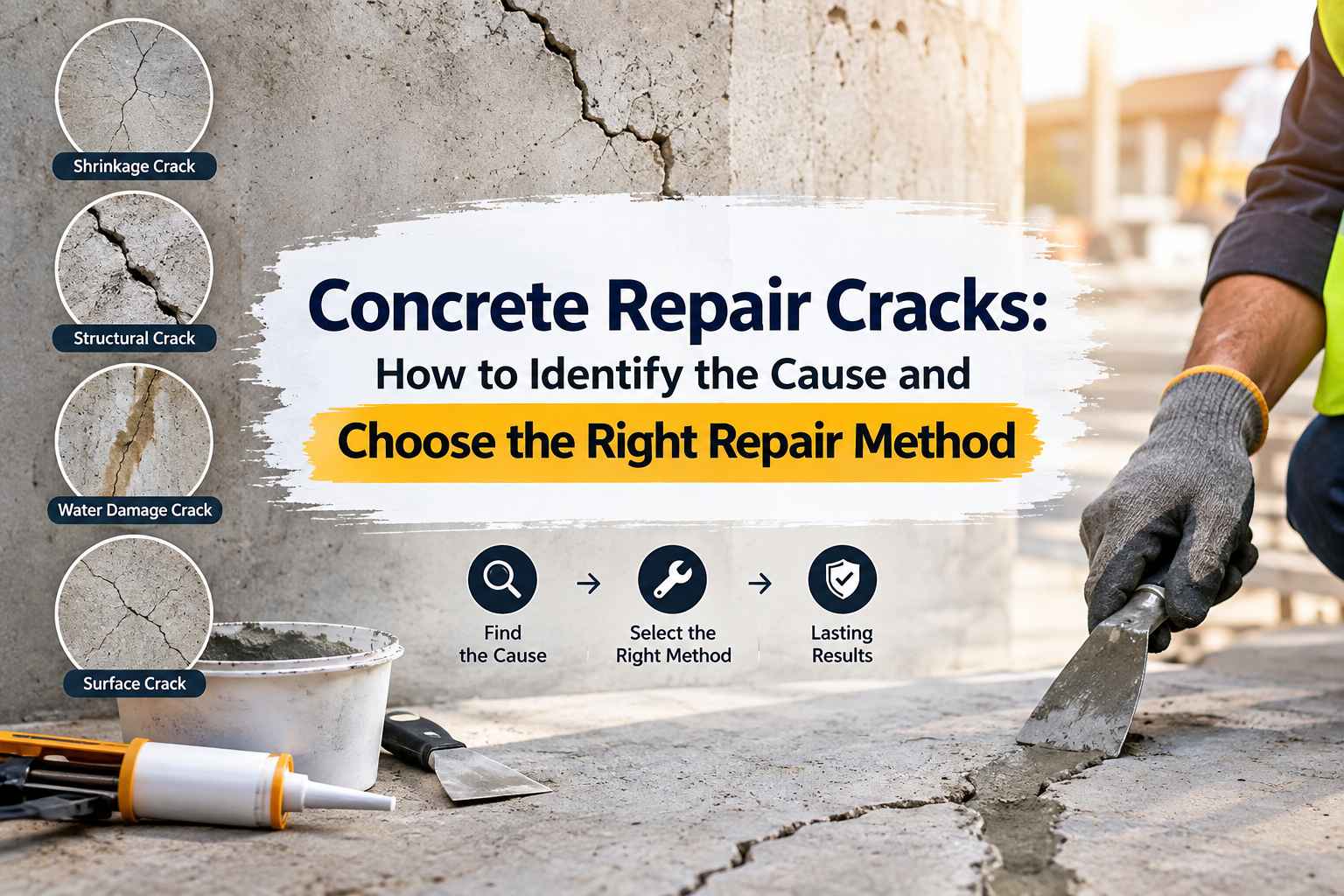
A crack in a concrete slab is easy to notice. The reason behind it is not.
For an asset manager, property manager or facility team, that distinction matters. A fine surface crack may be associated with shrinkage, while a widening crack in a structural element could point to movement, loading or deterioration that needs further investigation. The repair should therefore begin with finding the cause, not simply filling the gap.
What Causes Cracks to Appear in Concrete?
Concrete cracking has several possible causes. The crack pattern, location and surrounding condition can provide important clues.
Common Causes Include:-
- Drying Shrinkage:- Concrete contracts as it loses moisture during drying and curing.
- Thermal Movement:- Concrete expands and contracts as temperatures change.
- Settlement:- Movement beneath a slab or structure can create cracking and displacement.
- Overloading:- Loads beyond the intended design conditions can produce flexural, tensile or shear cracking.
- Restraint:- Concrete movement can be restricted by adjoining elements, reinforcement or inadequate movement provisions.
- Corrosion:- Reinforcement corrosion can contribute to cracking, delamination and concrete spalling.
The Cement Concrete & Aggregates Australia guide also identifies drying shrinkage, thermal movement and structural loading as important considerations when assessing concrete cracking.
That is why two cracks that look similar from a distance may require completely different responses.
How Do You Know If a Concrete Crack Is Serious?
There is no reliable rule that says every hairline crack is harmless or every wide crack is structural. Assessment needs to consider more than width.
Look For These Warning Signs:-
Cracks That are Changing:-
- A crack that continues to widen, lengthen or reappear after previous repair deserves investigation. Ongoing movement can make a rigid repair unsuitable.
Cracks with Displacement:-
- If one side of a crack sits noticeably higher or lower than the other, the issue may involve movement of the supporting material or structure.
Cracking with Spalling or Exposed Reinforcement:-
- Broken concrete, rust staining, delamination or exposed reinforcement can indicate deterioration that extends beyond the visible crack.
Cracks Allowing Water Ingress:-
- Water penetration can create additional durability concerns, particularly where reinforcement or sensitive internal areas are involved.
For commercial assets, photographs, measurements and inspection dates can also provide a useful condition history. Small changes become much easier to identify when there is something to compare.
What Is the Best Method for Repairing Concrete Cracks?
There is no single best concrete crack repair method. The appropriate solution depends on the cause, crack characteristics, exposure conditions and required performance.
Epoxy Injection:-
- Epoxy injection can be used for selected structural cracks where restoring continuity and reducing moisture penetration are objectives.
- ACI guidance stresses that the cause of the crack should be assessed and addressed first. If ongoing movement is expected, epoxy injection may not be appropriate.
Flexible Sealants:-
- Where controlled movement is expected, a flexible sealing system may be more suitable than a rigid repair. The crack, joint configuration and surrounding concrete still need to be assessed before selecting the product.
Cementitious Repair Materials:-
- Repair mortars can be suitable for localised areas where concrete has deteriorated, chipped or spalled. Good surface preparation is critical. Simply applying new material over unsound concrete is unlikely to provide a durable repair.
Concrete Rehabilitation:-
- More extensive deterioration may require removal of unsound concrete, assessment of reinforcement, treatment of affected areas and reinstatement using an appropriate repair system.
- The principle is straightforward: a durable repair must deal with the defect and the conditions that caused it.
A Better Approach to Concrete Crack Repair
For commercial and infrastructure assets, a practical assessment should cover five areas:
- Locate The Damage:- Record where the cracks occur and whether they affect slabs, walls, beams, columns or other elements.
- Measure and Document:- Record approximate crack width, length, direction and any visible displacement.
- Investigate The Cause:- Consider shrinkage, thermal movement, settlement, loading, water exposure and reinforcement deterioration.
- Select The Repair:- Match the repair method and material to the condition rather than choosing a product first.
- Check The Outcome:- Inspect completed repairs and establish monitoring requirements where movement or deterioration may continue.
For structural cracking, the repair specification should be based on appropriate engineering assessment rather than a cosmetic treatment. ACI’s current concrete repair guidance similarly places emphasis on proper design, material selection and application methods.
When Should You Call a Professional?
Early assessment can prevent a minor defect from becoming a larger maintenance issue. Arrange professional concrete inspection when you notice:
- Cracks that are widening or spreading
- Repeated cracking after repair
- Significant displacement
- Spalling or exposed reinforcement
- Water entering through cracked concrete
- Cracking in beams, columns, retaining walls or other structural elements
- Damage affecting safety, access or asset operation
For property managers and asset owners, the value is not simply in repairing today’s crack. It is in understanding the condition of the asset and planning the right intervention before deterioration becomes more disruptive.
Also Read:- How to Pressure Clean Concrete : Best Methods for Driveways, Paths & Outdoor Areas
FAQs
Q:- Can hairline cracks in concrete be repaired?
Ans:- Yes, where repair is appropriate. Some fine cracks may be monitored, while others may require sealing or another treatment depending on their cause, location and exposure.
Q:- What is the best method for repairing concrete cracks?
Ans:- It depends on the type and cause of the crack. Epoxy injection, flexible sealants, repair mortars and broader concrete rehabilitation each have different applications.
Q:- Are concrete cracks always a sign of structural damage?
Ans:- No. Some cracking is associated with shrinkage or thermal movement. However, changing cracks, displacement, spalling and cracking in structural elements should be assessed professionally.
Q:- Can concrete cracks be repaired without replacing the concrete?
Ans:- Often, yes. Suitable cracks may be sealed or injected. Where surrounding concrete is deteriorated, unsound material may need to be removed before repair.
Q:- When should you call a professional for concrete crack repair?
Ans:- Seek professional assessment when cracks are growing, recurring, displaced, allowing water ingress or associated with spalling or exposed reinforcement.
Repair the Cause, Not Just the Crack
Concrete damage rarely tells the whole story from the surface. The right repair begins with understanding what is happening beneath it.
For Australian commercial, infrastructure and government assets, Civilcraft provides practical civil construction and maintenance solutions focused on long-term asset performance. Contact us to discuss your concrete repair or maintenance requirements.