Let’s set the scene. You’re on a job site in Sydney or Melbourne, the sun is out, and the excavator is humming. You’ve checked the plans, you’ve got your morning coffee, and everything is going perfectly—until it isn’t.
You hear that heart-stopping crunch or, worse, a sudden hiss. Suddenly, the “quick dig” has turned into a multi-million dollar disaster. You’ve just struck a high-pressure gas main or a critical fibre-optic cable.
The local neighbourhood loses internet, the fire brigade is on the way, and your budget just evaporates faster than a puddle in the Outback. Damaging underground pipes during digging is a massive liability.
But what if I told you there’s a way to dig that is basically like “keyhole surgery” for the earth? Non Destructive Digging (NDD) is the solution.
The Scary Reality of “Digging Blind”

In Australia, our underground is a chaotic web of aging clay pipes, modern plastic conduits, high-voltage electrical lines, and “ghost” cables that don’t even appear on official maps.
Traditional excavation with big, heavy-duty backhoes and metal buckets is basically a sledgehammer. It’s effective, but it has zero precision. When a metal bucket meets a utility line, the utility line always loses. The consequences are massive:
- Safety Risks: Strikes on gas or power lines can lead to explosions or electrocution.
- Project Delays: Your site becomes a crime scene while authorities investigate and repair the damage.
- Financial Ruin: Repairing a single major utility strike can cost tens of thousands, not to mention the legal fines for disrupting public services.
What Exactly is Non Destructive Digging?
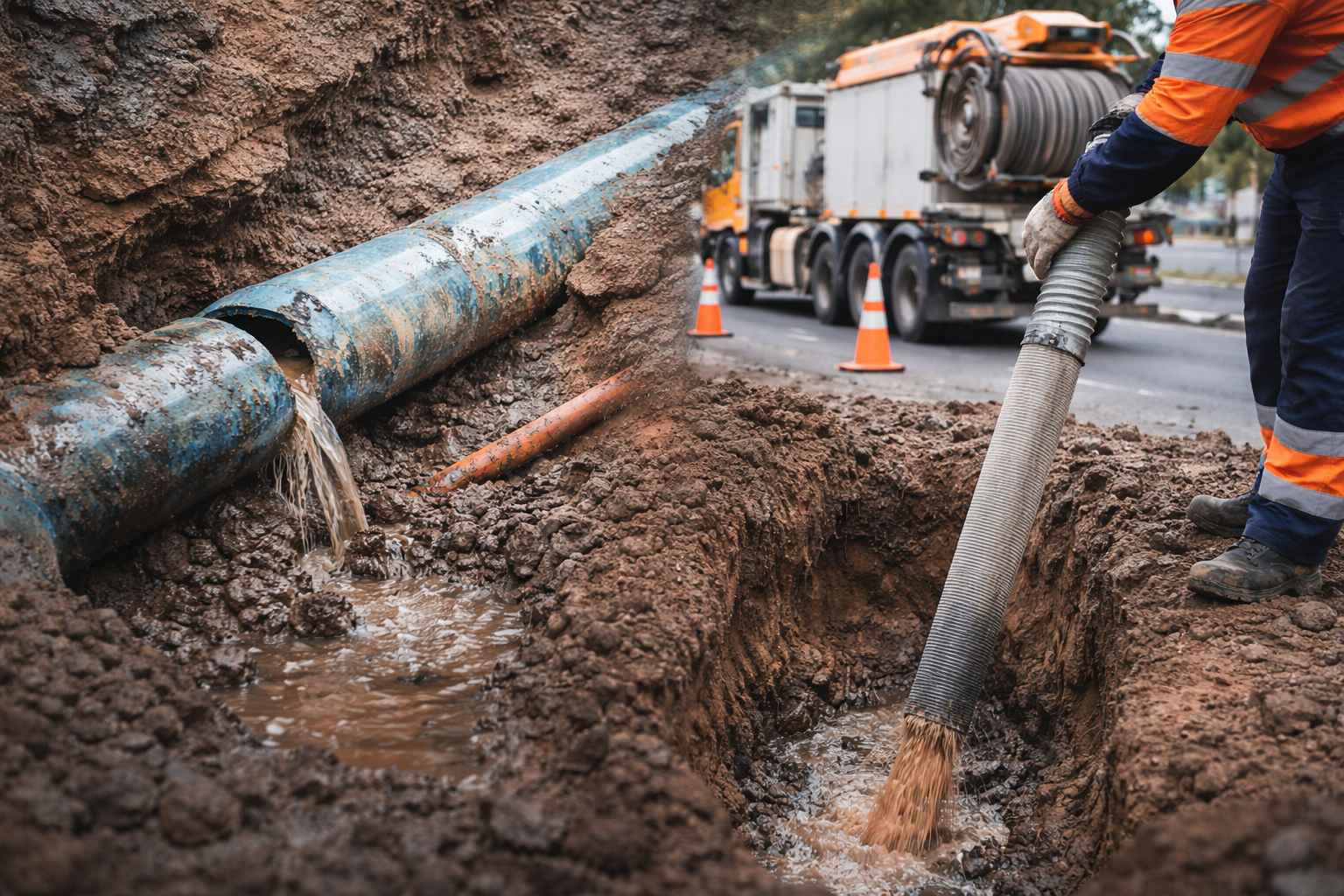
If traditional digging is a sledgehammer, Non Destructive Digging is a scalpel. It’s a method of excavation that uses high-pressure water (Hydro Excavation) or air to break up the soil, which is then sucked up by a powerful vacuum system into a debris tank.
Because there are no sharp metal teeth involved, the “digging” medium—water or air—simply flows around the pipes and cables. It washes the dirt away, leaving the utilities perfectly exposed and, most importantly, completely unharmed.
Why NDD is the “Main Character” of Construction in 2026:
- Surgical Precision: You can dig a hole exactly where you need it, as small as a dinner plate if necessary.
- Reduced Labour: You don’t need a team with shovels sweating in the sun; the machine does the heavy lifting.
- Cleaner Sites: All the “slurry” goes straight into the truck’s tank. No messy piles of dirt left around the sidewalk.
- Asset Protection: It’s the only way to “positively identify” a utility (a process known as potholing) without the risk of a strike.
Hydro vs. Air Non Destructive Digging: Which Option Do You Need?
There are two main ways to roll with non destructive digging in Australia:
- Hydro Excavation (The Wet Way):- It uses high-pressure water. It’s the go-to for hard-packed Aussie clay or rocky ground. It’s incredibly fast and efficient at “slicing” through the earth.
- Vacuum Excavation (The Dry Way):- It uses compressed air. The big win here? The soil stays dry, meaning you can often dump it right back into the hole once you’re done—no disposal fees, no mud.
How Civilcraft Makes You Look Like a Pro
If you’re managing a project in Australia, especially in high-stakes environments like airports, busy motorways, or sensitive marine zones, you don’t just need a machine—you need a risk specialist. This is where Civilcraft comes in.
Civilcraft isn’t just about digging holes; we are civil engineering experts who understand the “why” behind the dig. We’ve invested heavily in high-capacity vacuum trucks and highly trained operators who know how to navigate the complex utility networks of Sydney and beyond.
When you partner with Civilcraft, you’re getting:
- Expert Oversight: We apply engineering principles to every dig to ensure structural stability.
- Turnkey Solutions: From initial utility locating and potholing to final restoration, we handle the whole lifecycle.
- Disruption-Free Work: We specialise in time-critical projects (like airport runway maintenance) where you literally cannot afford a mistake.
Basically, Civilcraft takes the “stress” out of the “pressurised water.”
Also Read:- Facing Water Leakage Issues? Water Infrastructure Services in Australia Explained
The “Potholing” Secret
One of the most common uses for non destructive digging is potholing. It is the practice of digging small, strategic holes to confirm the exact depth and alignment of a utility visually.
Even if you have the best “Before You Dig Australia” (BYDA) plans, those maps can be off by a meter or two. Potholing with NDD allows you to see the pipe with your own eyes before you bring in the heavy excavators. It’s the ultimate “safety first” move.
Final Thoughts: Don’t Gamble with the Ground
At the end of the day, skipping non destructive digging to save a few bucks on the hourly rate is a massive gamble. One utility strike will cost you 100x more than the price of a vac truck.
In Australia’s crowded urban corridors, NDD isn’t just a “nice-to-have”, it’s the industry standard for anyone who values their budget, their timeline, and their sanity.
FAQs
Q:- Is NDD faster than manual digging?
Ans:- Yes, way faster! A vac truck can excavate in minutes what would take a crew with shovels hours to do, all while being much safer.
Q:- Can NDD cut through a pipe?
Ans:- No. The water/air pressure is calibrated to break up soil but is gentle enough that it won’t damage plastic, metal, or fibre-optic conduits.
Q:- What happens to the dirt that gets sucked up?
Ans:- For hydro excavation, the “slurry” is stored in the truck and taken to a licensed disposal facility. With air excavation, the dry dirt can often be reused on-site.
Q:- Why is potholing important?
Ans:- It’s the only way to get “Level A” data, meaning you have actually seen the pipe and know exactly where it is, rather than guessing based on a map.
Q:- Does Civilcraft work on small residential jobs?
Ans:- While Civilcraft excels at large-scale infrastructure and government projects, their NDD expertise is a game-changer for any site where underground assets are a risk.