
In Australia, where extreme weather swings between droughts and floods are becoming the new normal, traditional stormwater systems are being pushed to the limit. That’s why green stormwater infrastructure is taking centre stage.
These are natural or nature-based systems designed to mimic how water behaved before towns and cities laid concrete over every patch of land. So, if you’re keen on exploring rain gardens, bioswales, or tree box filters for a cleaner, greener future and wondering how your business or community can benefit, let’s dive in.
What Is Green Stormwater Infrastructure?
Green Stormwater Infrastructure captures rainfall where it lands, filtering out pollution and letting water soak back into the ground or slowly flow into drains. Instead of huge underground pipes doing all the work, you get bursts of rain, greenery, and groundwater harmony working together. Examples include:
- Constructed wetlands
- Permeable paving
- Tree box filters
- Rain gardens
- Green roofs
- Bioswales
All of them work to slow down water, clean it, and use plants and soils as natural filters.
Why is There a Need for Green Software Infrastructure in Australia
- Curbing urban flooding: Built-up areas generate flash floods during heavy rain. Green infrastructure slows down flow at the source. In Melbourne, one project cut peak flow by up to 16% and downstream flooding by nearly 30%!
- Cleaner waterways: Rainwater now carries oil, heavy metals, rubbish; GSI filters those toxins before they hit rivers and beaches.
- Battle urban heat: Green space cools cities by soaking up heat, green roofs and trees bring those relief degrees back.
- Wildlife boost & beauty: More plants bring more birds, bees, and butterflies. Plus, they beautify schools, parks, medians, and even driveways.
- Snappy return on investment: These systems double as public green space, lift property values, and help tick regulatory boxes.
Clever GSI Solutions You’ll See in Aussie Cities
-
Tree Box Filters: Think of trees in a concrete pot; these filters create micro systems at kerbsides to treat water and give trees a juicy drink. They reduce heavy metals by up to 90%, that’s science working on your street verge.
-
Rain Gardens: These are shallow planted dips, ideal for soaking up roof or driveway runoff. Great for backyard installations or road verges. They naturally filter water and help revive local wildlife.
- Constructed Wetlands & Living Streams: Designed urban wetlands like Mikawomma Reserve in Adelaide. These slow waters let it settle and filter pollutants before the excess drains away.
-
Green Roofs: Living roofs layered with soil and plants soak up water and insulate buildings. In Perth, a 2,000 m² green roof held back vast volumes from hitting drains during a storm.
-
Permeable Paving: Driveways and carparks that drain through gravel-filled pavers instead of flooding the street. Helps recharge groundwater and quietens runoff.
-
Bioswales: A cousin to rain gardens, but longer and narrower, often littered along streets or in parking lots. Perfect for large-scale water management.
How Civilcraft Supports Green Stormwater Infrastructure
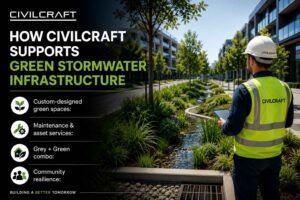
Civilcraft’s team has been at the forefront of designing, installing, and maintaining GSI across Australia. Our team has a specialisation in stormwater management in Sydney and around.
- Custom-designed green spaces: Civilcraft works on partnerships with councils, schools, and businesses, installing rain gardens, bioswales, and even living streams that look after flood risk and bring greenery to the site.
- Maintenance & asset services: Green Software Infrastructure isn’t a “set and forget” thing. We schedule regular maintenance through our Maintenance & Optimisation of Service Infrastructure division, meaning plants stay alive, filters stay clean, and flood risk stays low.
- Grey + Green combo: Civilcraft can integrate traditional infrastructure (like storm drains) upstream to reduce sediment load, protecting your green spaces long-term.
- Community resilience: By working with local councils and following federal water quality policies, Civilcraft helps Aussie towns meet environmental standards, mitigate flood risks, and create greener spaces that everyone enjoys.
Best Practices for Long-Term Performance
Across Sydney, councils are reimagining grass verges. Rain gardens and bioswales are now doing the work, improving water quality and streetscapes, while boosting local ecosystems. People report cooler streets, better biodiversity, and stronger community connections. These green systems are awesome, but only work when properly looked after:
- Ongoing maintenance: Remove litter, check plants, and dredge sediment.
- Community training: Inform residents and businesses, everyone plays a part.
- Council support: Include systems in infrastructure budgets so they’re cared for long-term.
- Mix green + grey: Let fences or drains capture heavy debris before entering bioretention zones.
What You Can Do Next
If you’re a homeowner, business or council looking for real impact, Green Stormwater Infrastructure is the way forward. Whether you want to tackle flooding, support biodiversity, or add community appeal, these systems tick every box.
Contact Civilcraft today to explore design options and get a demo project. They specialise in green & grey integration, long-term service, and compliance, making sure Aussie cities stay clean, green, and climate-ready.
Final Thoughts
Green stormwater infrastructure is not just eco-fashion: it’s practical, long-lasting, and community-strengthening. In Australia’s changing climate, nature-based solutions are essential. With well-designed infrastructure, we can manage rainfall, filter pollutants, cushion floods, cool urban heat, and build thriving ecosystems.
So yes, if you care about your street, your water quality, or your local backyard wildlife, go green. Equip your property or council with smart stormwater infrastructure and give voice to a cleaner, healthier future. Civilcraft is standing by to help lead the transformation.
Creating green, living infrastructure is both urgent and achievable. Let’s make Australia cleaner, cooler, and greener together.
FAQs
Q: What’s the difference between green and grey stormwater infrastructure?
- Green uses plants and soil to slow and clean water naturally.
- Grey includes pipes, culverts, and drains. The best systems combine both.
Q: Will these systems cause mosquitoes or pests?
Ans: Nope, if properly designed with layers (like gravel below rain gardens), water either infiltrates or flows away. Speaking from experience, Civilcraft builds to avoid stagnant pools.
Q: Can I add a rain garden to my backyard?
Ans: Absolutely. Over 1 m² is enough to reduce stormwater runoff from the roof or driveway. Use local native plants for easy care.
Q: Do green roofs need expensive upkeep?
Ans: Not really, modern systems are self-contained and require minimal maintenance, just periodic checks and weeding.
Q: What’s the typical lifespan of these systems?
Ans: With Civilcraft installation and follow-up maintenance, rain gardens, permeable paving, and wetlands can serve effectively for 20–30 years, sometimes even longer.