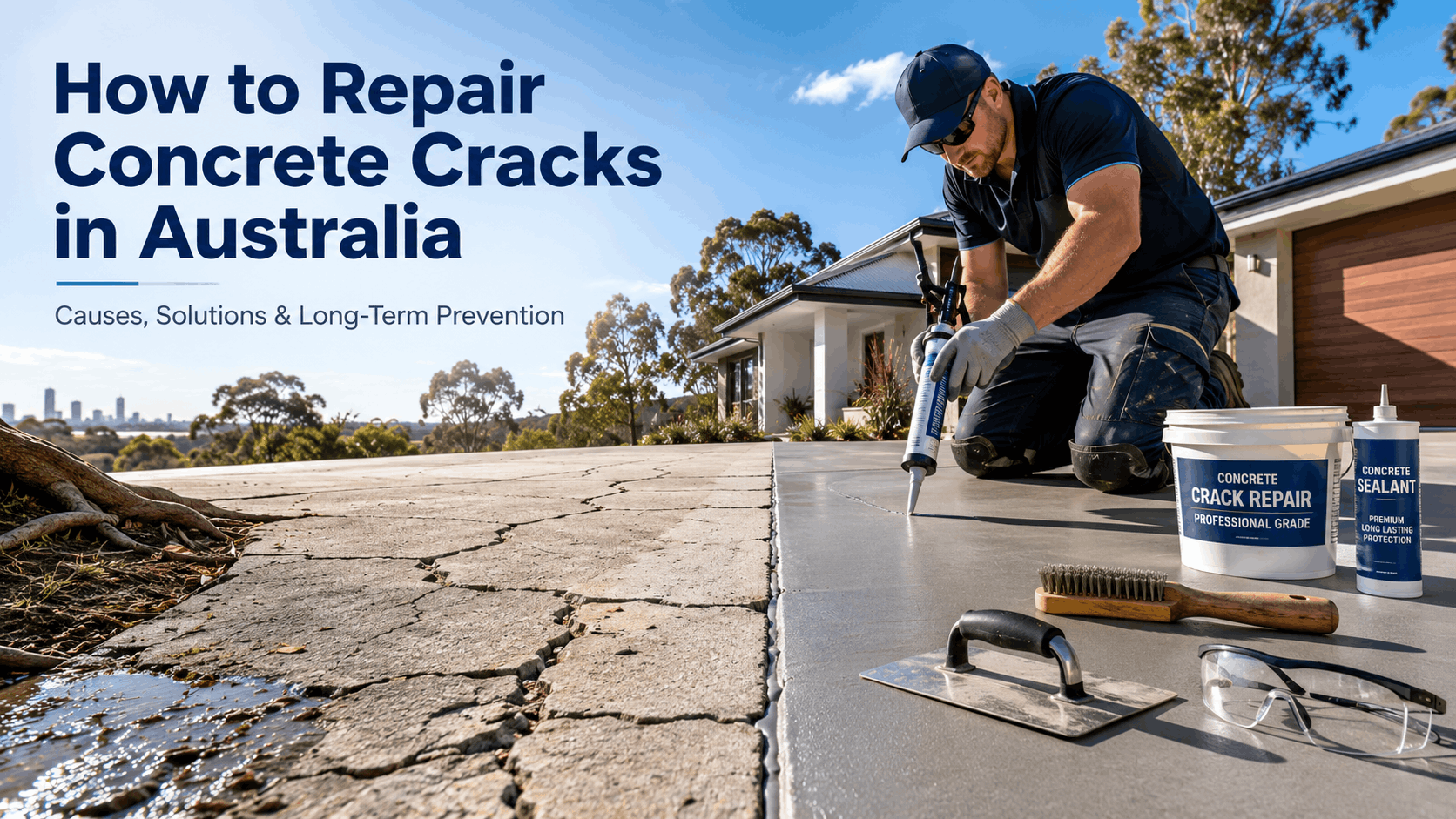
Concrete is built to last, but even the strongest surfaces are not immune to cracking. Across Australia, driveways, warehouse floors, footpaths, loading docks and commercial pavements are exposed to harsh sunlight, heavy rainfall, reactive soils and constant traffic. Over time, those conditions place stress on concrete, leading to visible cracks that are easy to ignore until they become a bigger problem.
Not every crack signals structural failure. Some are simply part of the natural curing and ageing process, while others point to movement beneath the slab or ongoing water damage. Knowing the difference can save thousands of dollars in unnecessary replacement costs and help protect the long-term value of your asset.
If you’re planning to repair concrete cracks, the first step is understanding why they formed in the first place. A quality repair addresses both the visible damage and the underlying cause, reducing the chance of the crack returning.
Why Concrete Cracks in Australian Conditions
Concrete expands, contracts and settles throughout its service life. Australia’s diverse climate often accelerates that process.
Some of The Most Common Causes Include:
- Drying shrinkage during curing
- Seasonal temperature changes
- Heavy vehicle or machinery loads
- Reactive clay soils that expand and contract
- Poor drainage allowing water beneath the slab
- Tree roots disturbing foundations
- Inadequate expansion joints
- Age-related deterioration
For commercial properties and public infrastructure, these issues rarely occur in isolation. Water may weaken the supporting soil, repeated traffic increases stress on the slab, and small defects gradually become larger maintenance challenges.
When Is a Crack Cosmetic or Structural?
A thin surface crack is not always a reason to panic. Hairline cracks often develop as concrete cures or experiences minor movement over time. If they remain stable and show no signs of widening, they may only require sealing to prevent moisture from entering.
Structural cracks are different. They deserve prompt attention because they may affect the performance of the slab or allow water to reach reinforcing steel.
Warning Signs Include:
- Cracks wider than approximately 3 mm
- Uneven or lifted concrete surfaces
- Water leaking through the crack
- Rust stains or concrete spalling
- Cracks that continue to grow over time
Many property owners ask, “Can cracked concrete become a structural problem?” The answer is yes, but not every crack does. Early inspection by experienced concrete repair specialists helps determine whether the issue is cosmetic, serviceability related or structural, allowing repairs to be planned before damage spreads.
A common question from homeowners is, “How do I repair concrete cracks in my driveway in Australia?” Small, stable cracks can often be sealed using appropriate repair products after the surface has been properly cleaned. However, wider, moving or recurring cracks usually indicate an underlying issue that should be professionally assessed rather than simply filled.
Best Methods to Repair Concrete Cracks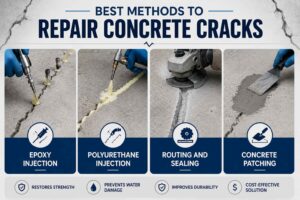
There is no universal repair method. The right solution depends on the crack’s width, depth, location, movement and whether the concrete still performs its structural role. Treating every crack the same often leads to repeat repairs and unnecessary expense.
Epoxy Injection
- Epoxy injection is commonly used for structural cracks where restoring the bond between separated concrete sections is the priority. The resin penetrates deep into the crack and hardens, helping the concrete act as a single element again.
- This method is often suitable for commercial floors, bridge components, retaining structures and other load-bearing assets where structural integrity is critical.
Polyurethane Injection
- Where water ingress is the main concern, polyurethane injection is often the preferred option. Unlike rigid epoxy, polyurethane expands as it reacts, creating a flexible seal that helps prevent further moisture penetration.
- It is widely used in basements, retaining walls, underground structures and other areas exposed to groundwater.
Routing and Sealing
- For non-structural cracks in driveways, pathways and car parks, routing and sealing can provide an effective long-term solution.
- The crack is prepared, cleaned and filled with a suitable flexible sealant that accommodates minor movement while reducing water infiltration.
- Many clients ask, “What is the best concrete crack repair method for Australian weather?” There is no single answer.
- The most effective repair depends on site conditions, crack behaviour and future exposure. A method that performs well on a residential driveway may not be suitable for a busy industrial loading area.
Concrete Patching
- If sections of concrete have chipped, broken away or developed localised spalling, patch repairs may restore the surface without replacing the entire slab. Success depends on proper preparation, compatible repair materials and correct curing practices.
Should You Repair or Replace?
Replacement is not always the smartest investment. In many cases, timely repairs can significantly extend the service life of concrete while minimising disruption to business operations.
- Property owners often wonder, “When should concrete cracks be repaired instead of replaced?” If the damage is localised and the surrounding concrete remains structurally sound, professional repairs are frequently the more practical and cost-effective option.
- Complete replacement is generally considered when extensive deterioration, severe settlement or widespread structural failure affects the slab.
- Cost is another common consideration. “How much does concrete crack repair cost in Australia?” There is no fixed price because every project differs.
- Factors such as crack size, repair method, site access, traffic management requirements, labour, materials and the overall condition of the concrete all influence the final cost. A detailed inspection provides the most reliable basis for an accurate quotation.
How to Prevent Concrete Cracks from Returning
Even the best repair will have a shorter lifespan if the original cause is left untreated. Long-term performance comes from combining quality workmanship with proactive maintenance.
Practical Strategies Include:
- Inspect concrete surfaces regularly for early signs of movement.
- Keep drainage systems clear to prevent water from weakening the subgrade.
- Maintain expansion joints so the slab can accommodate natural movement.
- Apply suitable sealers where appropriate to reduce moisture penetration.
- Avoid overloading pavements beyond their intended design capacity.
- Address minor defects promptly before they develop into larger structural issues.
For commercial facilities, industrial sites and public infrastructure, preventative maintenance is often far more economical than major rehabilitation. Small repairs completed at the right time can reduce lifecycle costs and minimise disruption to daily operations.
Why Professional Concrete Repairs Deliver Better Value
Civilcraft Concrete repair is more than filling a visible crack. It requires understanding why the damage occurred, selecting the appropriate repair method and ensuring the repaired area performs reliably under future loading and environmental conditions.
An experienced civil contractor assesses factors such as drainage, ground movement, traffic loads, crack activity and surrounding concrete condition before recommending a solution. This approach helps prevent repeat failures while extending the service life of valuable infrastructure.
Whether the project involves a commercial driveway, warehouse floor, public footpath or large-scale asset maintenance program, investing in timely repairs protects safety, reduces future costs and preserves the long-term value of the asset.
Also Read:- Professional Cleaning Services in Sydney: How Businesses Maintain Safe & Clean Facilities
Conclusion
Concrete cracks are common across Australia, but they should never be dismissed without proper assessment. Some remain cosmetic throughout their life, while others indicate movement or deterioration that can become more expensive if left untreated.
The most effective way to repair concrete cracks is to identify the underlying cause, apply the appropriate repair technique and support the repair with ongoing maintenance. Taking action early helps maximise asset life, improve safety and avoid unnecessary replacement costs.
If you’re responsible for commercial property, civil infrastructure or public assets, partnering with an experienced concrete repair specialist ensures every repair is backed by practical engineering knowledge and a focus on long-term performance.
FAQ
Q:- Are all concrete cracks a sign of structural damage?
Ans:- No. Many hairline cracks are cosmetic, but wider, growing or uneven cracks should be professionally assessed to determine whether they affect structural performance.
Q:- How quickly should concrete cracks be repaired?
Ans:- Prompt repairs are recommended, particularly if cracks allow water penetration or continue to widen. Early intervention often prevents more extensive deterioration.
Q:- Can repaired concrete crack again?
Ans:- Yes. If the underlying cause, such as ground movement or poor drainage, is not addressed, new cracks may develop over time.
Q:- Is concrete repair better than replacing the slab?
Ans:- When damage is localised and the remaining concrete is sound, repair is often the more cost-effective solution. Replacement is generally reserved for extensive or irreparable deterioration.
Q:- Why should commercial properties schedule regular concrete inspections?
Ans:- Routine inspections help identify defects early, allowing maintenance to be planned before small issues become costly repairs or safety risks.