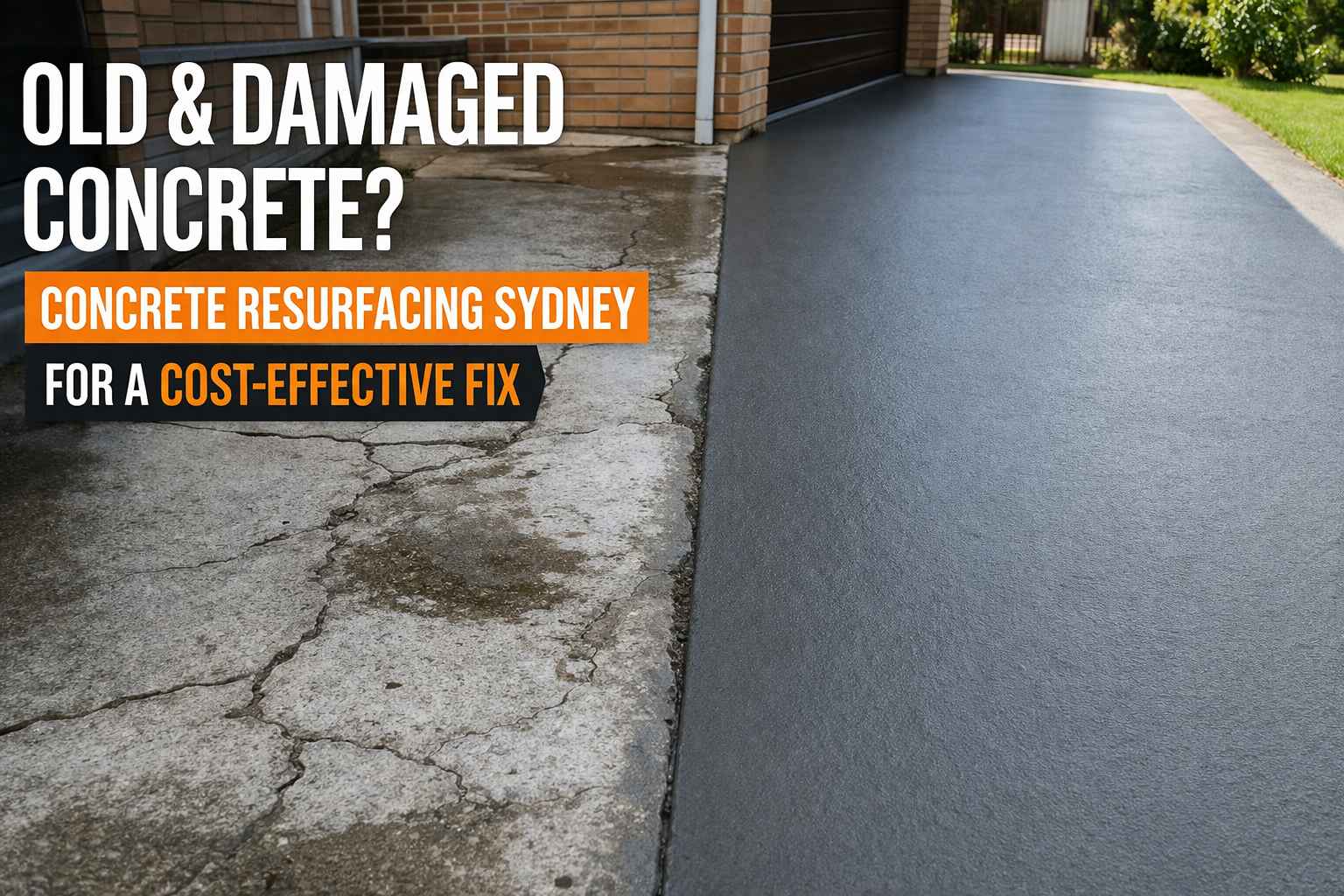
Between the relentless summer sun that could bake an egg on the pavement and those sudden, torrential downpours that turn your backyard into a swamp, the ground is constantly shifting. Over time, your once-pristine slab starts to look like a topographic map of the Moon—full of craters, cracks, and patches of “what on earth is that stain?”
The traditional line of thinking is that if the concrete is ugly, it has to go. You picture the jackhammers, the dust, the massive skips, and a bill that makes your eyes water. But before you call in the demolition crew, there’s a much smarter, faster, and cheaper way to get that “new home” feel: concrete resurfacing in Sydney.
What Exactly is Concrete Resurfacing?
Think of it like a high-tech facelift for your floors. Instead of ripping out the entire slab, resurfacing solutions Australia wide involve applying a thin, specialised coating over the top of your existing concrete. This isn’t just a thick coat of paint. It’s a cement-based overlay mixed with resins and polymers.
It bonds at a molecular level to your old concrete, creating a fresh, durable surface that’s actually tougher than the original. Whether it’s your driveway, pool deck, or patio, you can change the colour, the texture, and the overall “vibe” without ever touching a sledgehammer.
Why Sydney Homeowners are Making the Switch

Why is concrete resurfacing in Sydney becoming the go-to for renovations? It’s not just about the money.
- The Cost-Effectiveness Factor
- Let’s talk numbers. Ripping out and replacing a driveway can cost a small fortune when you factor in labour, disposal fees, and the cost of new concrete. Resurfacing usually costs a fraction of that. You’re paying for a premium finish rather than a massive demolition project.
- Speed of Light
- A full replacement can put your driveway out of action for weeks while the new concrete cures. With most resurfacing solutions, you can usually walk on the surface within 24 hours and drive on it within a few days. For a busy Sydney household, that lack of disruption is priceless.
- Total Aesthetic Control
- Old concrete is boring grey. Resurfaced concrete can be whatever you want it to be. Want a “stencilled look that mimics expensive pavers? Done. Prefer a modern, “honed” aggregate look? Easy. You can choose colours that complement your home’s exterior perfectly.
The Process: From Grungy to Grand
If you’re wondering how a team takes a cracked mess and turns it into a masterpiece, here’s the typical “playbook” for concrete resurfacing in Sydney by Civilcraft:
Step 1: The Deep Clean
- You can’t build a house on sand, and you can’t resurface on dirt. The pros start by high-pressure cleaning the old concrete to remove oil, grease, and loose debris. It ensures the new coating sticks like glue.
Step 2: The Repair Phase
- Any existing cracks are “V-cut” and filled with a high-strength epoxy. It stops the cracks from “reflecting” through to your new surface. It’s about fixing the foundation before adding the flair.
Step 3: The Base Coat
- A primer or base coat is applied to create the bond. This is where the magic starts to happen, as the old, ugly stains finally disappear.
Step 4: The Creative Part
- Depending on the look you want, the team might spray on a “”granite finish, use stencils to create patterns, or apply a smooth trowel finish. The sky is the limit here.
Step 5: The Seal
- Finally, a high-quality sealer is applied. It protects the colour from UV fading (essential in the Australian sun) and makes the surface resistant to oil spills and tyre marks.
Is Your Concrete a Candidate?
Not every slab can be saved. If your concrete is literally crumbling into dust or has massive tree roots lifting sections 20cm into the air, you might be looking at a replacement.
However, if your concrete is structurally sound but just looks like it’s had a rough decade, think hairline cracks, surface scaling, or permanent oil stains, then concrete resurfacing in Sydney is your best friend. A quick consultation with a pro can tell you if your slab is a “survivor.”
Also Read:- Cracked Pavements Causing Safety Risks? Your Guide to Paving Repairs in Australia
The “DIY” Warning
We all love a weekend trip to Bunnings, but resurfacing is one of those jobs where “good enough” usually isn’t. Achieving a smooth, even finish that won’t peel off in six months requires specialised equipment and a deep understanding of how the materials react to Sydney’s humidity. Going pro ensures you get a warranty and a finish that adds value to your property.
Final Thoughts
Your home’s “curb appeal” starts on the street. If your driveway or front path is looking a bit tired, it drags down the look of the whole property. Concrete resurfacing Sydney is the ultimate “life hack” for homeowners; it saves you money, saves you time, and gives you a result that looks like you spent twice as much as you actually did.
FAQs
Q:- How long does resurfaced concrete actually last?
Ans:- When done correctly by professionals using quality resurfacing solutions in Australia, you can expect your new surface to last 10 to 15 years (or even longer) with basic maintenance.
Q:- Can you resurface concrete that has cracks?
Ans:- Yes! As long as the cracks aren’t caused by major structural sinking, they can be repaired and covered. The specialised polymers used in the resurfacing mix are designed to be flexible and durable.
Q:- Is the new surface slippery when wet?
Ans:- Not if you don’t want it to be. One of the best things about resurfacing is that you can add an “anti-slip” texture. This is especially popular for pool surrounds and steep Sydney driveways.
Q:- How do I maintain my resurfaced concrete?
Ans:- It’s pretty low-maintenance. A simple wash with a hose now and then is usually enough. It’s recommended to have it resealed every 3 to 4 years to keep the colours vibrant and the protection strong.
Q:- Can I change the colour of my existing “stamped” concrete?
Ans:- Absolutely. If you have an old-fashioned “terracotta” stamped driveway from the 90s that you now hate, resurfacing can give it a modern charcoal or slate grey makeover without losing the texture.