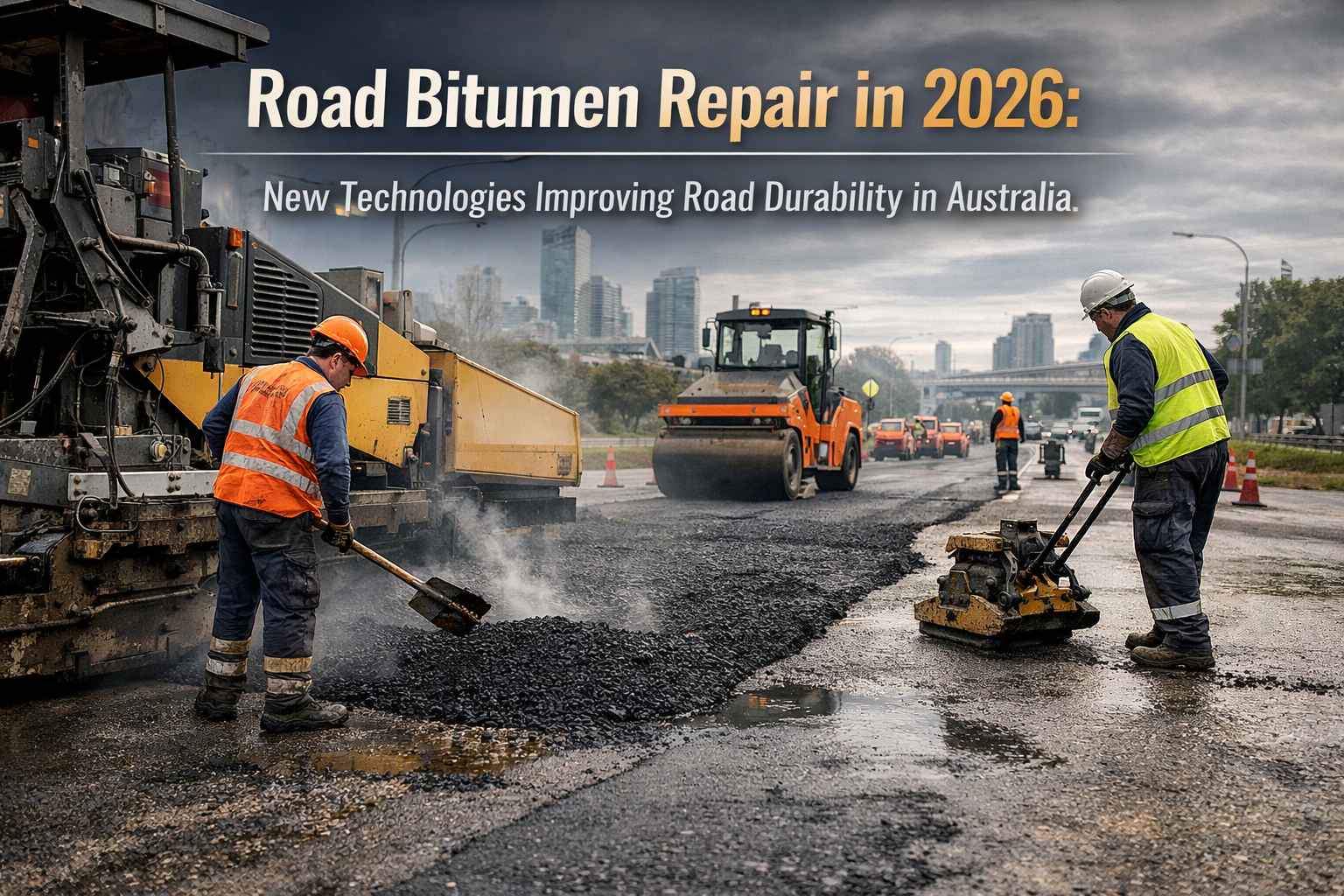
In 2026, the Australian road landscape is undergoing a quiet but high-tech revolution. If you’ve driven through a suburban council street in Melbourne or a rural highway in Western Australia lately, you might have noticed fewer “Roadwork Ahead” signs lingering for weeks.
That isn’t a coincidence; it’s the result of a massive shift in how we approach road bitumen repair. For decades, the standard fix for a pothole was a “patch and pray” approach.
Today, bitumen maintenance contractors are swapping out guesswork for AI-driven diagnostics and “self-healing” materials.
Whether you’re a facility manager looking for asphalt maintenance or a curious commuter, here is how technology is making Australian roads more durable than ever.
The Rise of “Smart” Diagnostics
Gone are the days when a council worker had to walk the length of a road to spot cracks manually. In 2026, asphalt road repair in Australia begins with data.
- Asset AI® and Mobile Sensors:
Many Australian councils now use “Asset AI,” a system where cameras and sensors are fitted to everyday vehicles like garbage trucks. As these trucks do their rounds, the AI scans the pavement for hairline cracks or early-stage potholes.
- Predictive Maintenance:
Instead of waiting for a road to fail, this data allows contractors to intervene when a repair is cheap and easy, often saving up to 70% in long-term reconstruction costs.
Self-Healing Bitumen: Science Fiction to Reality

One of the most exciting breakthroughs in road bitumen repair is the commercial rollout of self-healing asphalt.
Traditional bitumen becomes brittle over time due to Australia’s harsh UV rays and extreme heat cycles. New mixes now incorporate microscopic capsules or steel wool fibres.
When a micro-crack forms, a specialised “induction heater” truck passes over the road, slightly warming the bitumen. It allows the capsules to melt and flow into the cracks, “healing” the road surface without a single shovel of new material.
Sustainable & Circular Materials
Sustainability isn’t just a buzzword in 2026; it’s a requirement for almost every major Australian road contract. Leading bitumen maintenance contractors like Civilcraft are now using mixes that would have been unthinkable a decade ago:
- Reclaimed Asphalt Pavement (RAP): Modern plants can now produce high-quality mixes using up to 50% recycled road material, significantly reducing the need for virgin bitumen and stone.
- Plastics-to-Pavement: Recycled soft plastics (like bread bags and snack wrappers) are being processed into additives that make bitumen more resistant to “rutting” (the indentations caused by heavy trucks).
- Crumb Rubber: Old tyres are being ground down and mixed into asphalt. This doesn’t just keep tyres out of landfills; it creates a “quieter” road surface that absorbs tyre noise, a huge win for residential neighbourhoods.
High-Tech Paving & Compaction
The longevity of a repair depends almost entirely on how well the material is compacted. In 2026, the equipment has become much “smarter.”
- Intelligent Compaction (IC): Rollers equipped with GPS and sensors ensure the asphalt is pressed to the exact density required, preventing soft spots that lead to potholes.
- Warm Mix Asphalt (WMA): By using special additives, contractors can lay asphalt at lower temperatures. It reduces carbon emissions and allows for longer hauling distances to remote Australian regions.
- Thermal Mapping: Infrared cameras on pavers monitor the temperature of the mix in real-time. If the bitumen gets too cool before it’s laid, the system alerts the operator, preventing “premature failure.”
Climate-Resilient Binders
Australia’s “Black Summer” fires and subsequent “La Niña” floods taught the industry a hard lesson: standard bitumen can’t always handle the new extremes. In response, 2026 has seen the widespread adoption of Polymer Modified Bitumen (PMB).
By adding high-tech polymers to the binder, the road becomes more like a rubber band—stretching in the 45°C heat of a Queensland summer and resisting water ingress during a Sydney downpour.
This “flexibility” is the secret sauce behind the asphalt maintenance solutions currently being deployed on our major freight routes.
Why Professional Intervention Matters
While the technology is impressive, the human element remains critical. Civil contractors in Australia, like Civilcraft, are now highly specialised technicians. They don’t just “fill holes”; they manage assets.
If you are managing a commercial property or a local government fleet, the shift from reactive patching to a preventative maintenance plan is the single best way to protect your investment.
A well-maintained road in 2026 can last 15–20 years, whereas a neglected one might need a total (and expensive) overhaul in just seven.
Also Reason:- How Cleaning Services Sydney Support Modern Commercial Infrastructure
Conclusion: A Smoother Road Ahead
The future of Australian roads is greener, smarter, and significantly tougher. By blending AI diagnostics with recycled materials and self-healing tech, we are finally moving toward a “circular” road economy.
For the average driver, road bitumen repair in 2026 means fewer detours, a quieter ride, and a more sustainable way to get from one location to another.
FAQs
Q:- What is the most cost-effective road bitumen repair method today?
Ans:- Crack sealing remains the most cost-effective method. By preventing water from reaching the road’s base layers, you can extend the pavement’s life by years for a fraction of the cost of a full patch.
Q:- How long does a modern asphalt repair take to cure?
Ans:- With new Warm Mix Asphalt (WMA) and high-compaction rollers, most repairs can be opened to traffic within 1 to 4 hours, significantly reducing road closure times compared to older methods.
Q:- Are recycled plastic roads as strong as traditional bitumen?
Ans:- Actually, they are often stronger! The polymers in recycled plastics can improve the “stiffness” and heat resistance of the road, making it less likely to deform under heavy truck loads.
Q:- Can AI really predict when a pothole will form?
Ans:- Yes. By analysing patterns in surface fatigue and “alligator cracking” via camera feeds, AI models can predict where a pothole is likely to form within a 90% accuracy range, allowing for pre-emptive repairs.
Q:- Why are some new roads “noisier” than others?
Ans:- Noise usually depends on the “aggregate” (stones) used. In 2026, many contractors will use Crumb Rubber Asphalt, which is specifically designed to be “open-graded” to swallow sound waves, making it much quieter than traditional spray seals.