se underground pipes, cables and other assets before major excavation begins.
By combining controlled excavation techniques such as hydro excavation and vacuum extraction, NDD reduces reliance on mechanical digging around k
For developers, asset managers, facility managers and civil contractors, that extra control can prevent a small excavation from becoming a major headache.
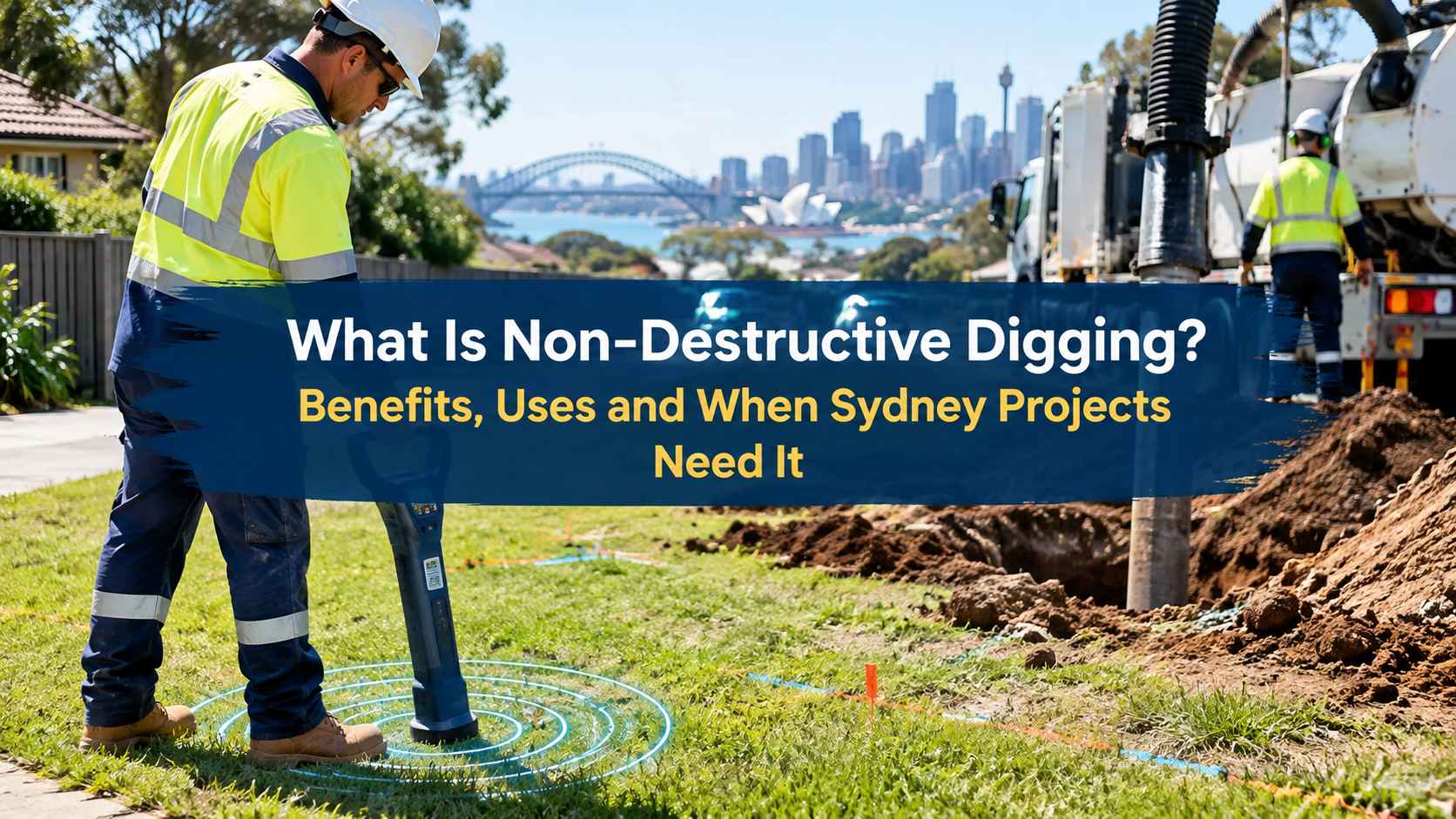
What is non-destructive digging ancontrolled excavation method used to expose underground infrastructure while reducing the risk associated with conventional mechanical excavation.
A typical hydro vacuum excavation process uses pressurised water to loosen soil around an underground asset. A vacuum system then removes the loosened soil and slurry.
The Result is a Targeted Excavation That can expose:
- Electrical and telecommunications cables
- Gas and water services
- Stormwater and drainage pipes
- Underground conduits
- Pits and other buried infrastructure
NDD is commonly used for potholing, where a small section of ground is excavated to physically verify an asset’s location and depth.
This matters because underground service plans are not always enough on their own. SafeWork NSW advises duty holders to obtain current service information and establish the location of underground services before excavation.
What is the difference between NDD, vacuum excavation and hydro excavation?
The terms overlap, but they are not identical.
|
Method |
What it does |
| Non-destructive digging |
The broader approach to controlled excavation around existing assets |
|
Hydro excavation |
Uses pressurised water to loosen or break up soil |
|
Vacuum excavation |
Uses suction to remove loosened soil and slurry |
| Potholing |
Targeted excavation to expose and verify an underground service |
Hydro and vacuum excavation are often used together.
When should Non-destructive Digging be Used in Sydney?
NDD makes particular sense when the cost of striking an underground asset could outweigh the additional control provided by careful excavation.
Sydney projects can benefit from NDD for:
- Service Verificatin: Before installing foundations, drainage, conduits, poles or other infrastructure.
- Congested Urban Sites: Established roads, buildings and utility networks can leave very little room for excavation errors.
- Civil Maintenance: Drainage repairs, pit works, pipework and utility upgrades often require excavation close to existing services.
- High-consequence Eexcavation: Damaging electrical, gas, water or communications infrastructure can create safety, operational and financial consequences.
- Tight-access work: Restricted areas around buildings, roads and existing infrastructure can make conventional excavation difficult.
The key question is simple: what is already underground, and how confident are you about its exact position?
Can Non-destructive Digging Expose Underground Pipes and Cables Safely?
NDD can reduce the risk of damaging underground services during excavation, but it does not remove every excavation hazard.
Before work begins, project teams still need current service information, appropriate locating methods, competent workers and site-specific controls. SafeWork NSW emphasises planning and identifying underground services before excavation proceeds.
A practical sequence is:
Locate → assess → pothole → verify → excavate.
That is far more reliable than treating an old service drawing as an exact underground map.
Is non-destructive digging suitable for tight-access construction sites?
Often, yes.
A large excavator is not always practical beside an occupied building, busy roadway, existing utility or sensitive facility. Vacuum excavation can provide a more targeted way to remove soil where working space is limited.
This makes NDD useful for facility managers, infrastructure professionals and asset owners who need to protect existing assets while completing new work.
What are the main benefits of NDD?
NDD is not simply about removing soil differently. Its real value is control and information.
Depending on The Project, It Can Help Teams:
- Reduce the likelihood of mechanical damage to underground services
- Verify the position of buried infrastructure
- Excavate more precisely around existing assets
- Work in restricted-access locations
- Minimise unnecessary ground disturbance
- Make better-informed decisions before larger excavation begins
The appropriate method still depends on ground conditions, site access, the asset involved and project-specific safety requirements.
Also Read:-Commercial Landscaping in Sydney: Landscape Solutions for Sustainable Outdoor Spaces
Why choose an experienced NDD contractor?
A vacuum truck alone does not make an excavation safe.
Good NDD requires suitable equipment, experienced operators, proper planning and coordination with the wider civil works program.
That is where Civilcraft fits naturally into the process. Its hydro/vacuum excavation, NDD, potholing and trenching services support commercial, property, infrastructure and government projects where existing underground assets need careful attention.
For project teams, the smartest excavation decision is often made before the first bucket touches the ground.
FAQs
Q:- What is non-destructive digging used for?
Ans:- NDD is used to expose and verify underground services and excavate more carefully around existing infrastructure.
Q:- Is hydro excavation the same as NDD?
Ans:- No. Hydro excavation is a technique used within NDD. It uses pressurised water to loosen soil, while vacuum equipment removes it.
Q:- Can NDD expose underground cables?
Ans:- Yes. NDD can carefully expose cables and other services after appropriate service locating and excavation planning.
Q:- Is NDD suitable for Sydney construction sites?
Ans:- Yes. It can be useful for urban, commercial, infrastructure, maintenance and tight-access projects where underground services must be identified or protected.
Q:- Does NDD eliminate excavation risks?
Ans:- No. It can reduce risks associated with mechanical excavation, but proper planning, service locating, competent workers and site-specific controls remain essential.