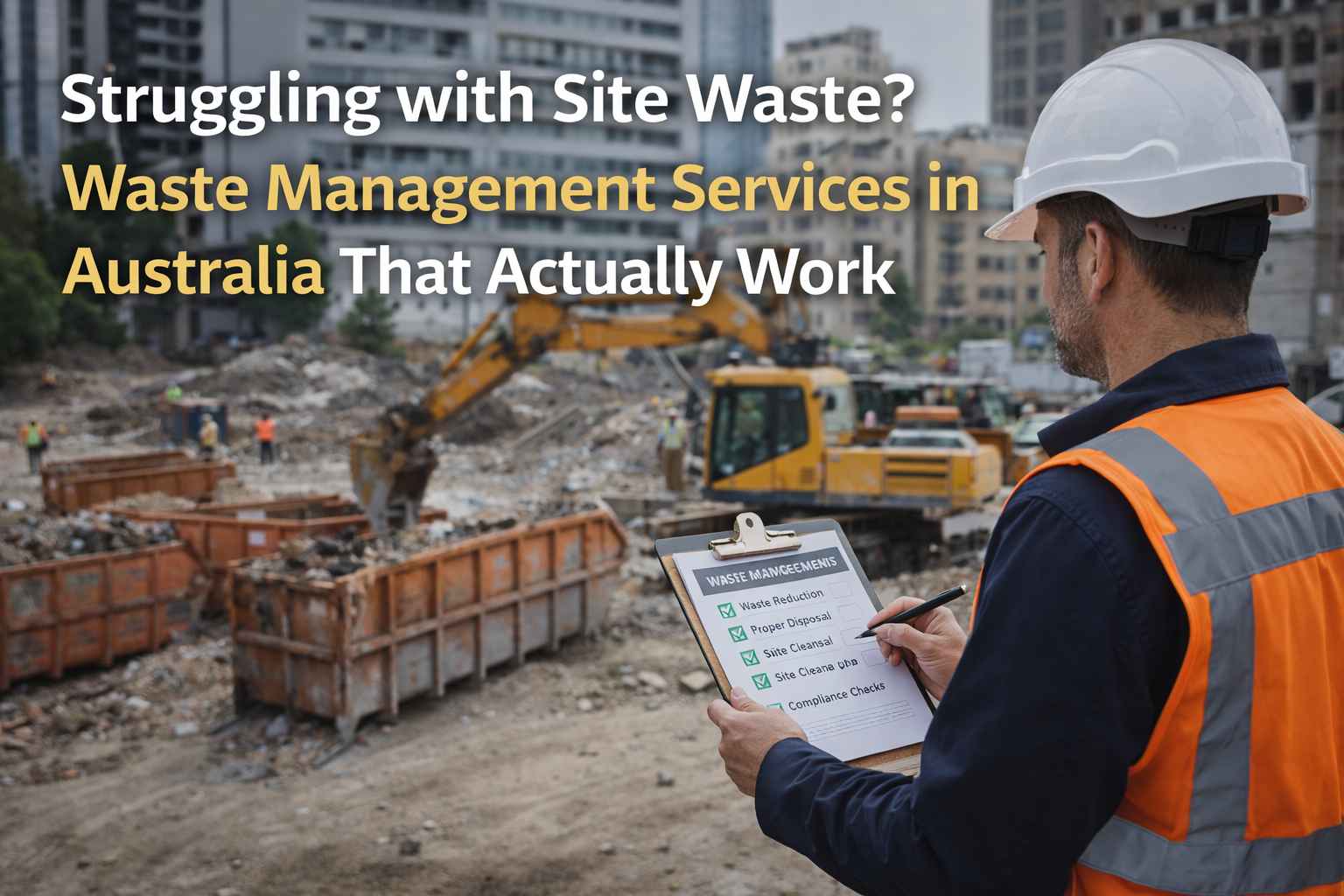
You’re standing in the middle of a busy site, the sun is beating down, and instead of looking at progress, you’re looking at a mountain of timber offcuts, concrete debris, and tangled plastic wrap. It’s messy, it’s a trip hazard, and a massive headache.
In the world of Australian building and infrastructure, “site waste” isn’t just a byproduct; it’s a bottleneck. But here’s the good news: managing it doesn’t have to feel like a second job.
With the right waste management services, you can turn that chaotic pile into a streamlined system that actually saves you money. Let’s break down how Australia’s construction waste management is changing in 2026 and how you can stay on top of the pile.
Why “Chuck it in the Skip” No Longer Works
Back in the day, the solution was simple: get a big bin, throw everything in, and watch it drive away. But in 2026, the game has changed. Landfill levies are at an all-time high, and the EPA (Environmental Protection Agency) has tightened the screws on how we handle debris.
If you’re still mixing your masonry with your cardboard, you’re basically burning money. Modern waste management services are now focused on resource recovery.
It means separating materials so they can be recycled into new road base, mulch, or steel, keeping your disposal costs down and your “green” credentials up.
The Secret Weapon: Professional Site Logistics
The best builders in Sydney, Melbourne, and Brisbane aren’t just good at laying bricks; they’re experts at logistics. This is where specialised partners come in.
Civilcraft has revolutionised the way infrastructure waste is handled by integrating Environmental and Waste Management directly into their civil works.
Whether it’s using hydro-vacuum trucks for non-destructive digging or setting up recycling zones on urban blocks, the goal is to keep the site moving. When waste is managed professionally, you’re not just cleaning up; you’re clearing the path for the next trade to start on time.
5 Ways to Master Construction Waste Management in Australia
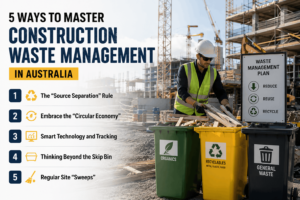
1. The “Source Separation” Rule
- It just means having different bins for different things. Having a dedicated spot for concrete, metal, and timber prevents cross-contamination. Most waste management services will actually charge you less if your load is “clean” because it’s easier for them to recycle.
2. Embrace the “Circular Economy”
- In 2026, the circular economy is the idea that today’s demolition waste is tomorrow’s driveway base. By partnering with a service that prioritises recycling, you’re helping ensure that 75% to 80% of your site’s output stays out of the ground and goes back into the supply chain.
3. Smart Technology and Tracking
- Gone are the days of wondering where your waste ended up. Modern services provide digital tracking and “waste certificates.” It is crucial for large-scale projects that need to meet Green Star ratings or government compliance. If you can’t prove where it went, it didn’t happen!
4. Thinking Beyond the Skip Bin
- Sometimes a traditional skip just doesn’t fit. Whether you’re working in a narrow Sydney lane or a high-rise in Melbourne, look for flexible options like “E-Bags” or hook-lift bins. These allow for faster turnarounds and less downtime waiting for a truck to maneuver into a tight spot.
5. Regular Site “Sweeps”
- Don’t wait for the end of the project to clean up. Scheduled road sweeping and site clearing keep the area safe and professional-looking. A tidy site is an efficient site, and it sends a huge message to your clients about the quality of your work.
How is Civilcraft Helping Australian Businesses
Civilcraft acts as a strategic partner for complex infrastructure projects, offering a “one-stop” solution that bridges the gap between heavy civil engineering and meticulous site maintenance.
- Our expertise is particularly valuable for high-traffic, “live” environments where disruption must be kept to an absolute zero. By integrating Environmental and Waste Management directly into their civil works, we help you navigate the strict Australian regulatory landscape.
- One of our standout services is Non-Destructive Digging (NDD); using advanced hydro-vacuum trucks, we can safely expose underground utilities without the risk of strike damage, simultaneously managing the resulting slurry waste in a compliant, eco-friendly manner.
- Beyond waste, Civilcraft supports your project through specialised civil repairs, such as asphalt patching and concrete spalling treatment, alongside the installation of heavy-duty water mains and stormwater drainage networks.
Whether it’s structural foundation work or industrial-scale road sweeping and debris removal, they ensure your site remains safe, functional, and professional. Essentially, we take the logistical “headache” out of infrastructure, allowing you to focus on the broader build.
Also Read:- Damaging Underground Pipes During Digging? Try Non Destructive Digging in Australia
The Bottom Line: Peace of Mind
At the end of the day, you want to focus on building, not on bins. Hiring a professional company for your construction waste management in Australia isn’t just an expense; it’s an investment in your sanity.
Professional waste management services reduce the risk of onsite injuries, keep the neighbours happy, and ensure you aren’t hit with nasty EPA fines.
FAQs
Q:- What are the most common waste management services for sites?
Ans:- Most sites utilise a mix of skip bin hire, specialised hazardous waste removal (like asbestos), and liquid waste management (hydro-excavation).
Q:- How much of construction waste can actually be recycled?
Ans:- In Australia, about 78% of construction and demolition waste is recyclable, including concrete, bricks, steel, and certain plastics.
Q:- Does professional waste management save money?
Ans:- Yes. By separating waste at the source, you avoid “mixed load” surcharges and can significantly reduce your total landfill levy costs.
Q:- Is site orientation important for waste placement?
Ans:- While Vastu focuses on energy flow, practically speaking, placing waste in the South-West corner of a site (away from the main entrance) is often recommended to keep the North-East “positive energy” zones clear.
Q:- What is the “General Environmental Duty” in 2026?
Ans:- It’s a legal requirement for anyone involved in a project to take reasonable steps to prevent harm to the environment through proper waste disposal and pollution control.