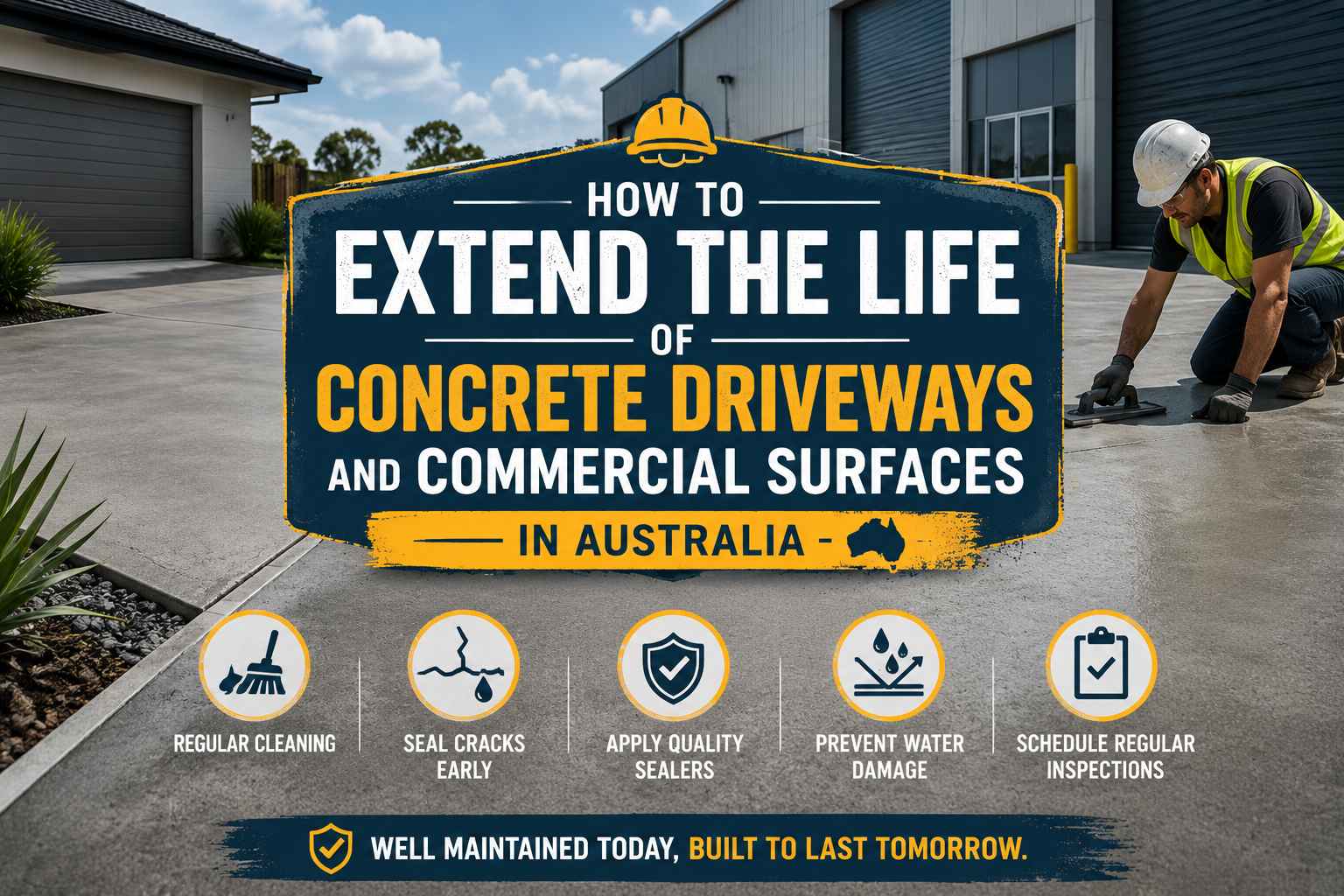
Concrete is easily one of the toughest building materials on Earth. It holds up skyscrapers, supports heavy freight trucks, and gives us a smooth place to park our cars every single day. Because it feels so indestructible, it is easy to assume that once concrete is poured, you can walk away and forget about it for the next thirty years.
If you live in Australia, that “set and forget” mindset can cost you thousands. Between blistering 40-degree summer heatwaves, torrential coastal downpours, relentless UV rays, and heavy daily traffic, concrete driveways and commercial surfaces take an absolute beating.
Without a bit of proactive TLC, even high-grade slabs can start cracking, flaking, staining, and sinking far sooner than they should. Whether you are a homeowner wanting to keep your driveway looking crisp or a facility manager responsible for keeping a commercial hardstand safe, here is your practical guide to maximising the lifespan of your concrete investment.
Top 5 Ways to Extend the Life of Concrete Driveways and Commercial Surfaces

Here are the ways that help you extend the life of your concrete driveways and commercial surfaces in Australia:
1. Seal It Like You Mean It
If you do only one thing to care for your concrete, make it this: keep it properly sealed. Concrete looks completely solid to the naked eye, but it is actually porous. Think of it like a giant, dense sponge. Microscopic pores inside the slab easily absorb water, engine oil, grease, salt, and atmospheric chemicals.
When water seeps into unsealed concrete during an Aussie storm, and the temperature fluctuates, that trapped moisture expands and contracts. Over time, this breaks down the internal bond of the slab, leading to surface flaking (spalling) and deep structural cracking
What Sealing Actually Does:
- Blocks Stains: Gives you a grace period to wipe away oil drips, fuel spills, and tire marks before they soak in.
- UV Protection: Prevents colored or decorative concrete from fading under intense Aussie sunlight.
- Repels Moisture: Stops rain and ground moisture from penetrating the surface.
- Eases Cleaning: Makes sweeping and pressure washing significantly faster.
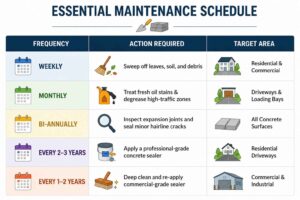
For residential driveways, a high-quality penetrating or acrylic sealer should be reapplied every 2 to 3 years. For heavy-duty commercial surfaces facing constant forklift or truck traffic, aim to inspect and reseal every 12 to 18 months.
2. Fill Cracks Before They Get Out of Hand
A tiny hairline crack might not look like a big deal, but in the world of concrete maintenance, it is an open invitation for trouble. Once a crack opens up, rainwater channels straight down beneath the slab.
That water erodes the compacted soil and sub-base holding your driveway up. Once the sub-base washes away or settles unevenly, the weight of a heavy vehicle over that hollow spot will cause the slab to snap and sink.
The Fix:-
Check your concrete driveways and commercial surfaces every few months for new hairline cracks. Wash out any dirt or weeds growing inside the gap, let it dry completely, and apply a flexible, exterior-grade polyurethane concrete sealant or crack filler.
Fixing a 2-millimeter crack today costs a few dollars for a tube of sealant; fixing a sunken, shattered slab next year costs thousands in demolition and repouring.
3. Keep Oils, Chemicals, and Organic Debris Off the Surface
Commercial loading bays and busy home driveways are magnet zones for fluid leaks. While a minor oil stain might look ugly on a residential driveway, industrial chemicals, battery acid, and petroleum products can actively break down the binder holding the concrete aggregate together.
Daily and Weekly Upkeep:-
- Clean Spills Instantly: Use kitty litter, sawdust, or a specialised absorbent powder to soak up fresh oil spills before scrubbing with a degreaser.
- Beware of Tree Tannins: Leaves, berries, and organic matter left sitting on damp concrete leach natural tannins that leave dark brown, stubborn stains. Sweep your surfaces regularly!
- Mind the Pressure Washer: Pressure washing is fantastic for lifting dirt, but don’t blast standard concrete with an ultra-high-pressure turbo nozzle at point-blank range. You can accidentally strip off the top cement cream layer, exposing the rough aggregate underneath and making the slab even more porous.
4. Manage Drainage and Keep Water Moving Away
Water is concrete’s number one long-term enemy. It isn’t just water falling from the sky that causes problems; it’s where that water goes once it hits the ground. If your driveway or commercial apron lacks proper drainage, water will pool along the edges or sink under the slab.
In coastal regions or areas with clay-heavy soils, oversaturated soil swells up and pushes against the concrete, while dry spells cause the soil to shrink away. This constant ground movement causes major structural cracking.
Smart Drainage Tips:-
- Keep trench drains, strip drains, and downpipes clear of leaf litter so heavy storm runoff drains away instantly.
- Ensure soil, lawns, and garden beds along the edges of your concrete sit slightly lower than the slab itself.
- Never allow roof downpipes to empty directly onto the edge of a concrete driveway.
5. Respect Weight Limits and Edge Vulnerabilities
Concrete is incredibly strong under compression, but its weakest points are always its unsupported edges and corners. If a heavy delivery truck, bobcat, or oversized commercial vehicle drives over the outer edge of a standard 100mm residential driveway, the unsupported corner can easily snap off.
- For Residential Driveways: Discourage delivery vans or heavy machinery from driving over the unreinforced edges of your lawn or driveway borders.
- For Commercial Surfaces: Ensure heavy vehicle traffic stays strictly within dedicated heavy-duty zones engineered with reinforced steel mesh and thicker concrete slabs (typically 150mm to 200mm+).
Essential Maintenance Schedule
Also Read:-Civil Contractors vs General Contractors: What’s the Difference?
The Takeaway
Protecting your concrete driveways and commercial surfaces isn’t about spending hours on your knees every weekend. It comes down to a few simple, consistent habits: keep the surface clean, seal it every few years, fix small cracks as soon as you spot them, and make sure stormwater drains away properly.
By giving your concrete just a little bit of care, you’ll keep your property looking sharp, maintain high curb appeal, and avoid painful replacement costs for decades to come.
FAQs
Q:- How long should a concrete driveway last?
Ans:- A well-installed concrete driveway in Australia should easily last 25 to 30 years or more with routine maintenance and sealing.
Q:- What maintenance helps prevent concrete damage?
Ans:- Regular sweeping, immediate spill cleanup, sealing every few years, and filling hairline cracks early are the best ways to prevent damage.
Q:- How often should concrete surfaces be sealed?
Ans:- Residential concrete driveways should be sealed every 2 to 3 years, while heavy-traffic commercial surfaces benefit from resealing every 12 to 18 months.
Q:- What are the first signs of concrete deterioration?
Ans:- The earliest signs include surface flaking (spalling), fine hairline cracks, dark oil staining, and powdery dust rising off the surface.
Q:- Can regular maintenance reduce concrete repair costs?
Ans:- Yes, proactive cleaning, crack sealing, and surface protection can reduce lifetime concrete repair costs by up to 70% by preventing major structural failure.