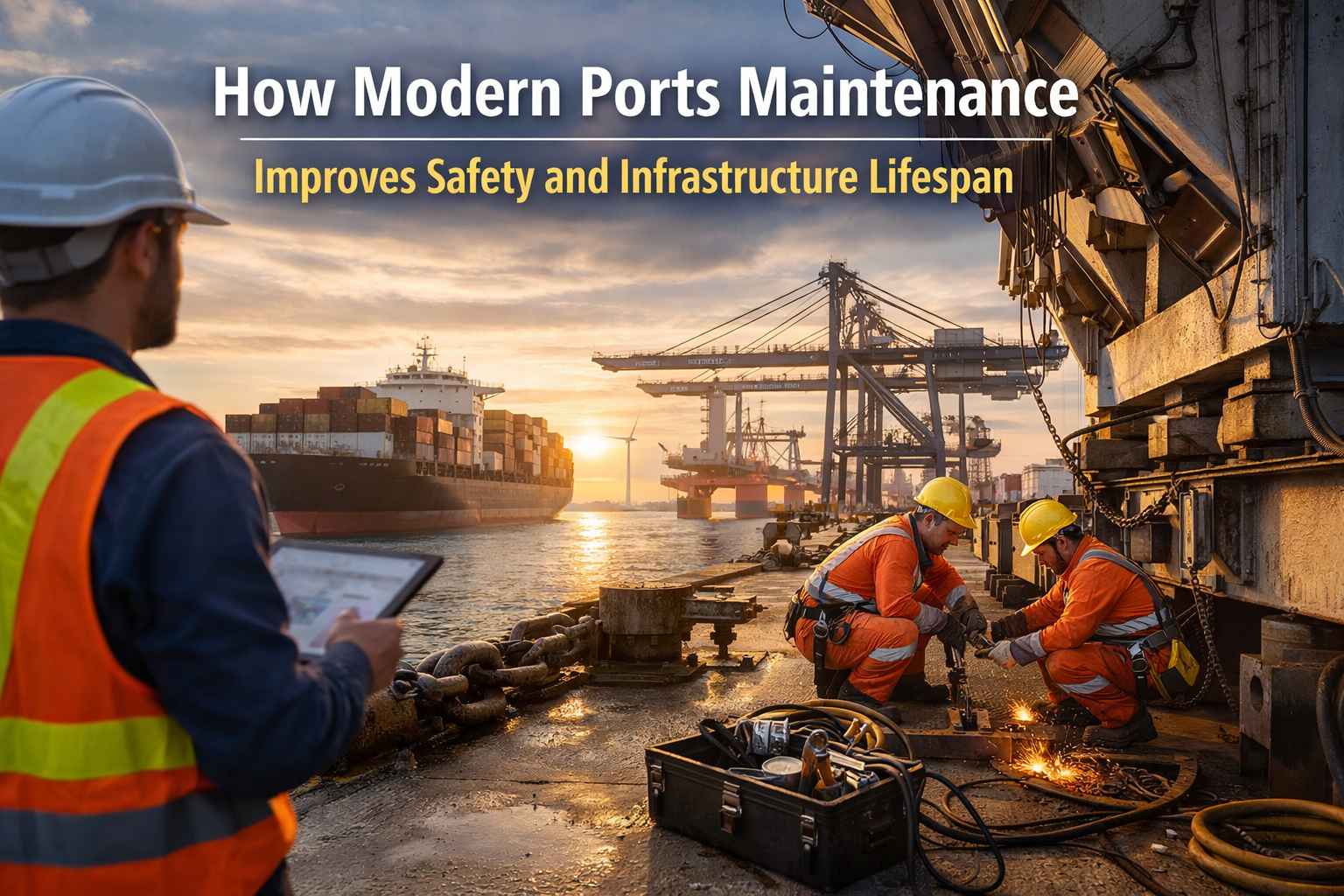
If you’ve ever stood on the edge of a massive Australian harbour, you know the feeling. The sheer scale of a modern port is enough to make your head spin.
We’re talking about giant gantry cranes that look like something out of a sci-fi movie, massive container ships the size of city blocks, and a constant, rhythmic hum of activity that literally keeps the Australian economy breathing.
But in 2026, Australian ports are under more pressure than ever. With global shipping volumes hitting record highs and the push for “just-in-time” delivery reaching a fever pitch, there is zero room for error.
This is where port maintenance steps out of the shadows and becomes the MVP of the maritime world. It’s not just about a bit of paint and some grease on a hinge.
Modern port maintenance services are the high-tech life support system for our nation’s gateways. Let’s dive into why keeping our ports in tip-top shape is the smartest investment Australia is making this year.
The Invisible Battle: Salt, Steel, and Storms
Australia’s coastline is iconic, but for a civil engineer, it’s a battlefield. You’ve got high-salinity air eating away at steel reinforcements, wild Southern Ocean swells bashing against pilings, and the brutal Aussie sun baking the concrete decks.
If you let port maintenance slide for even a few months, the “corrosion clock” starts ticking fast. By 2026, we’ll have moved past the old-school approach of “fix it when it breaks.” Today, it’s all about preventative care.
By using advanced coatings and cathodic protection, maintenance teams are stopping rust before it even has a chance to bite. This doesn’t just keep the pier looking good; it adds decades to the lifespan of infrastructure that costs billions to build.
Safety: Because “Oops” Isn’t an Option
When you’re moving 40-ton containers around, a small mechanical failure or a cracked pavement section can turn into a catastrophe in seconds. Safety in a 2026 port environment is a non-negotiable, 24/7 priority. Regular port maintenance ensures that:
- Pavement Integrity:- Heavy-duty straddle carriers need perfectly level surfaces. A single pothole can cause a vehicle to tip or drop a load.
- Mooring Bollards:- These are the unsung heroes holding ships in place. Regular stress testing ensures they don’t snap under the pressure of a shifting tide.
- Fender Systems:- These “bumpers” protect both the ship and the wharf during docking. If a fender fails, you’re looking at millions of dollars in structural damage.
By staying on top of these “boring” details, port authorities are ensuring that every worker on that dock goes home safe at the end of their shift.
The Tech Revolution in Port Maintenance
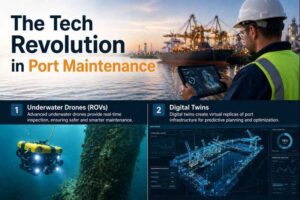
In 2026, the “maintenance man” has traded in just a wrench for a tablet and a drone. The integration of technology into port maintenance services has changed the game completely.
1. Underwater Drones (ROVs)
- Back in the day, checking the health of underwater pilings meant sending down divers—a risky and slow process.
- Now, we use Remotely Operated Vehicles (ROVs) equipped with high-def cameras and sonar. They can spot a hairline crack in a concrete pylon thirty meters underwater without anyone getting wet.
2. Digital Twins
- Many Australian ports now have a “Digital Twin”—a virtual 3D model that sits on a computer. Sensors on the actual wharf feed data back to the model in real-time.
- If a specific section of the wharf is under too much stress from a heavy load, the system flags it for inspection before a crack even forms. This is the peak of port maintenance efficiency.
How Civilcraft is Moving the Needle
You can’t talk about top-tier infrastructure in Australia without mentioning the specialists who actually do the heavy lifting. When it comes to complex environments like these, Civilcraft has established itself as a leader in the field.
Civilcraft understands that a port never sleeps. You can’t just shut down a terminal for a month to fix the asphalt. Our approach to port maintenance is built around “live environment” expertise.
We know how to get in, execute high-precision civil repairs—whether it’s specialised concrete remediation or heavy-duty pavement upgrades—and get out without disrupting the flow of trade.
By partnering with Civilcraft, Australian ports are ensuring they have the best “civil surgeons” on call. Our ability to blend traditional engineering grit with modern safety standards is exactly why we are the go-to for critical infrastructure longevity.
The Green Port of 2026
Sustainability isn’t just a buzzword anymore; it’s a maintenance requirement. Modern port maintenance services now focus heavily on reducing the environmental footprint of the harbour.
- Recycled Materials:- Using “Green Concrete” for wharf repairs that actually absorbs CO2 as it cures.
- Bio-friendly Antifouling:- Keeping pylons clean of barnacles using methods that don’t leach toxins into the water.
- Smart Runoff Systems:- Maintaining drainage so that oil or heavy metals from the port don’t end up in our beautiful oceans.
Wrapping Up: A Legacy of Longevity
At the end of the day, port maintenance is an act of stewardship. We’ve inherited these incredible coastal assets, and it’s our job to make sure they are still humming along for the next generation.
By investing in proactive repairs, embracing the latest tech, and working with experts like Civilcraft, Australia is proving that we aren’t just building for today—we’re building for a century. A well-maintained port is a safe port, a profitable port, and a source of national pride.
FAQs
Q:- How often do ports need major maintenance?
Ans:- While daily checks happen, major structural audits usually occur every 1 to 2 years, with deep-dive underwater inspections every 3 to 5 years, depending on the location.
Q:- What is the biggest threat to port infrastructure in Australia?
Ans:- Corrosion from saltwater (chloride attack) is the #1 enemy, followed closely by the physical impact of increasingly larger “Post-Panamax” ships.
Q:- Does port maintenance affect the cost of my groceries?
Ans:- Believe it or not, yes! Efficient, well-maintained ports mean faster ship turnaround times, which keeps shipping costs lower—and those savings eventually trickle down to the checkout.
Q:- Why is Civilcraft preferred for port work?
Ans:- Because they specialise in high-pressure, live environments where safety and speed are critical, they “speak the language” of maritime logistics.
Q:- Are Australian ports becoming automated?
Ans:- Many are! But even an automated port needs humans to maintain the physical infrastructure—the roads and foundations that the robots roll on.