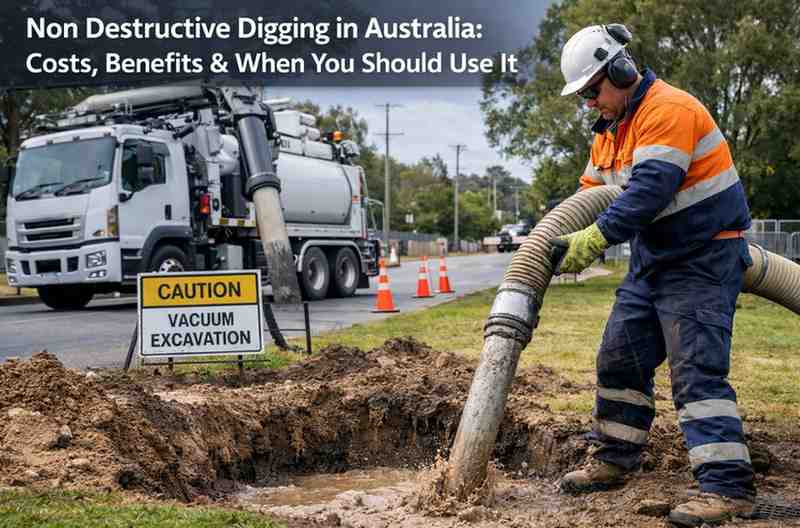
If you’ve ever walked past a major civil construction safety Australia project and seen a massive truck with a giant vacuum hose sucking up mud instead of a backhoe ripping through the earth, you’ve seen Non Destructive Digging (NDD) in action.
In a country like Australia, where our underground infrastructure is a complex spiderweb of fibre optics, gas mains, and water pipes, traditional digging is becoming a bit of a relic. Why risk a multimillion-dollar disaster with a metal bucket when you can use water and air?
What is Non Destructive Digging?
Non destructive digging (also known as hydro or vacuum excavation) is the process of using high-pressure water or air to break up soil, which is then immediately sucked into a tank by a powerful vacuum. Think of it like a high-tech “power wash and vacuum” for the ground.
Non destructive digging allows workers to “see” what’s underneath without the risk of a steel blade slicing through a high-voltage cable. It is widely considered the safest excavation method Australia has to offer for urban and high-risk environments.
Why the Shift? The Benefits of Safe Digging Methods

The move toward NDD isn’t just about being “nice” to the dirt; it’s about risk management and efficiency.
- Site Safety: Because the “digging” happens via a hose, workers don’t need to be inside the trench with heavy machinery, drastically reducing the risk of cave-ins or strikes.
- Surgical Precision: You can dig a hole the size of a dinner plate exactly where you need it. No more oversized trenches that need massive amounts of backfilling.
- Protection of Assets: It is the best way to avoid damaging underground pipes. Water won’t snap a telecommunications line, but a digger certainly will.
- Environmental Wins: It’s much easier on the local environment. You aren’t ripping up tree roots or disturbing more soil than necessary.
How to avoid damaging underground pipes
To keep your project safe and avoid the massive headache of a utility strike, follow these essential steps:
- Look for Markers: Keep an eye out for indicator posts, surface covers, or warning tape buried just above the pipes.
- Dial Before You Dig: Always contact the national referral service (like BYDA) to get official plans of what’s beneath your feet.
- Potholing: Hand-dig or use NDD to “daylight” the pipes—visually confirming their exact depth and location before bringing in heavy machinery.
- Use Non Destructive Digging: Opt for vacuum or hydro excavation. High-pressure water safely exposes pipes without the risk of a metal bucket slicing through them.
Is Vacuum Excavation Better Than Digging?
Vacuum excavation is a classic “horses for courses” situation. If you are in the middle of a remote paddock with zero underground services, a traditional excavator is faster and cheaper.
However, in any built-up area, whether it’s a Sydney CBD street or a suburban Victorian road, vacuum excavation wins every time. When you consider the cost of potentially hitting a gas line (both in repairs and massive fines), NDD is the clear winner for excavation without damage.
Breaking Down the Cost of Hydro Excavation in Australia
You’re likely wondering if this “fancy” method is going to blow your budget. The cost of hydro excavation in Australia is typically billed by the hour.
Rates generally range from $180 to $350 per hour, depending on the size of the truck and the complexity of the waste disposal. While the hourly rate is higher than that of a standard digger, you save on:
- Faster cleanup.
- Lower insurance premiums.
- Zero repair costs for struck assets.
- Reduced labour for manual spotting.
When Should You Use It?
If your project involves any of the following, non destructive digging should be your first choice:
- Tree Root Protection: When digging near protected trees, you can’t afford to damage the root system.
- Potholing & Daylighting: When you need to confirm exactly where a pipe is located visually.
- Tight Spaces: Where a traditional excavator simply can’t maneuver.
- Post Hole Boring: Especially in areas with high service density.
How Civilcraft Helps in Non Destructive Digging in Australia
When it comes to civil construction safety in Australia, Civilcraft has carved out a niche as a specialist in precision excavation.
We don’t just “dig holes”; we provide a high-tech safety net for complex infrastructure projects. Here is how we specifically supports non destructive digging operations across the country:
1. Specialised Vacuum Truck Fleet
- We use high-capacity vacuum excavation units that are essential for safe digging. These trucks use pressurised water to liquefy the soil and a powerful vacuum to remove the slurry, allowing for surgical precision in tight urban environments where traditional excavators are too risky.
2. Infrastructure Asset Protection
- The core of our approach is excavation without damage. By deploying NDD, we help project managers “daylight” or “pothole” existing services. It means we can visually confirm the exact location of high-voltage cables, gas mains, and optics without the risk of a mechanical strike.
3. Integrated Slurry Management
- One of the biggest headaches with hydro-excavation is what to do with the wet mud. Civilcraft manages the entire lifecycle of the waste, ensuring that the resulting slurry is transported and disposed of at certified facilities in compliance with Australian environmental regulations.
Also Read:- Project Delays & Budget Overruns? How to Plan Construct Civil Projects in Australia
Final Thoughts
In the modern Australian construction landscape, “near enough is not good enough.” Using non destructive digging is about moving from “hoping we don’t hit anything” to “knowing we won’t.” It’s smarter, safer, and ultimately, much kinder to your bottom line.
FAQs
Q:- Non destructive digging in Australia?
Ans:- Non destructive digging is a safe excavation method that uses vacuum systems to locate underground utilities without damaging pipes, cables, or infrastructure.
Q:- Is NDD only used for big civil projects?
Ans:- Not at all. While common in civil construction safety in Australia, it’s increasingly used for residential fibre installs and pool plumbing checks.
Q:- Can it dig through rock?
Ans:- High-pressure water is tough, but it’s not a diamond drill. It works best on soil, clay, and sand. For solid rock, you might still need traditional mechanical assistance.
Q:- What happens to the “slurry” (the wet mud)?
Ans:- The truck hauls it away to a certified waste disposal facility where the water is treated, and the soil is recycled.
Q:- Does it use a lot of water?
Ans:- It’s surprisingly efficient. Modern units are designed to use the minimum amount of pressure required to break the soil, and many can recycle some water within the system.
Q:- Do I still need a “Dial Before You Dig” report?
Ans:- Yes! NDD is a safe digging method, but you still need to know roughly where you are working. Always get your plans before the truck arrives.