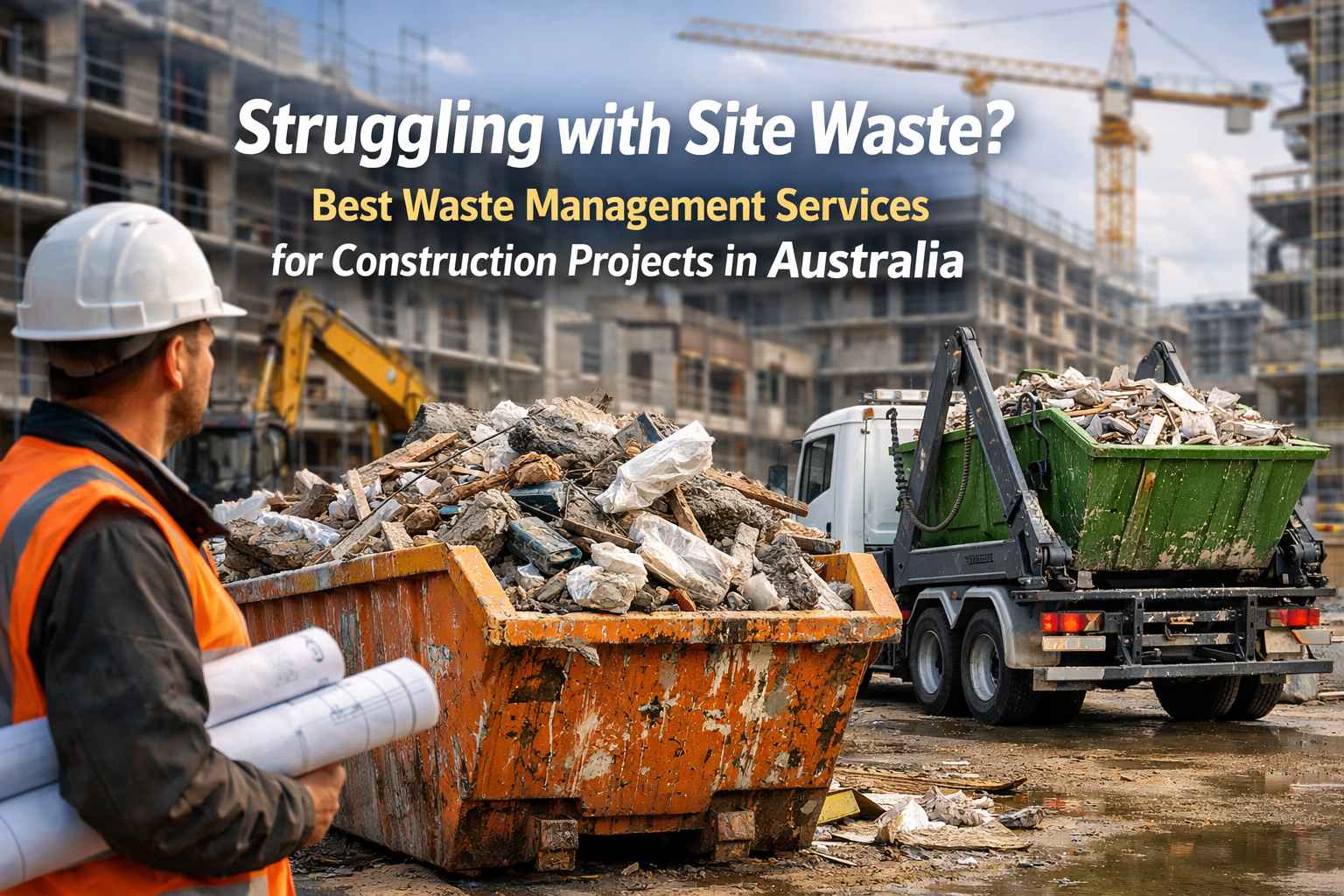
Building a project from the ground up is an incredible feeling, but let’s be real for a second: the mess that comes with it? Not so incredible.
If you’ve ever stood in the middle of a site surrounded by piles of concrete rubble, timber offcuts, and tangled steel, you know exactly what I’m talking about.
Managing a construction site in Australia is a high-stakes game. Between tight deadlines and even tighter safety regulations, the last thing you want to worry about is a mountain of debris blocking your access.
That is where professional waste management services come into play. It isn’t just about “getting rid of junk”; it’s about efficiency, safety, and our responsibility to the environment.
The Headache of Construction Debris: Why It Matters
In the past, waste was often an afterthought. You’d throw everything into one massive bin and hope for the best. But in 2026, the landscape has changed. With rising landfill levies across Australia and stricter EPA guidelines, simply “dumping” isn’t a viable business strategy anymore. Poor waste management can lead to:
- Legal Fines: Improper disposal can result in eye-watering penalties.
- Safety Hazards: Tripping over debris is a leading cause of site injuries.
- Project Delays: If trucks can’t get in because of waste piles, your timeline takes a hit.
How to Manage Construction Waste Effectively
If you are wondering how to manage construction waste without losing your mind, the secret lies in a “Source Separation” strategy. Instead of one giant bin, try using dedicated bins for different materials.
When you separate timber, metal, and masonry at the source, you aren’t just being tidy, you’re making commercial waste removal much cheaper.
Most waste providers charge less for “clean” loads (like pure concrete) than they do for mixed heavy waste. A little bit of organization on-site goes a long way in protecting your profit margins.
The Rise of Sustainable Waste Management
Australia is currently on a massive drive toward a circular economy. Sustainable waste management is no longer a “nice-to-have” buzzword; it is a requirement for most government and high-end residential contracts.
By partnering with the right service, you can ensure that your site waste doesn’t just rot in a hole in the ground. Modern facilities are now capable of recycling construction waste at record rates.
Concrete is crushed into road base, timber is turned into mulch, and steel is melted down for new beams. Being “green” is actually great for your brand, clients love seeing a “90% Diversion from Landfill” stat on a project report.
Spotlight on Quality: Why Civilcraft Stands Out
When we talk about heavy-duty infrastructure and civil projects in Australia, one name that frequently pops up is Civilcraft. Known for our precision in civil engineering and construction, we understand better than anyone that a clean site is a productive site.
Civilcraft sets the gold standard because we don’t just build; we manage the entire lifecycle of a project with an eye on sustainability.
Whether it’s bulk excavation or intricate urban upgrades, our approach proves that integrating professional waste management services from day one is the only way to handle large-scale developments successfully.
Construction Waste Recycling Options
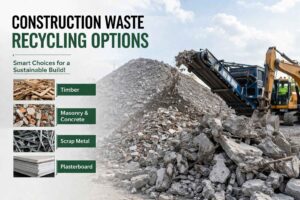
So, what actually happens to your rubbish? You’d be surprised at the options available in Australia today:
- Timber: Unpainted timber can be chipped for particleboard or garden mulch.
- Masonry & Concrete: These are crushed and reused as aggregate or sub-base for new roads.
- Scrap Metal: Copper, aluminum, and steel are highly recyclable and can even earn you some “scrap cash” back.
- Plasterboard: Gypsum can be recovered and used again in new wallboard or as a soil conditioner in agriculture.
How to Reduce Waste on Construction Site (Before It Starts)
Prevention is better than cure, right? To save on the cost of waste removal services in Australia, try these tips to reduce waste on construction site:
- Precise Ordering: “Measure twice, order once.” Reducing over-ordering of materials is the easiest way to cut waste.
- Standardized Designs: Using standard sizes for timber and boards reduces the amount of “offcut” waste.
- Take-Back Schemes: Some suppliers will take back pallets or unused materials. Always ask!
Finding the Best Waste Management Services in Australia
When searching for the best waste management services near me, don’t just go for the cheapest quote. Look for a partner who provides:
- Reliability: You need bins swapped out now, not next Tuesday.
- Compliance: They should provide waste tracking certificates (essential for Green Star ratings).
- Right-Sized Equipment: From 2-cubic-meter skips to 30-cubic-meter hook-lift bins, variety matters.
Cost of Waste Removal Services Australia
Let’s talk about money. The cost of waste removal services in Australia varies wildly depending on your state. Sydney and Melbourne generally have higher landfill levies than smaller hubs.
On average, you might look at anywhere from $400 for a small skip to several thousand dollars for bulk commercial waste removal of heavy materials.
However, the “hidden cost” of not hiring a pro is much higher. Factor in the labor hours your team spends moving trash manually, and suddenly, a professional service looks like a bargain.
Also Read:-Non Destructive Digging in Australia: Costs, Benefits & When You Should Use It
Final Thoughts
Managing a construction project is hard enough. By focusing on recycling this waste and choosing a partner that values sustainable waste management, you’re not just cleaning up a site, you’re building a better future for the Aussie construction industry.
Stay safe, keep it clean, and happy building!
FAQs
Q:- Is construction waste recycling mandatory in Australia?
Ans:- While it varies by state and council, many local governments now require a Waste Management Plan (WMP) before a DA is approved, often mandating high recycling percentages.
Q:- Can I mix all types of construction waste in one bin?
Ans:- You can, but it’s called a “Mixed Heavy Waste” bin and is usually the most expensive option. Separating concrete or metal can save you significant money.
Q:- What is the most common material recycled on Aussie sites?
Ans:- Concrete and masonry! Australia is excellent at crushing these down to create road base and recycled aggregates.
Q:- How do I know if a waste service is “sustainable”?
Ans:- Ask for their “Resource Recovery Certificate.” This document proves what percentage of your waste was recycled versus sent to a landfill.
Q:- Why is the cost of waste removal increasing?
Ans:- State governments increase landfill levies every year to discourage dumping and encourage companies to invest in recycling technology.