
Running a public or commercial pool in Australia—whether it’s a local council aquatic centre in Sydney, a hotel lap pool, or a school swimming facility—is a massive responsibility.
You aren’t just managing water; you’re managing a complex concrete structure that’s under constant pressure from thousands of litres of water, chemicals, and the Aussie sun.
When you start seeing cracks, “drummy” sections, or tiles popping off, it’s easy to feel a bit of a sinking feeling. But don’t stress. Swimming pool concrete repairs are just part of the lifecycle of any high-use facility.
The key is catching things early and using the right pros to fix them before a small leak turns into a structural nightmare. In this guide, we’ll walk through the “how-to” of keeping your concrete pool in top shape, from structural fixes to the surrounding stormwater management.
Why Concrete Pools Need a Bit of Love
Concrete is incredibly tough; that’s why concrete swimming pool building is the go-to for almost every Olympic and public facility in Australia. It’s versatile, durable, and can be built to any shape.
However, concrete is also porous and prone to “movement.” In places like Sydney, ground movement and fluctuating temperatures can cause the concrete shell to stress.
If the water chemistry isn’t perfectly balanced, that water can actually become “aggressive,” leaching calcium out of the concrete and weakening the structure. This is why regular swimming pool concrete repair isn’t just about aesthetics; it’s about structural integrity.
Common Signs You Need Repairs
If you’re managing a facility, keep an eye out for these “red flags”:
- Structural Cracks: These aren’t just surface scratches. If you see a crack that seems to be widening or following a line through the pool shell, it’s a sign of structural stress.
- Rust Stains: It usually means the steel reinforcement (rebar) inside the concrete is starting to corrode. If it expands, it’ll blow the concrete right off.
- Drummy Areas: If you tap a section of the pool wall and it sounds hollow, the render or tile bed has detached from the main concrete shell.
- Losing Water: If your auto-leveller is working overtime, you likely leak.
The Repair Process: From Digging to Diving
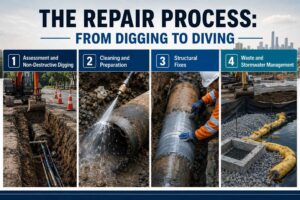
When it comes to concrete pool repairs in Sydney or any major Australian city, the process is quite surgical. You don’t just slap some putty on a crack and hope for the best.
1. Assessment and Non-Destructive Digging
- Before we even touch the pool, we need to know what’s happening underground. Non Destructive Digging (NDD) is a lifesaver for commercial facilities.
- Instead of bringing in a heavy excavator that might crush a vital pipe, NDD uses high-pressure water and a vacuum (hydro-excavation) to expose underground assets like filtration lines and power cables safely. It’s precise, safe, and keeps the site clean.
2. Cleaning and Preparation
- A good repair starts with a clean surface. Pressure cleaning concrete is essential to remove algae, old chemicals, and loose debris. For commercial pools, it usually involves industrial-strength equipment that prepares the concrete to bond perfectly with repair materials.
3. Structural Fixes
- Crack Injection: For deep structural cracks, technicians use high-pressure resin injections. It fills every microscopic fissure and creates a waterproof, flexible seal that moves with the building.
- Steel Reinforcement Repair: If rust is the issue, we have to cut out the “cancerous” concrete, treat the steel, and patch it back up with specialised high-strength mortars.
4. Waste and Stormwater Management
- In Australia, we have strict rules about where pool water and construction waste go. Proper waste management services are crucial during a repair to ensure old render, tiles, and slurry are disposed of legally.
- Additionally, stormwater management is vital. You can’t just drain a 50-metre public pool into the local gutter. It has to be neutralised and managed to prevent environmental fines and protect our waterways.
Tips for Maintaining Commercial Pools in Budget
- Annual Inspections: Don’t wait for a leak. Have a pro look at the structure once a year.
- Balance is Everything: Keep your pH between 7.2 and 7.6. If it’s too low, the water will “eat” your concrete.
- Watch the Surrounds: Sometimes the “pool” problem is actually a “drainage” problem. Ensure your deck drainage is clear so water isn’t sitting behind the pool walls.
How Civilcraft Can Help
When it comes to the complex world of swimming pool concrete repairs, having a specialised partner like Civilcraft is a game-changer for commercial and public facilities.
As experts in civil engineering and structural maintenance across Australia, Civilcraft takes a “whole-of-life” approach to your assets.
Instead of just patching a crack, they provide a full diagnostic service to find out why the damage happened in the first place, whether it’s soil movement, poor stormwater management, or aging reinforcement.
Also Read:- Spalling Concrete Repairs Explained: From Damage Assessment to Restoration
The Final Splash
A well-maintained pool is the heart of a community. By staying on top of your swimming pool concrete repairs and using modern techniques like NDD, you ensure that your facility stays safe, sparkling, and open for the public to enjoy for decades to come.
FAQs
Q:- How long does a typical concrete repair take?
Ans:- For minor cracks, a few days. For major structural remediation of a public pool, expect 2 to 6 weeks, depending on the scale.
Q:- Can you repair a pool while it’s full of water?
Ans:- Sometimes! “Underwater leak detection” and some specialised resins allow for minor fixes without draining, but for structural concrete work, the pool usually needs to be empty.
Q:- Is non-destructive digging really necessary?
Ans:- If you have underground pipes, yes. It’s the only way to ensure you don’t accidentally cut a filtration line and double your repair bill.
Q:- Why is my concrete “spalling” or flaking?
Ans:- This is often “concrete cancer” caused by the steel inside rusting and expanding. It needs professional attention immediately before it weakens the whole shell.
Q:- How often should a public pool be resurfaced?
Ans:- Generally, every 10 to 15 years, depending on the bather load and how well the water chemistry has been managed.