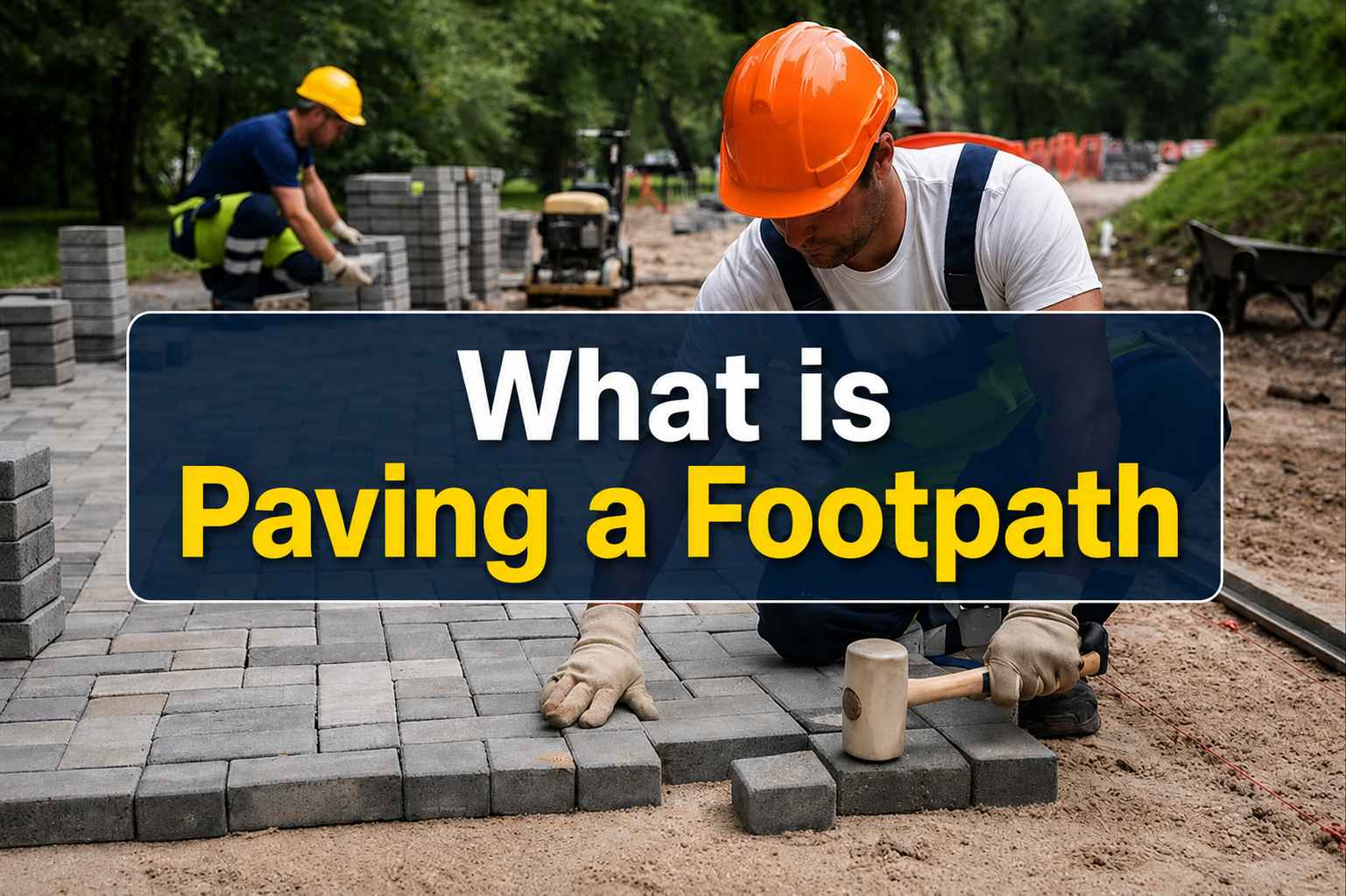
If you’ve been wandering around your neighbourhood lately and noticed your neighbour’s front yard looking a bit sharper, or maybe you’re tired of dodging puddles on a muddy track leading to your clothesline, you’ve probably thought about paving footpath options.
In Australia, a footpath isn’t just a strip of concrete. It’s the “welcome mat” to your home, a safe passage for the kids’ scooters, and a major factor in your property’s curb appeal. Whether you’re looking at a DIY weekend project or hiring a pro to overhaul your verge, here’s the lowdown on everything related to paving footpaths in the Land Down Under.
What is Paving?
Paving is the process of creating strong, durable surfaces for outdoor areas using materials like concrete, asphalt, bricks, or stone. It is commonly used for:
- Driveways
- Footpaths & walkways
- Patios & outdoor spaces
- Roads & parking areas
- Commercial and landscaping projects
Quality paving improves safety, appearance, and long-term durability for residential and commercial properties.
What Exactly is Paving a Footpath?
At its simplest, paving footpath work involves creating a hard-wearing, flat surface for walking. While the council takes care of the main pedestrian paths on the street, many homeowners are responsible for the path from the gate to the front door, or side paths that lead to the backyard. In the Australian context, we have to deal with some unique challenges:
- The Heat: Our pavers need to withstand the blistering sun without cracking or becoming “lava” under bare feet.
- The Soil: Depending on where you live, your path needs a solid foundation so it doesn’t turn into a roller coaster after one wet season.
The Most Popular Materials for Aussie Paths
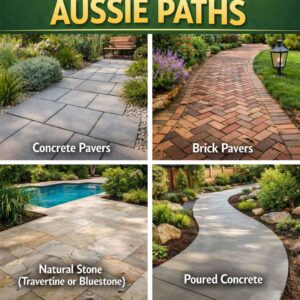
When it comes to paving footpath projects, we aren’t short on choices. Here are the heavy hitters you’ll see in most local hardware stores and landscaping yards:
1. Concrete Pavers
- These are the bread and butter of Australian landscaping. They are consistent, affordable, and come in every colour from “Limestone” to “Charcoal.” They are great because they are easy to replace if one gets stained by a leaky mower.
2. Brick Pavers
- Nothing beats the classic red brick look, especially for Federation-style homes or cozy cottages in Melbourne and Sydney. They offer a timeless, earthy feel and are incredibly durable.
3. Natural Stone (Travertine or Bluestone)
- If you want that premium, high-end look, natural stone is the way to go. Victorian Bluestone is a massive favourite for modern designs, while Travertine stays remarkably cool under the Queensland sun, making it perfect for paths near pools.
4. Poured Concrete
- Technically not “paving” in the traditional sense, but many Aussies opt for exposed aggregate. It’s one solid slab with beautiful pebbles showing through—super low maintenance but harder to repair if it cracks.
How to Do It Right: The “Non-Boring” Steps
If you’re thinking about tackling a paving footpath project yourself, don’t just throw some bricks on the dirt and call it a day. That’s a one-way ticket to Ankle-Sprain City.
-
The Foundation is King
You need to dig out about 100mm to 150mm of soil. Then, you lay down a “road base” (crushed rock) and compact it until it’s as hard as a rock. On top of that goes a thin layer of washed sand. This acts as the bed for your pavers.
-
Mind the Fall
A common mistake is making the path perfectly level. In Australia, when we get rain, we usually get a lot of it at once. You want a slight “fall” (slope) away from your house walls so water doesn’t pool against your foundations.
-
The “Lock”
Once the pavers are down, you sweep “gap sand” or polymeric sand into the cracks. This locks them together so they don’t wiggle when you walk on them.
Council Rules: Don’t Get Fined!
Before you start paving footpath areas near the street, you’ve got to check with your local council. Most councils have strict rules about what you can do on the “verge”.
For example, if you pave over the whole thing without permission, you might be creating a drainage issue that the council will make you tear up at your own expense. Always check if you need a “Verge Development Application” or similar permit.
How Does Civilcraft Help in Paving Footpaths in Sydney
In the competitive landscape of Sydney’s infrastructure, Civilcraft distinguishes itself as a premier partner for paving footpath projects by blending technical civil engineering with high-end landscaping.
- Serving a diverse range of clients—from government bodies managing iconic parklands to commercial developers—Civilcraft specialises in the complete lifecycle of a footpath.
- We don’t just lay pavers; we provide structural assessments to ensure the underlying foundation can withstand Sydney’s specific soil conditions and heavy foot traffic.
- Our expertise extends to sophisticated restoration work, where we utilise laser-guided pavers and advanced hot-mix asphalt to ensure every millimetre is level and durable.
- Beyond simple installation, Civilcraft integrates complex urban elements into our paving designs, such as modified pits, drainage infrastructure, and sustainable “green” stormwater solutions.
- By operating under our “Preserve – Enrich – Return” framework, we ensure that whether we are paving a modern commercial walkway or restoring a heritage-listed garden path, the project enhances the local community with minimal disruption.
From selecting the right non-slip materials to navigating strict Sydney council regulations, Civilcraft provides a seamless, professional approach to transforming ordinary nature strips and verges into high-quality, long-lasting pedestrian assets.
Conclusion
If you’re ready to transform your outdoor space, paving footpath projects are one of the most rewarding upgrades you can do. It’s practical, looks great, and gives you a solid reason to spend more time in the backyard with a cold drink in hand!
FAQs
Q;- How much does paving a footpath cost in Australia?
It varies, but expect to pay anywhere from $40 to $100 per square metre for materials. If you’re hiring a pro, labour can add another $60 to $100 per square metre.
Q;-Do I need to seal my pavers?
It’s highly recommended! Sealing protects against oil stains (if it’s near a driveway) and prevents the colour from fading in the harsh Aussie UV rays.
Q;-Can I pave over an old concrete path?
Usually, yes! As long as the old concrete isn’t badly cracked or sinking, you can use it as a solid base for new pavers.
Q;-What is the best paver for a DIY beginner?
Large-format concrete pavers (like 400x400mm) are generally the easiest for beginners because they cover ground quickly and are easier to level than tiny bricks.
Q;- How do I stop weeds from growing between pavers?
Use a high-quality “jointing sand” that hardens like mortar, and make sure your base is thick enough to discourage root growth.