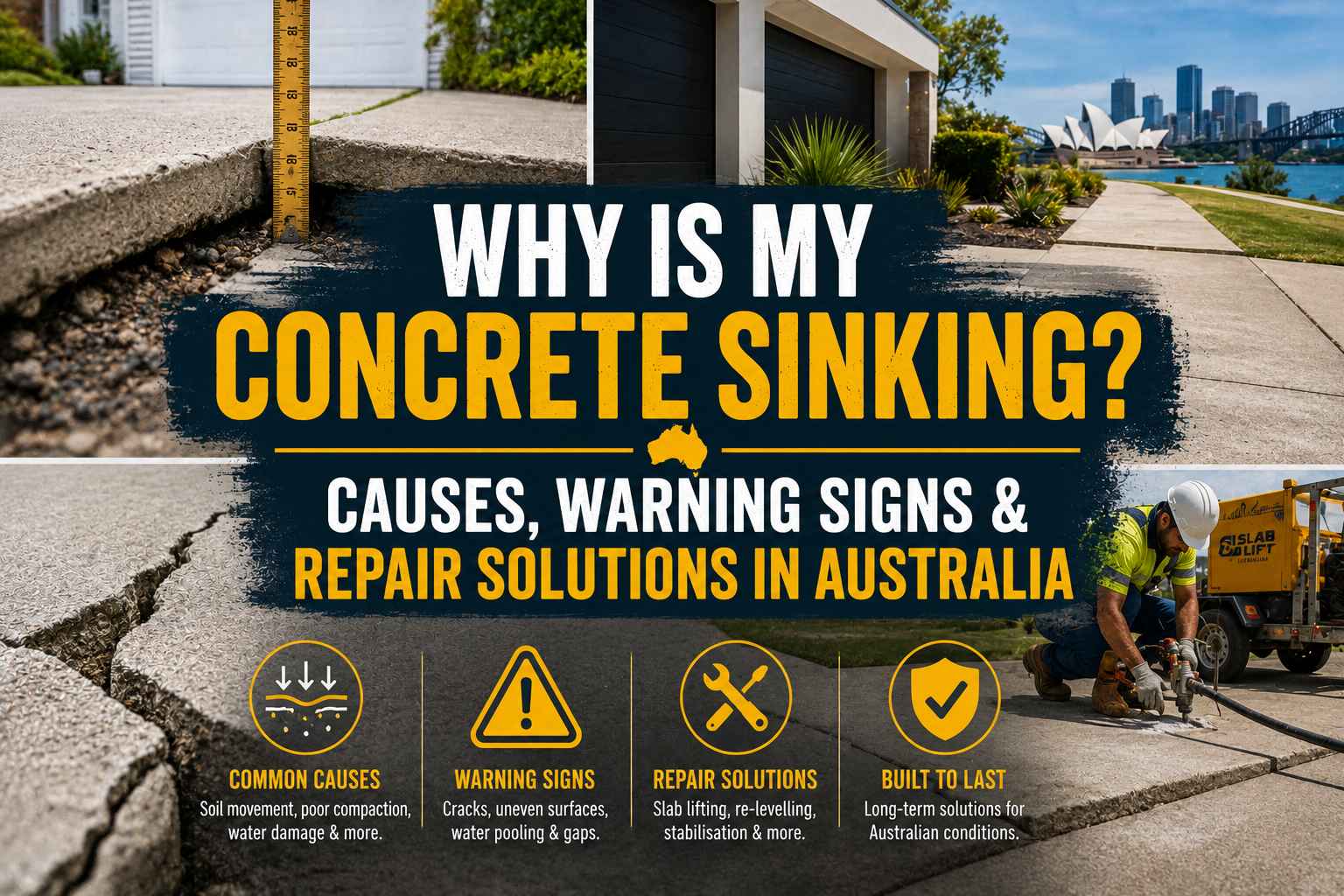
Have you ever walked out to your driveway in the morning, coffee in hand, only to stumble over a sudden lip in the slab that definitely wasn’t there a couple of years ago? Or maybe you’ve noticed water pooling right next to your home’s foundation after a heavy rainfall.
If your outdoor slabs look uneven, tilted, or cracked, you’re dealing with concrete sinking, a surprisingly common head-scratcher for property owners right across Australia.
Concrete is tough, durable, and built to withstand heavy vehicles and harsh weather. However, concrete is only as strong as the soil sitting right beneath it. When that ground shifts, shrinks, or washes away, even the thickest slab starts to drop.
In this guide, we’ll break down why slabs sink, the early warning signs to look out for, how to decide between fixing or replacing your concrete, and how experts in concrete repair in Australia, like Civilcraft, can restore your surfaces safely and affordably.
Causes of Concrete Slab Sinking After Installation
One of the most frustrating things for homeowners is investing thousands in a fresh outdoor area, only to see it drop a few seasons later.
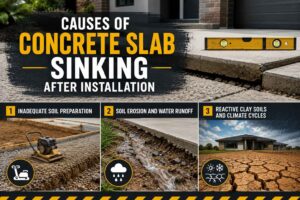
Understanding the causes of concrete slabs sinking after installation usually comes down to three main culprits: poor soil compaction, water erosion, and Australia’s extreme climate cycles.
1. Inadequate Soil Preparation
- Before pouring concrete, contractors must compact the sub-base soil thoroughly. If the ground is left loose or poorly prepped, the sheer weight of the cured concrete slab will slowly crush the loose soil pockets beneath it over time, leading to uneven settling.
2. Soil Erosion and Water Runoff
- Water is the natural enemy of stable ground. Heavy downpours, leaking underground pipes, or poorly positioned downspouts can channel rainwater directly under your slabs.
- As water flows beneath the concrete, it washes away loose sand and base rock, leaving empty voids. Without soil supporting the slab, gravity takes over, and the concrete drops into the gap.
3. Reactive Clay Soils and Climate Cycles
- Australia is famous for reactive clay soils that expand significantly when wet and contract dramatically when dry.
- During prolonged droughts, clay loses moisture, shrinks, and creates hollow pockets under concrete slabs. When torrential rains arrive, the dry soil softens instantly, causing the heavy slab above to settle unevenly.
Why Is My Concrete Driveway Sinking?
Driveways take more abuse than almost any other slab on a property. Concrete sinking in driveways is primarily because of a combination of high vehicle weight and edge water penetration.
Every time a heavy car, SUV, or delivery truck drives onto your driveway, it exerts immense downward pressure. If water from rain or garden irrigation runs off the side of the driveway and seeps underneath the edges, the base material softens.
The constant dynamic load of parked cars forces the softened subgrade to shift, causing the driveway panels to drop along the edges or at major joint lines.
Additionally, tree roots near driveways can absorb huge amounts of groundwater, shrinking the surrounding soil and causing localised sinking beneath individual driveway sections.
Uneven Concrete: a Safety Hazard
It’s easy to look at a sunken walkway or slightly uneven patio and think, “I’ll deal with that next year.” But is irregular concrete a safety hazard? Absolutely.
- In fact, a vertical offset of as little as 5 to 10 millimeters between two adjacent slabs creates a significant trip hazard for family members, visitors, and delivery drivers.
- When concrete sinks toward a building foundation rather than sloping away from it, rainwater pools directly against exterior walls.
- Over time, this unwanted water intrusion can seep into footings, undermine structural brickwork, or cause severe moisture damage inside your home. Addressing concrete sinking early prevents minor surface trips from turning into costly structural repair bills.
Warning Signs Your Slabs Are Settling
Catching settling concrete early allows you to fix the issue before the slab cracks into unsalvageable fragments. Keep an eye out for these clear red flags around your property:
- Standing Water: Puddles lingering on walkways or driveways hours after rain has stopped.
- Uneven Joints: One slab sits noticeably higher than the adjoining panel along control joints.
- Cracks Near Edges: Hairline or widening cracks developing near slab borders where support has eroded.
- Gaps Under Skirting: Visible gaps opening up between patio slabs and your home’s exterior walls or door thresholds.
- Hollow Sounding Concrete: A hollow, ringing drum sound when walking or tapping heavily on specific areas of the slab.
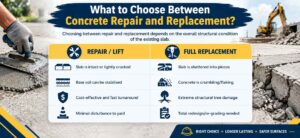
If your sunken slab is mostly intact with only minor surface cracks, modern non-invasive levelling methods can raise the existing concrete back to its original position at a fraction of the cost of replacement.
However, if the concrete has crumbled into dozens of small, loose pieces or suffered massive structural degradation, breaking it out and pouring fresh concrete is the smarter long-term solution.
Modern Solutions for Concrete Repair in Australia
Gone are the days when fixing sunken concrete meant heavy jackhammers, noisy excavation teams, and weeks of messy construction. Specialist providers of concrete repair in Australia now utilise advanced, low-impact levelling and soil stabilisation techniques.
High-Density Polyurethane Resin Injection (Polyjacking)
- Polyjacking involves drilling small holes (about the size of a coin) through the sunken slab. A specialised, high-density polyurethane resin is injected underneath.
- As the chemical reaction occurs, the liquid expands into a rigid foam, filling empty underground voids and lifting the heavy concrete slab back to level precision within minutes.
Resin Underpinning & Soil Stabilisation
- For deep-seated soil issues or larger civil structures, technicians inject expanding resins deep into subgrade soil layers. It binds weak soil particles together, increases load-bearing capacity, and prevents future subsidence.
How Civilcraft Helps Resolve Concrete Sinking Issues
When it comes to addressing complex slab settlement and structural ground issues like concrete sinking, working with experienced engineering professionals makes all the difference.
Civilcraft specialises in comprehensive civil engineering, slab levelling, and soil remediation services tailored specifically to Australian conditions.
- Expert Root-Cause Diagnosis: Civilcraft doesn’t just patch up surface damage; their team conducts thorough site inspections to pinpoint exactly why the ground shifted in the first place.
- Drainage & Base Remediation: Civilcraft addresses underlying moisture control and sub-base compaction issues, ensuring water flows away from your structures so your concrete stays level for decades to come.
- Precision Slab Levelling & Grouting: Utilising state-of-the-art injection technologies and high-strength void filling materials, Civilcraft lifts sunken driveways, pathways, and commercial slabs back into alignment efficiently.
- Turnkey Residential & Commercial Care: From home driveways to industrial concrete pavements, Civilcraft delivers reliable, Australian standards-compliant solutions that save time, reduce disruption, and safeguard property values.
Also Read:- Landscape Solutions Sydney: Ideas That Improve Outdoor Spaces and Property Value
Conclusion
Addressing concrete sinking early protects your property’s structural safety and curb appeal. By choosing non-invasive leveling solutions from experts like Civilcraft, you restore sunken slabs quickly while avoiding costly replacements.
FAQs
Q:- Why is the concrete driveway sinking?
Ans:- Driveways sink when heavy vehicle loads press down on sub-base soil that has been softened, eroded by rainwater runoff, or poorly compacted during initial construction.
Q:- Is uneven concrete a safety hazard?
Ans:- Yes, uneven concrete creates severe trip hazards for pedestrians and can redirect rainwater back toward home foundations, causing moisture and structural damage.
Q:- How do I know if my concrete needs repair or replacement?
Ans:- If the sunken slab is mostly intact with minor cracks, it can be levelled and repaired; if it is shattered into small loose pieces, full replacement is required.
Q:- What causes concrete slabs to sink after installation?
Ans:- Slabs sink after installation due to loose, uncompacted base soil settling under weight, water eroding the sub- grade, or reactive clay soils shrinking during dry weather.
Q:- Can sunken concrete be lifted without destroying the yard?
Ans:- Yes, modern polyurethane injection methods lift sunken slabs through tiny drilled holes without needing heavy machinery or damaging surrounding landscaping.