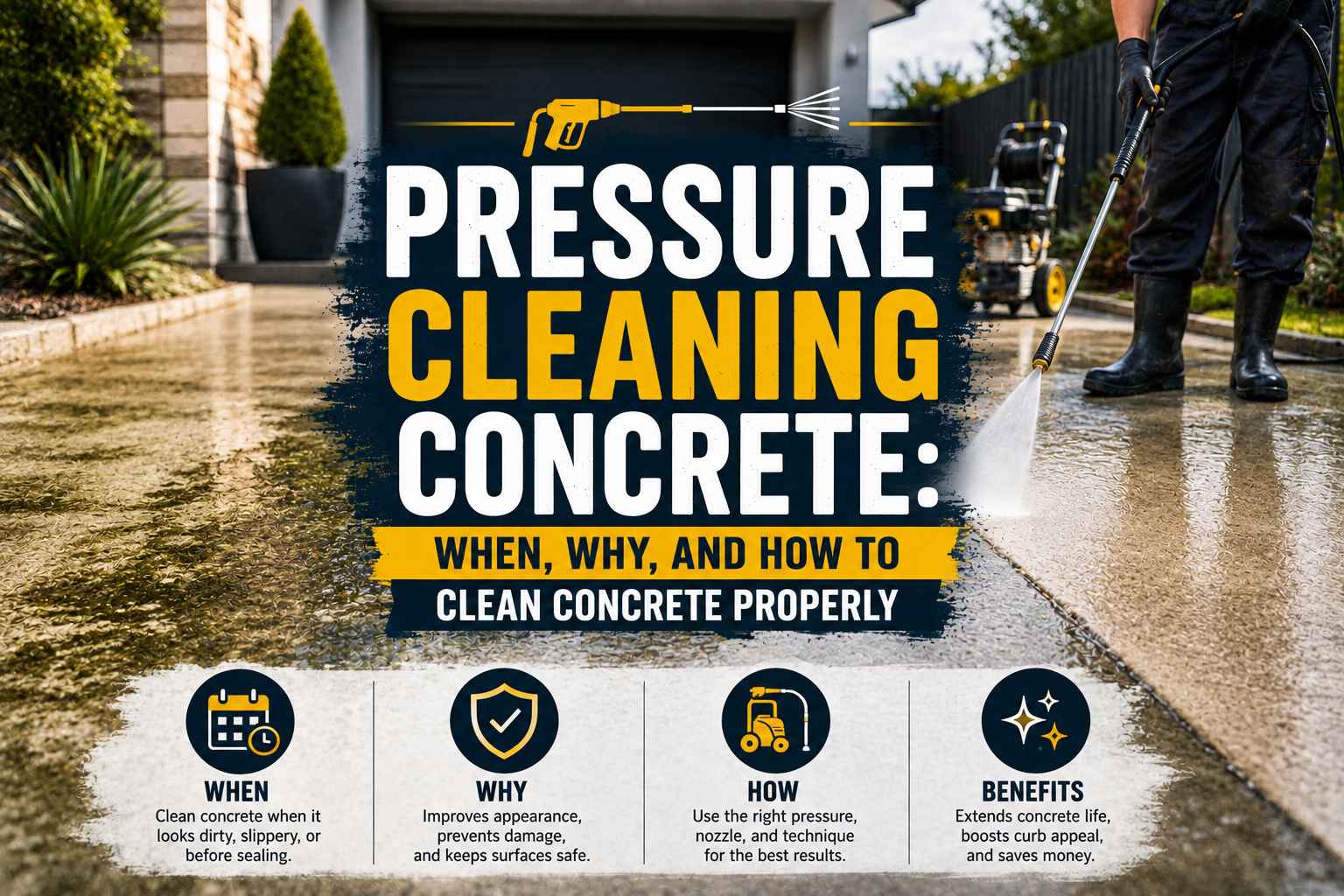
Outdoor concrete has a tough job in Australia. From sun-baked driveways in Queensland to damp, mossy patio slabs in Melbourne, our outdoor concrete surfaces take a beating year-round.
They get scorched by intense UV rays, splashed with oil, coated in coastal sea salt, and invaded by stubborn black mold the moment the wet season rolls around. Over time, that bright, fresh concrete driveway begins to look dark, dingy, and neglected.
The good news? You don’t need to replace weathered hardscaping to make your home look brand new again. Pressure cleaning concrete is the single most effective, satisfying, and cost-effective way to restore your property’s curb appeal.
But before you rent a blaster and start spraying indiscriminately, there is a right way and a very wrong way to clean concrete. Here is your complete guide on when, why, and how to pressure clean concrete properly, tailored for Australian conditions.
Why Pressure Cleaning Concrete Matters
Concrete might seem indestructible, but it is actually a highly porous material. Think of it like a rigid sponge. Tiny pores across the surface trap dirt, atmospheric grime, motor oil, tree sap, and biological spores. Ignoring dirty concrete leads to more than just cosmetic problems:
- Slip Hazards: Damp algae, moss, and lichen create a dangerously slick surface when wet, turning your front pathway into an ice rink during winter rain.
- Surface Degradation: Organic growth and trapped chemicals slowly break down concrete sealers and weaken the top layer of aggregate over time.
- Property Value: Your driveway and entryways form the “first impression” of your home. Clean concrete instantly brightens the exterior and boosts overall property value.
Understanding the Basics: Pressure Cleaning vs. Soft Washing
Before diving into the process of pressure cleaning concrete, it helps to clear up a common misconception about high-pressure water versus chemical cleaning.
What’s the Difference Between Pressure Washing and Soft Washing?
The main difference lies in water pressure and cleaning agents.
- Pressure Washing:
Relies on sheer mechanical force (typically 2,500 to 4,000 PSI) to physically blast away surface dirt, mud, paint, and caked-on grime. It is ideal for hard, durable, non-porous surfaces like concrete driveways, sidewalk slabs, and steel.
- Soft Washing:
Uses low water pressure (under 500 PSI) combined with specialised, eco-friendly cleaning solutions, detergents, and algaecides. The chemical solution does the heavy lifting by killing mould, mildew, and algae at the root level.
Soft washing is designed for delicate surfaces like timber decks, roof tiles, and weatherboards that high pressure would strip or damage.
For standard grey concrete driveways and paver paths, a hybrid approach often works best: pre-treating organic growth with a soft-wash detergent, followed by high-pressure rinsing.

Is Pressure Cleaning Safe For Concrete?
Yes, pressure cleaning is completely safe for concrete if done correctly. Because cured structural concrete is extremely dense, it can comfortably handle high water pressure. However, improper technique can leave permanent damage:
- Blowing Out Mortar Joints: High pressure targeted directly at brick paver joints or expansion gaps can blast away sand, mortar, and joint sealants.
- Etching (Zebra Stripes): Using a narrow nozzle (like a zero-degree pin-point nozzle) too close to the surface can cut lines directly into the concrete, permanently scarring it.
- Damaging Fresh Concrete: Never pressure wash concrete that is less than 3 to 6 months old. Young concrete is still curing and lacks the tensile strength to withstand high-pressure water.
To keep your concrete safe, always use a 25-degree or 40-degree fan nozzle, hold the tip at least 30 cm away from the surface, or better yet, use a dedicated rotary surface cleaner attachment.
How Often Should Concrete be Pressure Cleaned?
For most Australian homes, pressure cleaning concrete once every 12 to 18 months is ideal. However, your exact timeline depends on your surroundings:
- Shaded or Coastal Areas: If your driveway sits under heavy tree canopy or experiences high humidity (common in tropical and subtropical regions), you may need to clean it every 6 to 9 months to keep moss and mold at bay.
- High-Traffic Driveways: Commercial properties or residential driveways housing multiple vehicles may benefit from an annual spring clean to lift oil accumulation before summer heat bakes stains into the slab.
Can Pressure Washing Remove Oil Stains From Concrete?
Pressure washing alone will lighten oil stains, but water alone rarely removes deep oil stains completely. Because concrete is porous, spilled motor oil sinks deep beneath the surface.
Water sprays right over the top without dissolving the petroleum hydrocarbon bonds. To eliminate oil stains, follow a three-step treatment:
- Absorb: Soak up fresh oil immediately using kitty litter, sawdust, or baking soda.
- Degrease: Apply a heavy-duty industrial degreaser or citrus-based cleaner directly to the dry stain. Work it into the concrete pores using a stiff-bristled deck brush and let it sit for 20 to 30 minutes.
- Hot Pressure Wash: Rinse the area thoroughly with high-pressure water. Using hot water (if your equipment supports it) emulsifies the broken-down oil, pulling it completely out of the concrete matrix.
How to Pressure Clean Concrete Properly (Step-by-Step)
If you’re gearing up for a weekend DIY project, follow this step-by-step workflow to get professional-grade results for pressure cleaning concrete without damaging your property.
Step 1: Prep the Work Zone
- Move all cars, furniture, and garden hoses away from the concrete. Sweep away loose leaves, sticks, and gravel. Cover nearby electrical outlets and delicate garden beds with plastic sheeting or rinse plants with clean water before and after to protect them from detergent overspray.
Step 2: Pre-Treat Organic Growth & Stains
- Spray a pre-treatment cleaner or concrete detergent over the area. For heavy green algae or black mold, a sodium hypochlorite (bleach) mix or eco-friendly outdoor cleaner helps kill fungal spores so they don’t grow back a few weeks later.
Step 3: Use a Surface Cleaner Attachment
- While a handheld spray lance works, using a rotary surface cleaner (a dome-shaped attachment with spinning nozzles underneath) is a game-changer. It cleans a 15 to 20-inch swath in a single pass, works twice as fast, and eliminates ugly streaking lines.
Step 4: Rinse and Sweep Away Slurry
- Switch to your 25-degree fan nozzle to push dirty slurry, sand, and lifted debris off the driveway toward a safe drainage point.
Step 5: Seal for Long-Term Protection
- Once the concrete dries completely (allow 24–48 hours), apply a high-quality concrete sealer. Sealing repels water, prevents future oil absorption, and makes your next pressure cleaning job 80% easier.
Should I Hire a Professional for Concrete Pressure Cleaning?
While renting a pressure washer for a small patio is a manageable weekend DIY task, hiring a professional is often the smarter choice for larger driveways, commercial properties, or heavily stained surfaces. Consider hiring a pro for pressure cleaning concrete if:
- You are dealing with large surface areas (100+ square meters) that would take an entire weekend with homeowner-grade equipment.
- You want to avoid risks like concrete etching, damaged landscaping, or water ingress under garage doors.
- You have deep oil stains, rust, or paint spills requiring hot-water units and commercial chemical treatments.
How Civilcraft Can Help
When it comes to extensive residential developments, commercial precincts, and civil infrastructure, maintaining structural and aesthetic concrete integrity requires professional precision. This is where Civilcraft excels.
As leaders in Australian civil construction, concrete works, and infrastructure maintenance, Civilcraft understands concrete from the ground up—from initial pouring and curing to long-term surface preservation.
Whether managing large-scale commercial site remediation or structural concrete maintenance across Australia, Civilcraft delivers engineered solutions that ensure your concrete surfaces remain strong, safe, and visually impressive for decades to come.
Also Read:- Why Is My Concrete Sinking? Causes, Warning Signs & Repair Solutions in Australia
Summary Checklist for Your Next Clean
Before you start your next concrete restoration project, keep these quick tips in mind:
- Check the Age: Never pressure wash concrete under 3 months old.
- Pre-Treat First: Use degreasers on oil and algaecides on mold before turning on the washer.
- Right Tool for the Job: Use a rotary surface cleaner for smooth, streak-free results on driveways.
- Protect Your Eyes: Always wear safety goggles, sturdy boots, and long pants; flying gravel hurts!
- Finish with Sealer: Lock in your hard work by applying a clear penetrating sealer once dry.
Conclusion
Mastering pressure cleaning concrete is the easiest way to revive weathered driveways and protect your home’s value. Grab your gear or call the pros to transform your outdoor spaces today!
FAQs
Q: Can I let pressure cleaning runoff flow straight into Australian storm drains?
A: No, local council regulations strictly require you to divert chemical and dirty wastewater away from stormwater drains to protect local waterways.
Q: What is the ideal PSI level for pressure cleaning a concrete driveway?
A: A machine rated between 3,000 and 4,000 PSI provides the ideal power to lift embedded dirt without damaging cured concrete.
Q: Is hot water pressure cleaning better than cold water for concrete?
A: Yes, hot water acts like dish soap in a sink, cutting through tough oil, grease, and ground-in tire marks much faster than cold water.
Q: How long should I wait after pressure washing before sealing my concrete?
A: Allow at least 24 to 48 hours of warm, dry weather so moisture deep inside the concrete pores completely evaporates before applying sealer.
Q: Will high-pressure washing strip painted or stenciled concrete?
A: High pressure can chip or lift flaking paint, so switch to soft washing with a lower PSI if you want to keep decorative finishes intact.