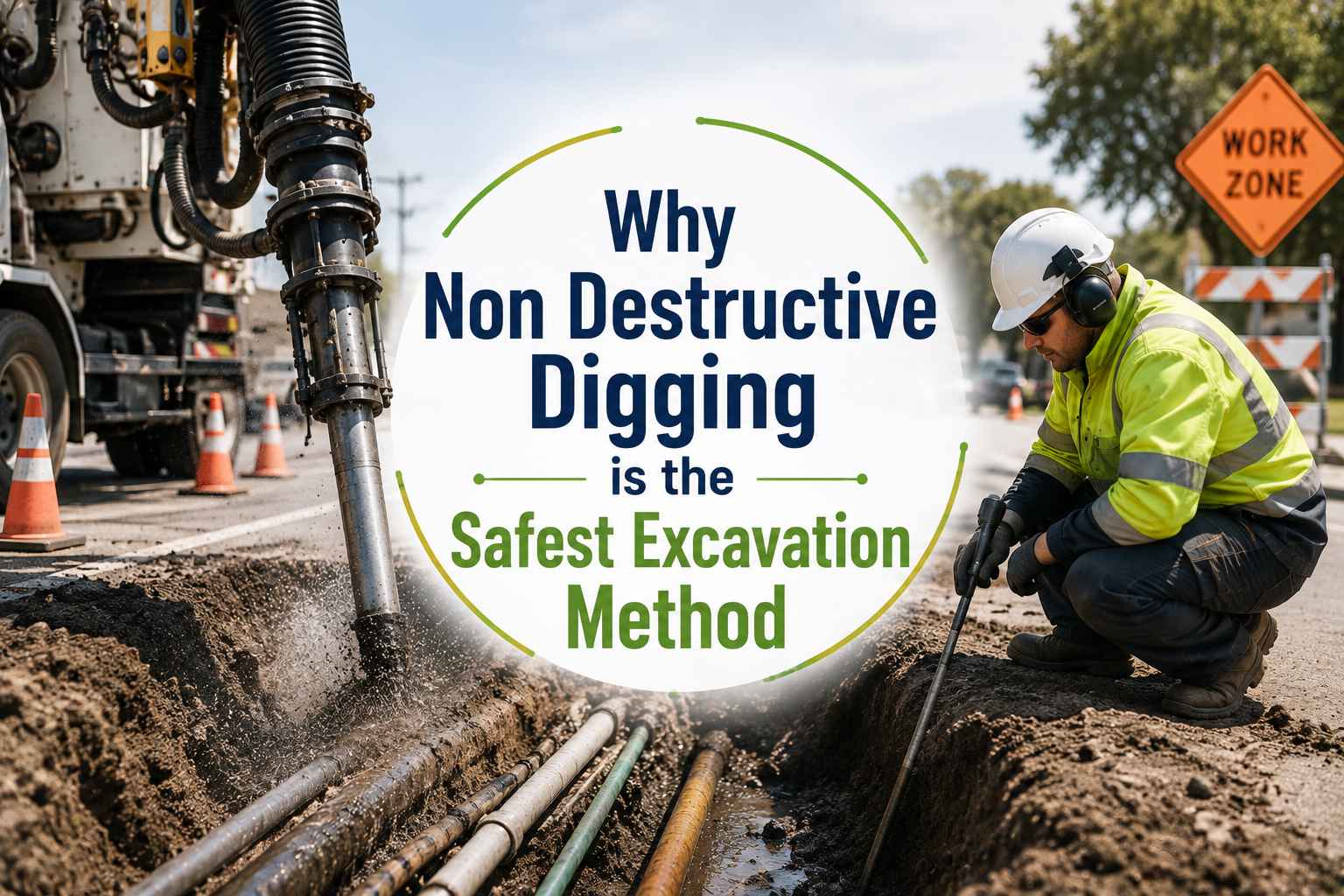
Imagine: a heavy excavator arm digs deep into the soil, only to puncture a high-voltage power line or strike a major gas main. Within seconds, a routine civil project turns into an expensive, dangerous emergency.
For decades, traditional mechanical excavation was a high-stakes guessing game. But as underground infrastructure becomes more crowded with fibre optic cables, water mains, gas lines, and power grids, relying on traditional diggers near hidden utilities is too risky.
Enter non destructive digging. Often called hydro excavation or vacuum excavation, this technology has completely revolutionised how we dig around buried utilities. But what makes it so special, and why is it universally recognised as the safest excavation method available today? Let’s understand.
Non Destructive Digging Explained
At its core, non destructive digging is an advanced excavation technique that uses pressurised water (or air) combined with a high-powered vacuum system to break up soil and remove debris safely. Instead of tearing through the earth with sharp metal buckets or backhoes, NDD uses high-pressure water streams to liquefy and loosen the dirt.
Simultaneously, a heavy-duty suction hose vacuums the resulting slurry straight into a debris tank mounted on a specialised truck. Because water and air gently wash away soil without cutting through solid materials like plastic pipes, copper lines, or metal conduits, the buried utilities underneath remain completely unharmed.
How Vacuum Excavation Works Step-by-Step
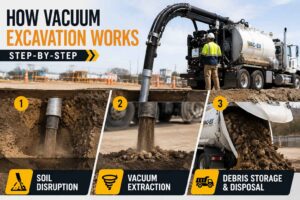
Understanding the process helps explain why it is so safe. The entire system relies on a specialised vacuum loader unit operating in three seamless steps:
- Soil Disruption: High-pressure water (or compressed air) is directed at the ground using a handheld wand. The water breaks apart compacted clay, sand, and soil without applying hard mechanical force.
- Vacuum Extraction: As the soil turns into slurry, a high-volume vacuum hose immediately sucks up the mud, rocks, and debris.
- Debris Storage & Disposal: The slurry travels through the hose and deposits into an onboard debris tank. The site remains clean, dry, and free of dirt mounds, leaving a clean, precise hole.
5 Reasons Why Non Destructive Digging is the Safest Excavation Method
Whether you are working on a busy city street, a residential road, or a complex industrial site, safety is always priority number one. Here are the main reasons why NDD beats traditional digging every single time.
1. Zero Risk of Utility Strikes
- Hitting an underground line isn’t just an inconvenience; it can cause massive power outages, explosive gas leaks, or widespread water disruptions. Because NDD utilises water or air rather than sharp metal teeth, it harmlessly washes soil away from delicate infrastructure. Telecom cables, gas lines, and electrical conduits are exposed cleanly without a single scratch.
2. Maximum Safety for Site Workers
- Excavation sites carry inherent dangers. When a traditional backhoe hits a gas pipe or high-voltage cable, workers face threats of explosions, electrocution, or hazardous chemical exposure. By eliminating heavy impact machinery around sensitive areas, NDD drastically reduces workplace injuries and keeps operators safely on their feet holding precision wands.
3. Unmatched Precision in Tight Spaces
- Heavy machinery is clumsy. If you need to dig a tiny 30 cm slot to inspect an underground pipe, a standard excavator will dig up a massive trench, destroying surrounding pavement and landscape. NDD allows operators to dig surgical, pin-point holes (often called “potholing” or “slot trenching”) without disturbing nearby roads, footpaths, or garden beds.
4. Environmental & Tree Root Protection
- Traditional trenching frequently slices through major tree roots, destroying local ecosystems and killing mature trees. NDD safely washes soil away from tree roots without severing them, making it the preferred excavation choice for arborists and environmentally sensitive zones.
5. Prevents Costly Damage and Project Delays
- Striking a major utility line can result in thousands of dollars in emergency repair fees, council fines, and weeks of project delays. By using a non-destructive approach, civil contractors protect their bottom line, avoid costly litigation, and keep project timelines on schedule.
Traditional Excavation vs. Non Destructive Digging
|
Feature |
Traditional Mechanical Digging | Non Destructive Digging |
|
Primary Tool |
Metal buckets, backhoes, shovels |
Pressurised water/air + high-velocity vacuum |
|
Utility Risk |
High risk of strikes and punctures |
Virtually zero risk of asset damage |
|
Precision |
Low (creates large, wider trenches) |
High (surgical potholing and slot trenching) |
|
Worker Safety |
Higher risk of cable strikes & electrocution |
Extremely safe hand-wand operation |
|
Environmental Impact |
Damages tree roots and disrupts surrounding soil |
Gentle on roots, preserves surrounding ecology |
| Site Cleanup | Requires heavy manual cleanup of dirt piles |
Slurry goes directly into vacuum tank |
When Should You Use Non Destructive Digging?
While standard excavators still have their place for large-scale bulk earthmoving on open fields, NDD is essential in high-risk environments. You should always opt for non destructive digging methods when:
- Tree Root Exhumation: Exposing tree roots without damaging them for ecological assessments or utility installation.
- Signpost and Pole Installation: Drilling clean, deep, precise vertical holes for power poles, fence posts, or street signs.
- Potholing or Utility Locating: Exposing underground utilities to verify their exact depth and location before major construction begins.
- Working Near Live Assets: Digging around high-voltage electricity cables, fibre optic lines, high-pressure gas pipes, or main water lines.
- Digging in Tight or Urban Areas: Working on crowded city streets, narrow alleys, or near residential footpaths where heavy machinery won’t fit.
The Civilcraft Advantage: Safer Excavation for Modern Infrastructure
At Civilcraft, we know that building better communities starts from the ground up, and that means prioritising safety on every job site. As leaders in civil construction, roadworks, and infrastructure maintenance, Civilcraft utilises advanced vacuum excavation technologies to safely expose underground assets without compromising public safety or project timelines.
By combining cutting-edge NDD equipment with experienced civil engineering crews, Civilcraft ensures that complex site works are completed cleanly, efficiently, and with zero impact on critical underground networks.
Also Read:- Pressure Cleaning Concrete: When, Why, and How to Clean Concrete Properly
Final Thoughts
Excavation doesn’t have to be a high-risk gamble. By shifting from heavy mechanical diggers to non destructive digging, civil projects protect underground infrastructure, safeguard workers, and keep communities running smoothly.
Whether you’re locating a buried fibre optic cable or preparing a site for foundation works, NDD stands out as the ultimate modern standard for safe, smart, and efficient excavation.
FAQs
Q:- What is non destructive digging?
Ans:- Non destructive digging is a safe excavation method that uses high-pressure water or air to break up soil, which is then simultaneously sucked away by a high-powered vacuum system without damaging underground utilities.
Q:- When should non destructive digging be used?
Ans:- Non destructive digging should be used whenever you are excavating near hidden underground utilities, locating buried assets, working in tight spaces, or digging near sensitive tree roots.
Q:- How does vacuum excavation work?
Ans:- Vacuum excavation works by spraying pressurised water or air onto the ground to loosen soil into slurry, which is instantly drawn through a suction hose into an onboard debris tank.
Q:- What are the benefits of non destructive digging?
Ans:-The main benefits of non destructive digging include zero risk of utility strikes, improved worker safety, high surgical precision, minimal environmental disruption, and reduced cleanup costs.
Q:- How much does non destructive digging cost?
Ans:- Non destructive digging typically costs between $150 to $300 per hour depending on equipment size and job complexity, but it ultimately saves money by preventing multi-thousand-dollar utility strike damages.